
This Recreation-Loving State Out West Is Planning A 'Freeway System' For Bikers

Utah is a magnet for bicyclists. Mountain bikers climb over rust-colored rock faces in Moab, while families and commuters roll over 100 miles of paved paths in Salt Lake City. Gravel bikers find all sorts of backroads through the Beehive State, and there's no shortage of big skies and epic vistas along the way. No matter how you like to get around on two wheels, Utah is ready to roll. Indeed, a trail situated between Zion and Bryce Canyon National Parks is considered one of the world's best bike routes.
Utah is still upping the ante. The Utah Trail Network is designed to cross the entire state and branch off in diverse directions, covering a total of 3,100 miles. This is an astonishing distance for a single state to build and manage — about the same riding mileage between Los Angeles and New York City. When Governor Spencer Cox presented a map of the project in late 2025, the statewide network struck many as a kind of cycling freeway, linking cities and towns from the northern border to the south. The protected paths and lanes will pass through urban and rural settings, granting cyclists vast stretches of traffic-free coasting.
Utah is well-positioned for this kind of infrastructure. The climate here varies by elevation, but the state is generally sunny and warm, and you can find comfortable places to ride almost any month of the year. Salt Lake City is crowded with bike shops, as is Moab. The UTN could be a boon for tourists, of course, but also for Utahns eager for active exploration.
The future of the Utah Trail Network
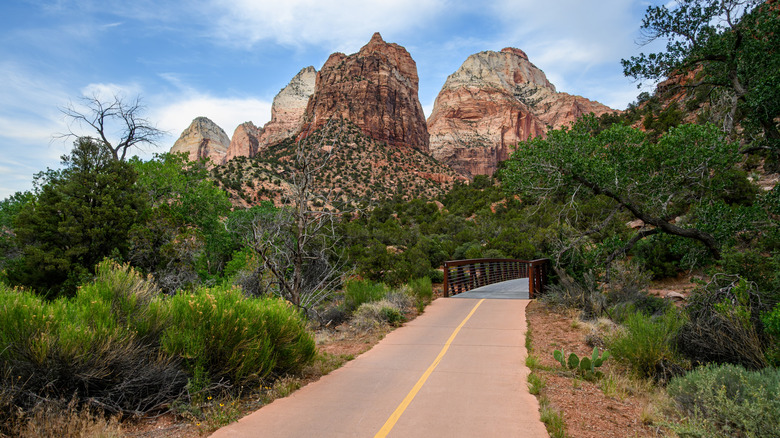
Many U.S. states have invested in long bike paths that extend from one border to another, such as New York's 750-mile multi-use trail with lush valleys and charming villages and the 239-mile Katy Trail across Missouri. What sets the UTN apart is its ambitious length and connectivity. The network forms a web through the middle of Utah, tethering most inhabited places in this largely arid state. Once finished, the UTN will leave out some sections, such as the Great Salt Lake Desert in the northwest and the Uintah and Ouray Reservation in the east, but these districts are prohibitively difficult for anyone to reach, even by motor vehicle.
The sprawling initiative will take time to complete, and it's hard to pin down an exact timetable. About 500 miles have already been paved, leaving five-sixths of the UTN still to be constructed. Yet with each new mile, Utah's robust cycling community will have more of its state to explore. The UTN should incorporate 33 college campuses and 25 state parks, among other points of interest like Utah's "Mighty 5" national parks. Naturally, travelers will be able to bike smaller sections, combining riding and driving.