
Portland's Largest Historic District Is A Walkable Neighborhood Near Downtown With Jaw-Dropping Homes
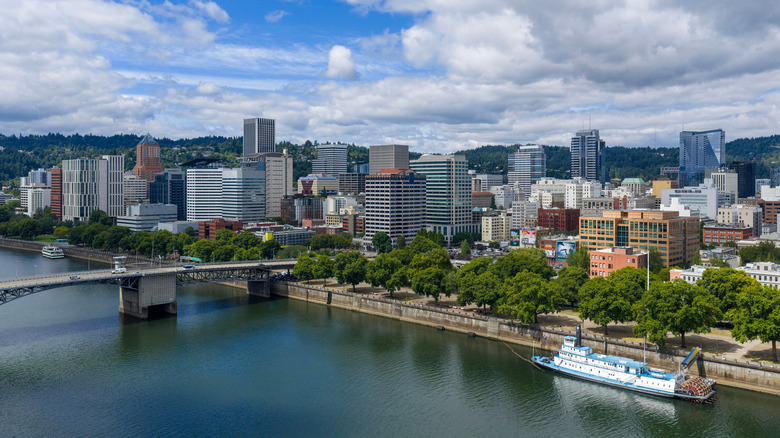
Portland, hugged by the majestic confluence of the Willamette and Columbia Rivers, is beloved for its countless breweries and free spirit. The Rose City's immediate access to pristine Pacific Northwest nature, as well as its vibrant arts and culinary scenes (many of which locals hope tourists never discover), make it a coveted destination. In the midst of the busy streets bursting with color, you'll find the leafy green residential oasis of Irvington, a historic neighborhood only about 4 miles from downtown. The quaint area is beloved for its calm, walkable streets and stunning heritage architecture.
The neighborhood is sewn into Portland's historical fabric, largely developed in the 1880s during a period of economic growth. Although it is known primarily for its beautifully preserved residences in the Queen Anne, Prairie School, and Craftsman Bungalow architectural styles, Irvington was named after local riverboat captain William Irving and his wife, Elizabeth, who together owned 640 acres of the area's land in the 1850s. Due to the influx of pioneers and fortune-seekers during and after the California Gold Rush, the city blossomed thanks to its lumber industry, and the Irving family astutely sold off large tracts of its land to be developed into the upscale neighborhood it is today.
With its beautiful stately homes, canopies of lush trees, and sidewalks perfect for leisurely strolls, Irvington represents Portland's definition of the American Dream. With more than 2,800 structures, the area is the largest historic district in the city (as well as one of the biggest in the country). Although you can visit the outside of each building at any time, the annual Irvington Home Tour offers visitors a self-guided tour of seven historic private residences and almost always sells out. Even without the tour, you can enjoy walking around the historic area. When you get hungry, on the southern border of Northeast Broadway, there are also countless inviting breweries, pizzerias, and cafés.
Historic homes in Irvington
Before you embark on a tour of Irvington's streets, stop by the Americana Cadillac Cafe, which has been running for over 30 years — after all, you'll definitely want to try a cup in the coffee capital of America. While admiring the buildings, look for markers on the sidewalks bearing the original craftsman's names. On 2323 NE Tillamook Street, you will find the Tudor Revival-style Doernbacher House, built in 1903 for the founder of the Doernbacher Furniture Company, one of the nation's largest at the time. Looking around the residential streets, you will understand why Portland was named the "quietest city in America."
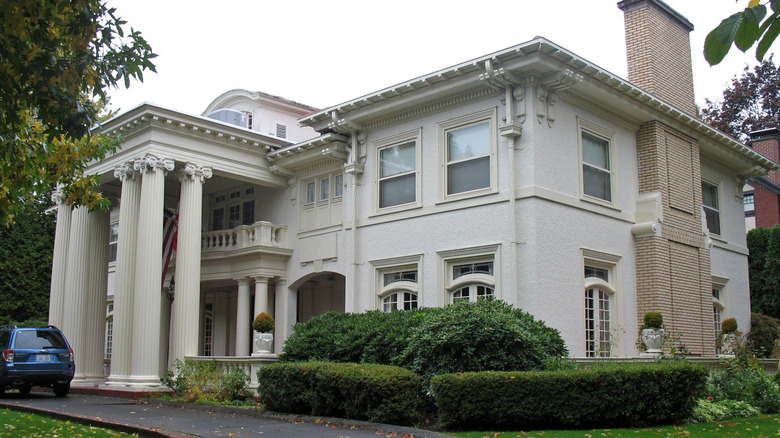
On 1914 NE 22nd Avenue, you'll find Portland's own White House. As the summer home of local lumber baron Robert Lyle, this Greek Revival mansion was one of the most expensive homes built in the city in 1911. With nine ensuite bedrooms, a dining hall, and a commercial-grade kitchen, it was listed for the humble price of $3 million in 2023. A short walk west will lead you to the Gustav Freiwald House, a stunning late-period blue Queen Anne manor that was once home to a brewery owner and inventor after whom the house is named.
The Irvington District was deservingly added to the National Register of Historic Places in 2010, and for good reason. The oldest home in Irvington, the Irving Spencer House, dates back to 1884 and was originally owned by the daughter of Captain William Irving. Styled in a Victorian-era Italianate exterior, its welcoming facade is shaded by a tasteful wraparound porch. If you look carefully, you may spot iron rings on the front curb that once tethered carriage horses of a bygone era.