
Washington's Breathtaking Puget Sound Island State Park Where Only Paddlers Can Camp
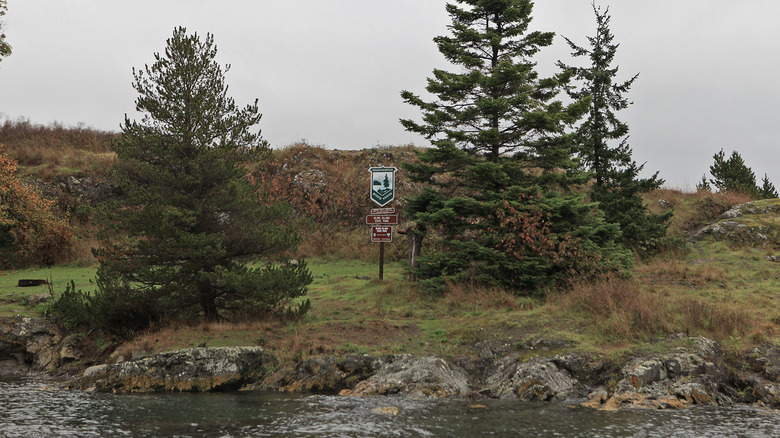
Washington's Puget Sound is a complex system of interconnected marine waterways and islands on the state's northwest coast. In the northern reaches of Puget Sound, the San Juan Islands are a unique archipelago of over 450 islands and rock formations. Within the San Juan Islands chain is the Blind Island Marine State Park, a 3-acre island accessible only by boat. Blind Island lies along the Cascadia Marine Trail, a vast network of shoreline campsites in Puget Sound designed specifically for kayakers and other non-motorized watercraft.
Blind Island is located near the entrance of Blind Bay, just off the coast of Shaw Island. This island state park is a popular destination for sea kayakers, with 1,280 feet of accessible shoreline and landing sites. It's a hidden-gem getaway for those seeking wilderness and solitude in the waters of the Salish Sea. Surrounded by calm scenery and lush with vegetation, Blind Island is a sanctuary for nature lovers who crave quiet places and incredible nighttime stargazing. Picnicking, wildlife viewing, and exploring the shoreline's tidal pools are among the other popular activities visitors can enjoy here.
Primitive camping for paddlers on Blind Island
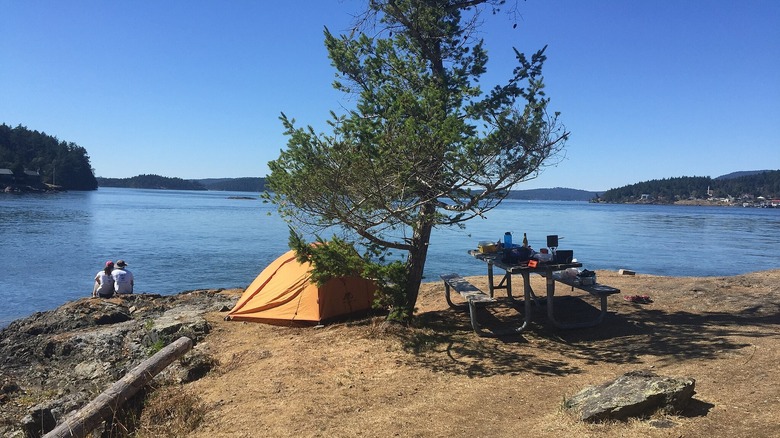
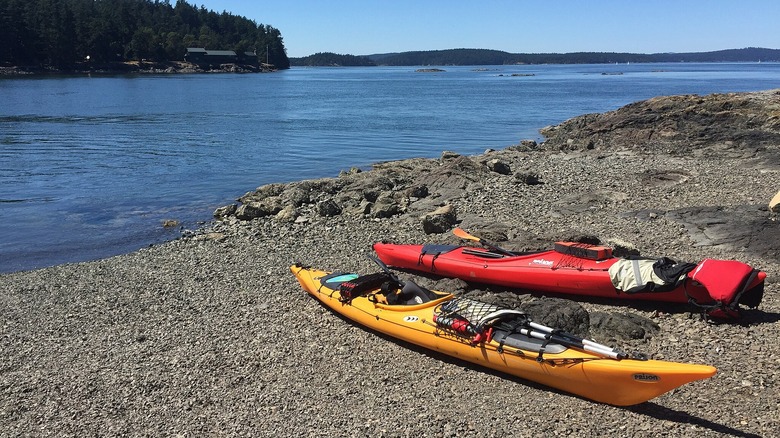
Blind Island is open year-round and has only four very primitive first-come, first-served campsites for visitors arriving by kayak or sailboat. Accessing the shore can be challenging because of the rocky coastline and shallow landing sites. Because reefs extend off the island's northwest edge, paddlers and boaters typically land from the northeast, where access is safer and less exposed to submerged rock. Larger day-use boats can also tie up to one of the four mooring buoys. The mooring buoys are located on the south and west sides of Blind Island.
If you arrive by a motorized vessel, you may enjoy the island for day use, but camping is not permitted. There is one composting toilet on the island and no trash service. You'll need to bring everything with you, including fresh water and firewood. Pack out what you pack in, and leave no trace. Nightly moorage fees cost $23 for a buoy, as of this writing. Camping fees are collected by Washington State Parks and paid by envelope at the on-site kiosk.
Recreational boaters can set crab traps in Blind Bay, which is closed to commercial crabbing. Anyone harvesting shellfish in the area should check current Washington State regulations in advance, as permits and catch documentation are required with enforcement active throughout the San Juan Islands. If you're interested in sourcing your own seafood, check out Washington's beachfront "shellfish trail."
Natural beauty is all around Blind Island
Each campsite on the island has a 360-degree view of neighboring Shaw and Orcas Islands, and you may even spot Mount Baker on a clear day. The waters surrounding Blind Island are rich with marine life, including salmon, halibut, and rockfish. Harbor seals are frequently seen resting on nearby rocks, while bird species such as golden eagles, bald eagles, and great blue herons patrol the shoreline. Beneath the surface, eelgrass beds support Dungeness crabs, hooded nudibranchs, and other invertebrates, while the broader Salish Sea is home to aquatic mammals like porpoises, otters, and several populations of killer whales. Orcas are present in Washington waters year-round, with sightings most common between April and October, particularly around the San Juan Islands.
Many of these San Juan Islands, including Blind Island, are managed by the Department of the Interior's Bureau of Land Management (BLM). On March 25, 2013, President Obama signed a proclamation designating the San Juan Islands National Monument, encompassing approximately 1,000 acres. The proclamation states, "The protection of these lands in the San Juan Islands will maintain their historical and cultural significance and enhance their unique and varied natural and scientific resources, for the benefit of all Americans." Blind Island is one of the most intimate corners of the protected San Juan Islands, where visitors can still experience a landscape of quiet simplicity and the steady rhythms of nature, tides, and weather.