
Here's How Many Flyers Will Be Affected By TSA's New 2026 Fee, According To Data
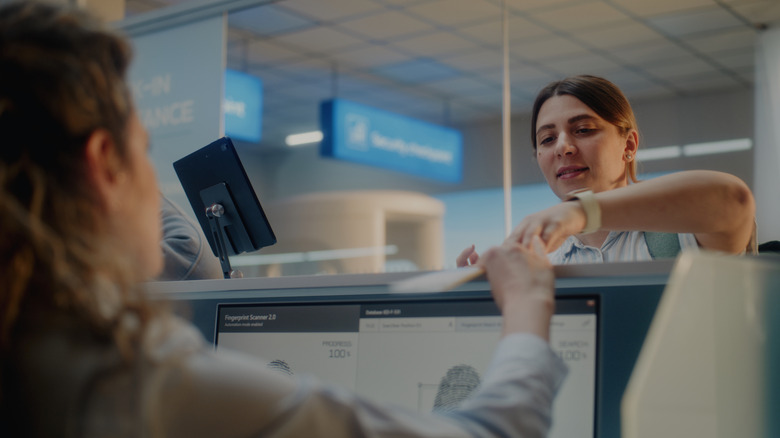
If you've flown domestically recently, you know about REAL ID: since spring 2025, passengers on flights within the U.S. have been required to show a federally accepted form of identification. But while the new rule was meant to be strictly enforced, some people are still showing up to airports without it. As of February 1, 2026, they'll be penalized with a recently increased fee — and according to the Transportation Security Administration (TSA), about 6% of air travelers will be affected.
When implementing the new rule in May 2025, the TSA published an interactive map of the U.S., pointing out where residents of each state could apply for a REAL ID. The agency also suggested acceptable alternatives for REAL ID, and travel expert Samantha Brown fine-tuned the list even more, creating an Instagram post that outlined everything you can still use to board a flight at a U.S. airport, including passports, Global Entry cards, and more. If you arrived at a TSA checkpoint without one of these forms of ID, you may have received a verbal warning or undergone enhanced security screening. From late November onward, you might also have been charged an $18 fee.
That fee is poised to nearly triple to $45 per person, per Adam Stahl, Senior Official Performing the Duties of Deputy Administrator for TSA. "This fee ensures the cost to cover verification of an insufficient ID will come from the traveler, not the taxpayer," said Stahl in a TSA press release. "The security of the traveling public is our top priority, so we urge all travelers to get a REAL ID or other acceptable form of ID as soon as possible to avoid delays and potentially miss flights."
150,00 air travelers will face an elevated TSA fee
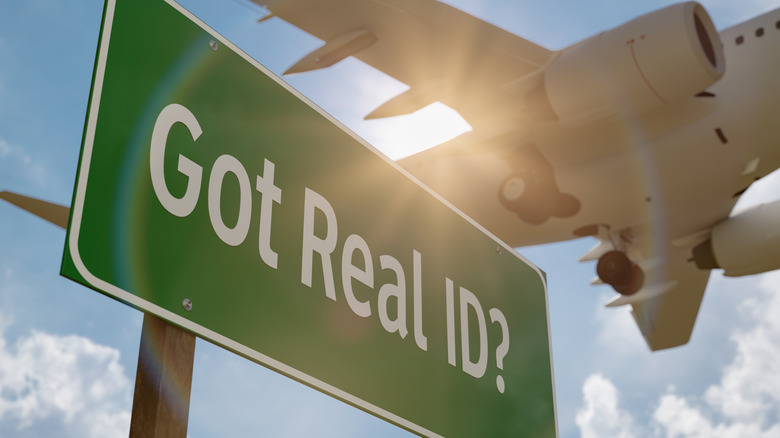
So exactly how many people are likely to get hit with the elevated fee as the new policy comes into effect? The TSA confirmed that around 94% of travelers present a REAL ID or an equivalent form of identification, which leaves about 6% who don't. There are currently about 2.5 million people traveling by plane each day in the U.S. Based on this ratio, that brings the number of non-REAL ID-holders to around 150,000 people.
Apart from the $45 fee, there's more bad news for those attempting to fly domestically without acceptable ID: they could face delays since additional security screening, referred to as the TSA ConfirmID process, is required. But there's good news, too: You can speed up the process by paying online for TSA ConfirmID before you arrive at the airport. And while the $45 fee is nonrefundable, it buys you 10 days of travel time from the date your TSA ConfirmID is validated.
The easiest way to avoid added fees and possible delays, of course, is to simply apply for REAL ID before traveling. Follow instructions on the TSA's website to find out how to do so in your home state. Alternatively, if you're a U.S. citizen, apply for your U.S. passport, which serves the same purpose at TSA security checkpoints. While you're strategizing about how to save time and headaches at the airport, check out these must-know do's and don'ts for getting through airport security, according to the TSA.