
The 5 Best Countries For Exploring The Amazon Rainforest, According To Travelers
We may receive a commission on purchases made from links.
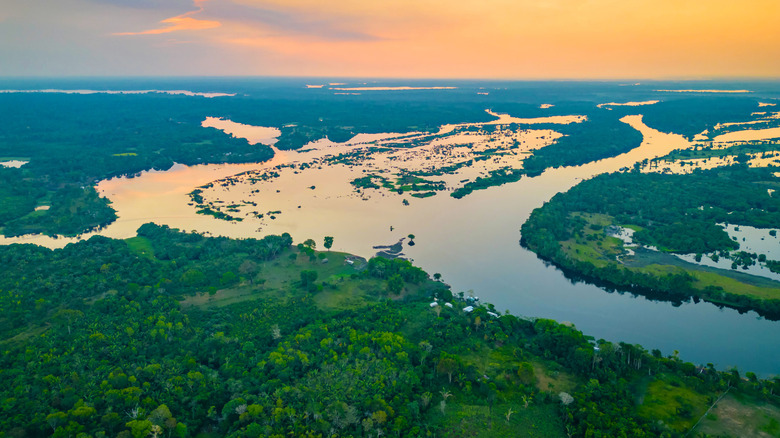
The Amazon Rainforest is one of the largest single biomes on the planet. It covers around 2.5 million square miles, about three quarters the size of the continental United States, and reaches across nine South American countries. It's also a fragile "last chance" destination slowly being destroyed by climate change. Between 1985 and 2024, the rainforest lost 121 million acres of native vegetation, a 13% shrink, according to a study from Phys.org. Traveling to the rainforest is not something to be taken for granted, as it gives you a chance to witness and appreciate the ancient, wonderfully diverse habitat crucial to the global climate system.
Because of the Amazon's scale and remoteness, you can't just go on a whim. You'll need to plan for local lodging, get experienced and friendly guides, and find the ideal wildlife viewing spots. The tourism infrastructure and experiences available to travelers vary between the nine countries draped by the rainforest, so we narrowed down the five that get praised as the most accessible and rewarding for visitors. We combed through travel blogs and reviews from popular travel aggregators to look for things like accommodation range, tours, transport options, and opportunities to see diverse fauna. You can check out the full explanation of our evaluation process at the end of this article. With that in mind, these are the five countries best-suited for going off-grid in the jungle without going off the rails.
Peru
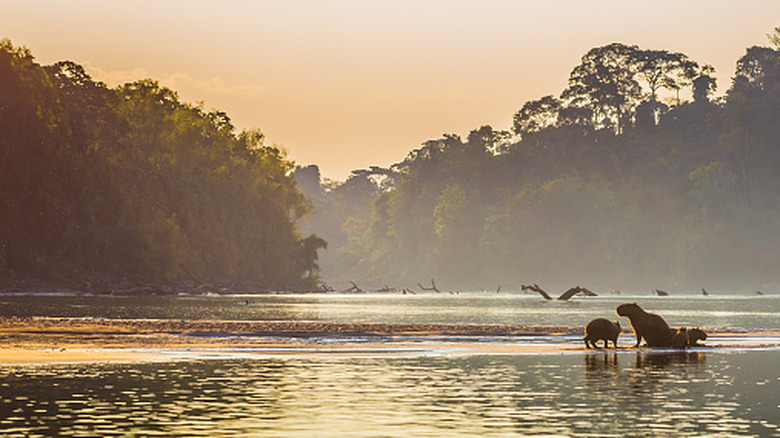
Peru hosts some of the most diverse and reputable rainforest regions, including the Tambopata National Reserve and Manu National Park, South America's best-kept secret for eco-adventurers. "I really loved [the rainforest] from Peru/Manu, the quality of the guiding was better and it's just a balanced experience. It's very remote but in the best possible way," a Reddit user said.
Many travelers want to know that their trek into the Amazon will include a good chance of seeing wildlife, and Peru is an excellent choice for this reason. The western region of the Amazon Basin (the region in which Peru sits) contains the highest diversity of the rainforest's wildlife, as a report by the Science Panel for the Amazon explained. The Tambopata National Reserve, for example, states that over one-third of the boats navigating through the area encounter elusive jaguars. Travel blogger Journey By Backpack cited the reserved zone of Manu National Park as a go-to wildlife hotspot: "The Reserve Zone is pretty much as deep into the Amazon as tourists can go; the jungle is dense, and the wildlife viewing is incredible. I've also visited the Amazon in Bolivia and Ecuador, and this was by far the best and most authentic experience."
Manu National Park is about a three-hour drive from Cusco, a well-connected hub city with plenty of affordable accommodation options. You can easily find a 4-star hotel for under $100 a night. Though if you're doing a multi-day tour with the park, it also has its own on-site lodging, the Treehouse Inn, which holds 4.6 stars on Tripadvisor. The Tambopata Reserve's main gateway city is Puerto Maldonado, which is regularly served by flights from Lima and Cusco and has many well-reviewed lodgings for under $100 per night.
Ecuador
Only about 2% of the Amazon Basin is in Ecuador, but the country has access to some of the most riveting rainforest excursions due to the high concentration and diversity of flora and fauna in this region. According to one study, about a 0.1-square-mile plot of Amazon Rainforest in Ecuador contains over 1,100 different tree species. Another study, as reported in The New York Times, found that Ecuador's Yasuní National Park is the most biodiverse place in the whole of South America.
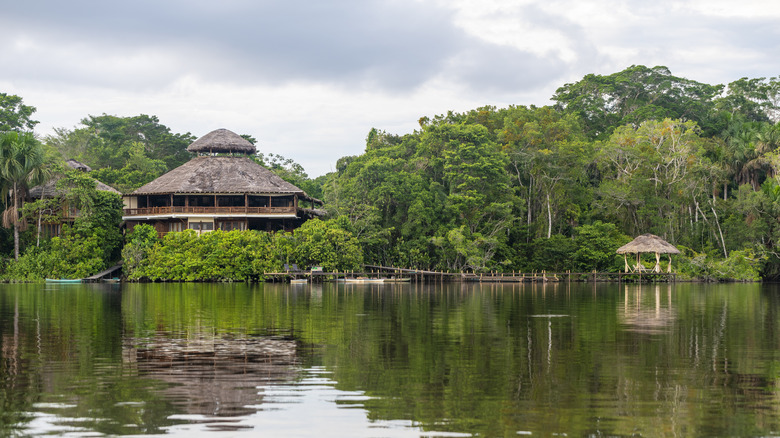
Travelers have succeeded in checking off a wide range of wildlife species sightings here. A Local Guide on Google, who visited Yasuní National Park on a floating hotel, wrote, "The naturalist guide was excellent and in 4 days we saw pink and grey fresh water dolphin[,] over 35 bird species[,] 7 types of monkey, owls, inumurable [sic] bugs etc." One of the great things about Yasuní, too, is that many of its lodgings and tours are managed by indigenous peoples who live within the rainforest. There's the Napo Wildlife Center, for example, a tour operator and eco-lodge with 4.9 stars plus a Traveler's Choice award on Tripadvisor, that's operated by the indigenous Kichwa Añangu community.
Flights from Quito, Ecuador's capital, to different Amazon gateways are frequent and abundant. To reach Yasuní National Park, for example, you can fly from Quito to Coca, then take a two- to three-hour boat ride on the Rio Napo to reach the park entrance. For accommodations, eco-lodges are the most widely available option, but they can be a bit expensive, with the lower-priced ones in the $200 to $300 per night range. The eco-lodges do offer convenience, though, by arranging tours and often having English-speaking guides on hand.
Brazil
Not only was it named 2026's "destination of the year," Brazil also has the largest share of the Amazon, about 60% of the rainforest. That means a lot more options for trips, though you have to be selective — Brazil's Amazon Rainforest can be hit or miss. "The Brazil side is better if you have time to really penetrate, but it can take longer to get to the 'good parts,'" a Reddit user put forth. However, once you do land on the right gateway into the Amazon in Brazil, there are plentiful boat treks, lodges, and wildlife tours that make the planning worth it.
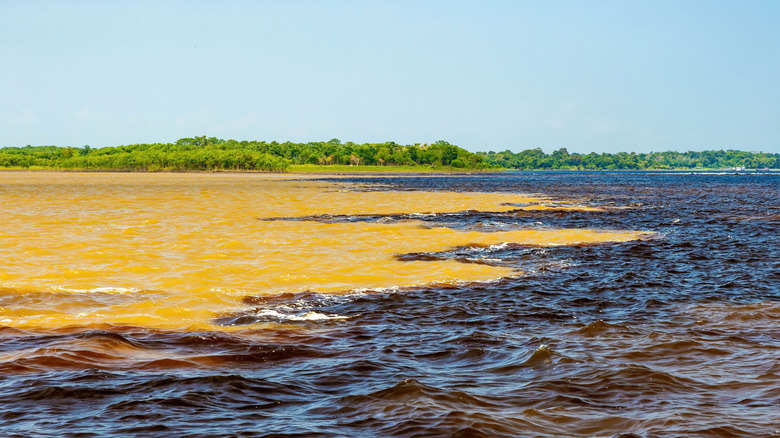
The aforementioned Reddit user recommended heading to Manaus, a city in Northern Brazil, adding, "[W]e stayed at [an] amazing lodge there though it was pricey. It's nice being at a tributary though." Another Reddit post backs up the recommendation: "Belém or Manaus are the cities with more organized tourism in the region." Manaus has the unique distinction of sitting right at the point where the Rio Negro and the Amazon River converge — a site called the Meeting of Waters, which is quite a mesmerizing spectacle, since the rivers flow side by side for a stretch rather than mixing. Several boat tours depart from Manaus, venturing past the Meeting of Waters and into the jungle. One that has 4.5 stars on Viator, for example, costs under $50 per person and includes optional dolphin interactions. Manaus also has its own international airport, Manaus-Eduardo Gomes International (MAO), which simplifies the journey in.
Belém, sitting closer to Brazil's Atlantic coast, is worth considering, too. It's engulfed in the Amazon Rainforest, though it offers some wilder excursions — the island of Combú is a forested Amazonian gem that's just a 15-minute boat ride from the city.
Colombia
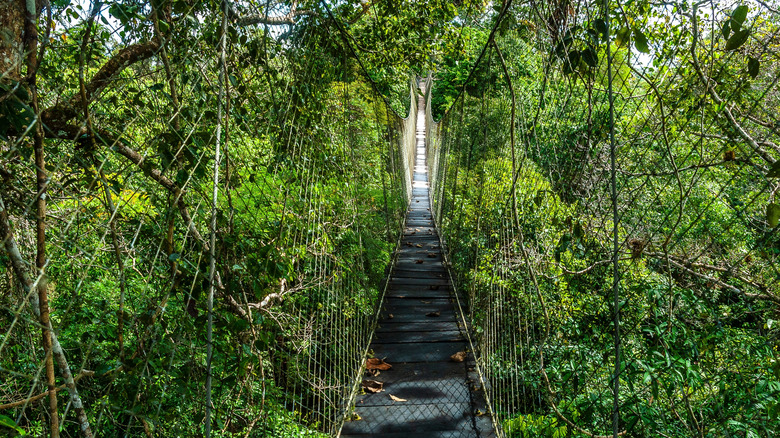
Though perhaps less famous than Peru or Brazil for its Amazonian treks, more travelers have been drawn to Colombia in recent years. The Colombian government expects over 2.5 million more visitors in 2026 than it saw in 2023 and is investing more in its tourism sector, per bne IntelliNews. The rainforest covers the southern half of Colombia, with the main jumping-off city being Leticia at the very bottom of the country. "It's pretty much the only place to access the Colombian Amazon," travel blogger On a Road to Nowhere wrote of Leticia.
The blogger added, "If you really want to experience the Amazon, you're going to have to get out into the rainforest. Thankfully, you can do that from Leticia without too much trouble at all." Lots of guided expeditions (mainly by boat) set off from Leticia into the jungle lakes and nature reserves around it. One spot past travelers have praised highly, with a 4.6-star average from Google reviews, is Amacayacu Natural National Park. Amacayacu's roster of native species includes the world's biggest lotus flower species, the world's smallest primate (the lion marmoset), and nearly 500 species of birds.
As with almost any Amazon trek, it's best to have a guide to take you through the rainforest. A top-voted Reddit comment recommended YOI Ecotours in Colombia, stating that, on the tour, "We saw so much that's not represented in the album...from troops of wild monkeys to pink dolphins, birds of prey, macaws, toucans, night monkeys." The tour operator is based near Leticia with airport pickups available. The Leticia International Airport has daily arrivals from Bogotá (note that there are no roads leading to Leticia, so flying in is the only option).
Bolivia
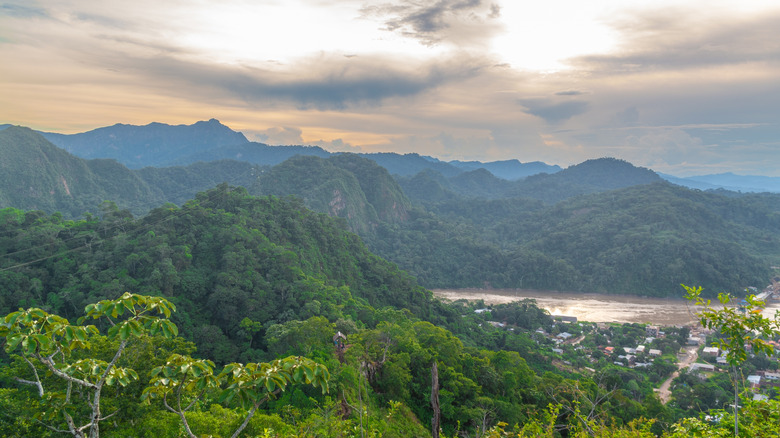
Bolivia offers some hotspots for Amazon scenery and budget-friendly tour options. It's definitely less popular than the aforementioned countries for visiting the Amazon, described by travel blogger Torn Tackies as "relatively under the radar which means fewer tourists." But that makes it an ideal candidate for the more adventurous traveler seeking an off-the-grid experience.
"I had a great time in northern Bolivia too, with an excellent long canoe trip and a camp in the wilderness... and it was considerably cheaper than Manu," a Reddit user said. There are some well-rated, multi-day tours on Tripadvisor in the Bolivian Amazon that start from under $400 per person (tours elsewhere can run over $1,000). Most Amazon excursions in Bolivia launch from Rurrenabaque, a town on the Beni River in northwestern Bolivia. You can fly into Rurrenabaque (RBQ) from La Paz (LPB), or, for the daring, it's also possible to travel between the cities by bus on a 15- to 20-hour bumpy ride along what's known as "Death Road."
One of the primary reasons most Bolivian Amazon treks start in Rurrenabaque is because of its proximity to Madidi National Park. The jungle-dense park is beloved by travelers. One Reddit commenter said, "It felt like the true Amazon experience. Loads of scenery and wildlife." There are many options for guided tours through the park, ranging from jaguar spotting to visits to the indigenous Tacana villages. Another interesting feature of Bolivia's Amazon is a region called the pampas, which is a more grassy, savannah-like terrain. There are tours available that cover excursions into both the Madidi jungle and the pampas, a unique option for travelers who want a more varied Amazon itinerary.
Methodology
We selected five countries covered by the Amazon Rainforest that have been most consistently praised by past travelers. To source for our list, we looked at which countries were frequently mentioned as positive experiences on Reddit threads, Tripadvisor forums, and online travel blogs. The main criteria we looked for in these reviews were accessibility (in terms of gateway cities and reliable transport), tour and accommodation options, and rewarding encounters with nature. The final five have the most overall appeal, though we also considered what distinctions make them stand out for different kinds of travelers.