
The Hands-Down 5 Most Underrated Nature Destinations In Pennsylvania
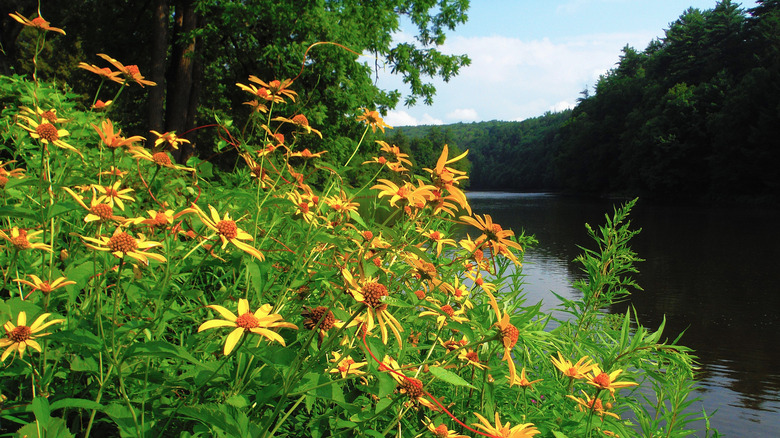
Pennsylvania occupies a unique geographic niche within the broader United States. Straddling the Mid-Atlantic, the Midwest, and Appalachia, the state offers one of the more distinctive menus of outdoor experiences for travelers to browse. Excellent public lands and thrilling recreation can be found in every corner, from the wild water adventures of the Upper Delaware Scenic & Recreational River in the northeast to the underrated paradise for outdoor thrills, Ohiopyle State Park in the southwest. In between, Pennsylvania's gorgeous landscape protects a wealth of lesser-known parks ideal for day trips, hiking excursions, and overnight camping adventures.
The National Park Service administers 19 national park sites across the state, as well as several segments of multi-state trails. While many of these protect historical resources rather than purely natural ones, Pennsylvania's illustrious state park system steps in to fill the gap with a whopping 124 state parks and forests. Outside of the National Park Service and Pennsylvania's Department of Conservation and Natural Resources, you can find plenty more superb natural treasures in the state's national forests, nationally recognized wild and scenic rivers, and even dramatic underground cave systems, to say nothing of local city and community parks. Altogether, coming up with a shortlist of underrated Pennsylvania natural destinations is something of a fool's errand. Still, a few under-the-radar places do stand out for exceptional beauty, ecological significance, and excellent recreational opportunities. These are five of them.
Cook Forest State Park
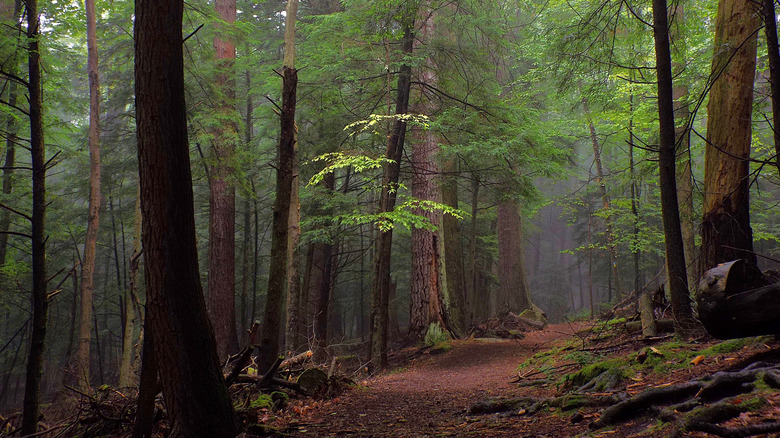
To many local boosters and state park buffs, calling Cook Forest State Park "underrated" borders on heresy. After all, the park is frequently ranked among Pennsylvania's top state parks, potentially giving it a higher profile than many others across the state. Still, when it comes to popular Mount Rushmore-style groupings of the best Pennsylvania state parks, Cook Forest doesn't quite get the attention on popular travel review sites like Tripadvisor as heavyweights like Ohiopyle, Ricketts Glen, or Kinzua Bridge do. That's unfortunate, because few parks offer more monumental natural treasures within their boundaries, nor better immersive experiences of the state's most primordial ecosystems.
Cook Forest State Park is situated in the heart of a remote and heavily forested region of north-central Pennsylvania known as the Pennsylvania Wilds. As one of the few areas to escape the heavy logging that wiped out most of Pennsylvania's forests in the 19th century, it features one of the state's best old-growth forests. The park's 11,536 acres include breathtaking groves of white pine, hemlock, beech, and other trees that predate European settlement.
Many of these trees are among the tallest in the Northeast. Their sheer height, combined with the ancient tone of the unadulterated forest, earns the park's old-growth forest the august title of the Forest Cathedral Natural Area. Visitors can experience Cook Forest State Park's mossy trails beneath a magical forest canopy, enjoy trails that cut directly through the landmark Forest Cathedral, or paddle along the scenic Clarion River. The park also has over 200 campsites, ideal for unforgettable overnight stays.
Ringing Rocks Park
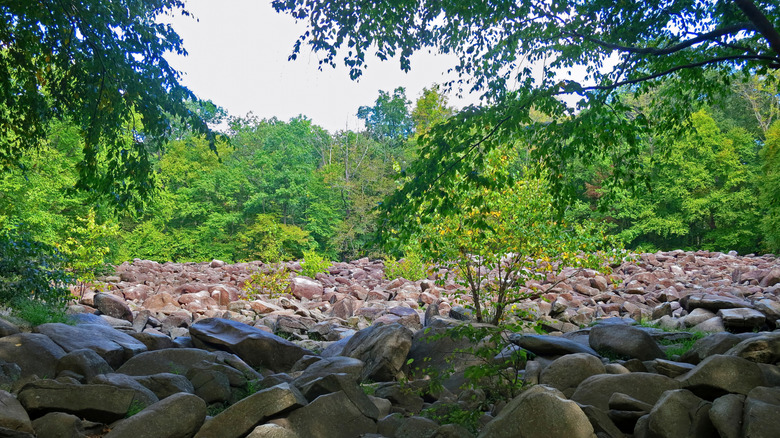
One of the most notable phenomena in any Pennsylvania public land preserve is the vast boulder field in Hickory Run State Park. Stretching nearly 2,000 feet, this massive collection of boulders was created by entirely natural forces and stands out among the state's many geological attractions. While the Hickory Run Boulder Field is the largest in Pennsylvania, it's not the only one. 70 miles to the south, in eastern Pennsylvania's Bucks County, sits the underrated Ringing Rocks County Park, home to its own unusual collection of boulders.
The boulder field at Ringing Rocks Park is smaller than Hickory Run's, covering "only" 123 acres, but it stands out for a far more peculiar reason. If the park's name wasn't enough of a hint, many of the rocks are known to produce a distinctive ringing sound when struck by a hammer or other blunt object. Visitors frequently arrive with hammers in hand, ready to "play" the rocks as if the entire field were one massive musical instrument.
Even more intriguing is the fact that scientists are still unsure why the rocks sing. The boulders consist of a type of ancient igneous rock called diabase, though the distinctive ringing is unique to this park. The prevailing theory is that this musical twist stems from some combination of weather, internal stress, and natural configuration. No matter the cause, make sure to bring your hammer when you visit to experience these ringing rocks for yourself. While there, you can also stop by the highest waterfall in Bucks County, the aptly-named High Falls, and explore one of the park's excellent scenic trails.
Hyner View State Park
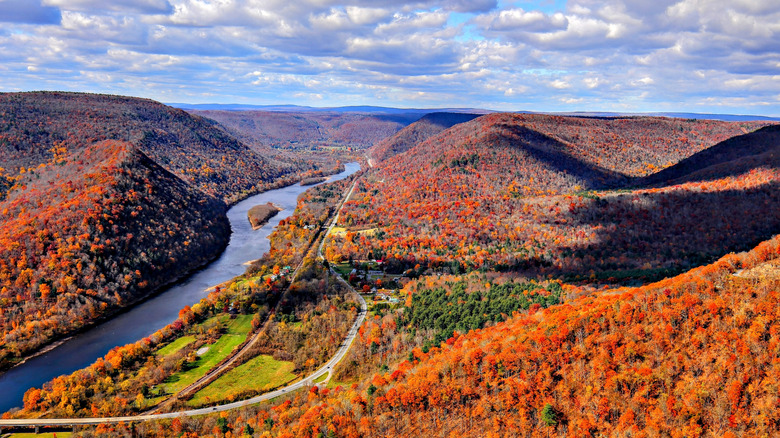
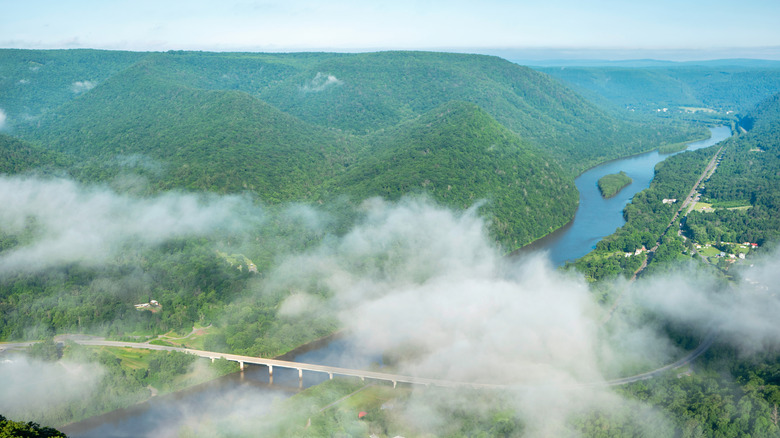
While we may all harbor a healthy level of cynicism toward advertising and branding, a park with the word "view" in its name is usually a good bet for truly spectacular scenery. Fortunately, Pennsylvania's Hyner View State Park doesn't disappoint in this regard. Like Cook Forest, Hyner View State Park is part of the pristine Pennsylvania Wilds of north-central Pennsylvania, where dense forests meet the deep valley carved by the West Branch of the Susquehanna River. Though the park's namesake view is not the highest point in Clinton County, it offers the best panoramic vista of the river valley below.
The park sits at an elevation of about 1,900 feet, making it ideal for expansive shots of the surrounding Appalachian forests without an arduous climb. While the scenery is the main draw, Hyner View also has a small but important connection to American history. The main overlook was built by the historic Civilian Conservation Corps during the 1930s, as part of a nationwide public works program to provide employment during the Great Depression. Nearly a century later, their hard work continues to pay off, delivering some of the best scenic views in Pennsylvania.
Beyond the overlook, hikers can explore routes such as the 5.2-mile Hyner View Trail, or take on more immersive jaunts into the deep valley thanks to the adjacent Hyner Run State Park. Even better, Hyner View's high altitude, open expanse, and consistent air currents make it Pennsylvania's top spot for hang gliding.
Tannersville Cranberry Bog Preserve
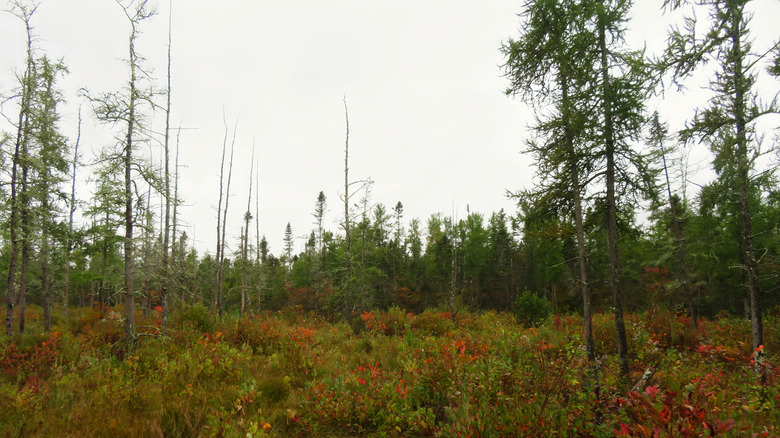
The concept of a bog tends not to induce the same stir of emotions as a mountain or a beach, but Tannersville Cranberry Bog Preserve proves how captivating wetlands can be. Located in the Poconos, about 2 hours north of Philadelphia, the preserve is managed by The Nature Conservancy rather than a government agency. Its ecological importance has earned it designation as a National Natural Landmark.
Though the park's mossy, peat-heavy wetlands aren't quite as immediately eye-catching as Cook Forest's old-growth tree cathedral or Hyner View's spectacular overlook, they actually represent a span of the earth's history that's just as fascinating. This type of bog is one of only two of its kind in Pennsylvania and is a remnant of the last ice age, formed when gigantic glaciers cut a deep kettle hole into the landscape. After the glaciers retreated, precipitation and evaporation carved the leftover hole into the ecologically rich bog that sits there today.
The Tannersville Bog's complex boreal ecosystem and black spruce-tamarack wetlands are believed to be the southernmost examples of these unique environments along the entire Eastern Seaboard. Even if ecological quirks like this don't interest you, a walk through can be a delightful escape into a small but fantastical natural setting you won't find anywhere else in Pennsylvania. Its unique ecosystem provides a home for rare flora like native orchids, carnivorous plants, and (yes) cranberries. The bog also has well-maintained boardwalks, where you can enjoy an informative Cranberry Bog Walk with the Kettle Creek Environmental Education Center for $6.
Elk State Forest
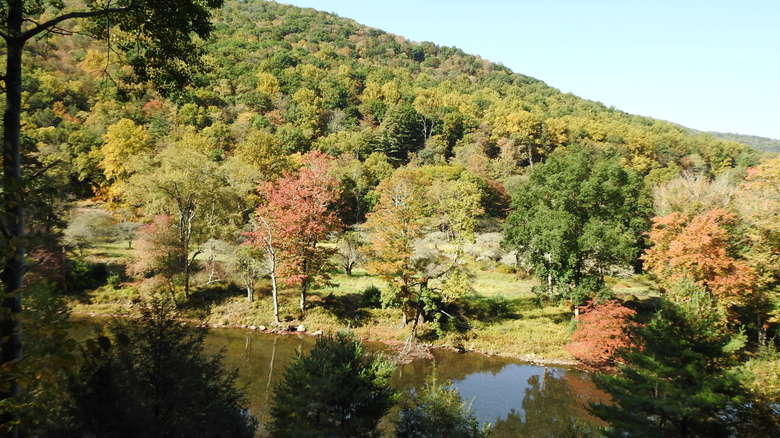
All 20 of Pennsylvania's state forests could reasonably be considered underrated, so identifying just one to highlight is a somewhat difficult task. Still, when it comes to outstanding beauty and unique natural features, it's hard to find a destination that's obviously superior to the remarkable Elk State Forest. Like many other entries on this list, it's part of the Pennsylvania Wilds region in the north-central part of the state. That alone may qualify it for a premier ranking, but Elk State Forest's most notable draw is actually the feature from which it gets its name.
Elk State Forest, much like its surrounding Elk County, was once home to thriving populations of elk. Sadly, human settlement, development, and deforestation eventually led to the extirpation of these majestic animals in the region. However, diligent elk restoration efforts (including the importation of Yellowstone elk) ultimately proved successful in bringing these animals back to Pennsylvania, if only in a few small corners of the state. Today, true to its name, Elk State Forest is home to Pennsylvania's restored elk herd.
Sitting in the middle of the Pennsylvania Wilds, Elk State Forest has several designated wild and natural areas that protect rare and valuable forest resources. The forest's Square Timber Wild Area, for example, comprises 5,615 acres of gorgeous old- and second-growth oak and conifer forests, along with noteworthy wildlife such as black bears and bobcats. Perhaps more remarkable is the 50,000-acre Quehanna Wild Area. Once a contaminated industrial site used for nuclear research, its current identity as a rich and thriving forest environment may be Pennsylvania's greatest environmental reclamation success story. Visitors can enjoy Elk State Forest's abundant beauty on terrific hiking trails, overnight campsites, and even road trips courtesy of the 127-mile Elk Scenic Drive.
Methodology
Pennsylvania's sheer breadth of natural destinations makes ranking a fairly difficult task. To compile this list, we primarily focused on establishing a basic, working definition of "underrated" and developing workable criteria for ranking the natural features in all relevant parks. "Underrated" is quite subjective, of course, and a park that some have never heard of may be a beloved and popular destination for others. To keep things simple, we looked for Pennsylvania parks with notable features that receive fewer mentions in "Pennsylvania top-X" lists or fewer reviews on popular travel apps like Tripadvisor. While this methodology is not perfect, it still works as a baseline for establishing a particular park as being "underrated" compared to other parks with similar features.
Having developed a basic criterion for which parks to consider, we then identified particular natural features that would earn a park a spot on this list. Each of these Pennsylvania parks is not only a beautiful natural destination with limited statewide attention, but also features a unique natural feature or characteristic that sets it apart. Cook Forest State Park has its record-holding old-growth forest, the Tannersville Cranberry Bog has its rare bog ecosystem, Elk State Forest has its elk herd, and so on. We also tried to identify under-the-radar parks with natural features that may compare to those of more popular parks. Ringing Rocks County Park, for example, is an excellent alternative to the much better-known boulder field at Hickory Run State Park, with an additional musical twist. Likewise, Hyner View State Park has a wonderful panoramic observation area that compares quite well to more popular natural viewpoints at Leonard Harrison State Park and Allegheny National Forest's Rimrock Overlook.