
Pennsylvania's 5 Most Walkable Cities, Per Resident Recommendations
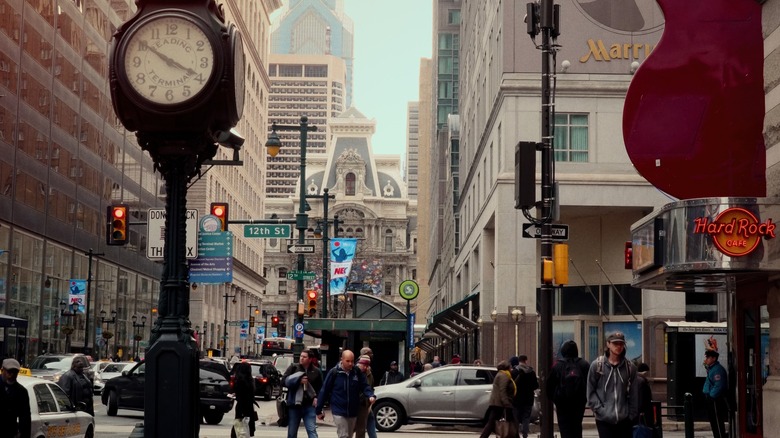
The benefits of living in a walkable state like Pennsylvania — ranked one of the best states to live in by WalletHub – can't be overstated. A recent Stanford study found that residents of highly walkable cities take significantly more steps each day across nearly all age and gender groups simply by virtue of their daily environment, even if they don't consciously choose to exercise. Daily walking, in turn, not only helps lower the risk of chronic diseases like diabetes and heart disease, but it also reduces anxiety, stress, and depression. Green spaces and safe pedestrian paths offer serene settings in which to reset the mind.
So what makes Pennsylvania, in particular, so walkable? It comes down to a unique mix of compact downtowns, historic urban design, and community-oriented infrastructure, all of which help to deliver a different pace of life that many residents gravitate toward. Casual interactions in public parks, on sidewalks, and at public plazas throughout cities like Philadelphia, Lancaster, and West Chester strengthen social bonds. What's more, with more foot traffic and fewer cars, local shops and restaurants reap great economic benefits, a smaller carbon footprint is a boon to the environment, and neighbors feel safer overall.
As evidenced by each city's Walk Score as well as the positive sentiments of Reddit and City-Data.com users, Pennsylvania ought to be atop your itinerary or list of places to live if you've got your heart set on somewhere highly walkable. If you need a little more inspiration, read on to learn about the cultural spots, notable art galleries, popular eateries, and events in each featured city that attract people near and far. Who says you need a car to get around to soak up the best of what a city has to offer?
Lancaster
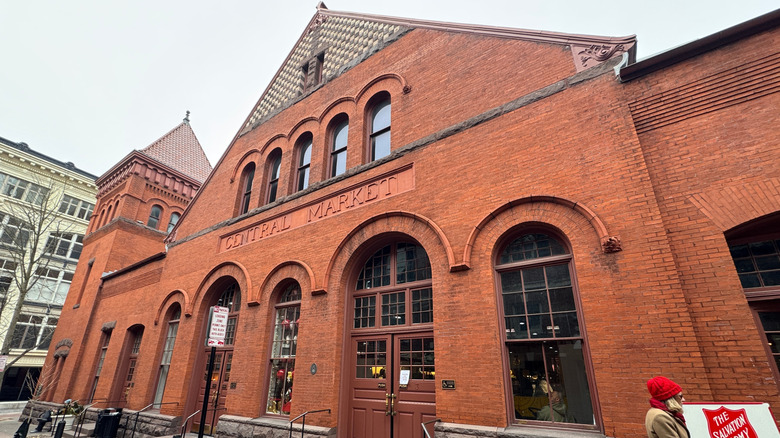
Ranked the No. 1 most walkable city in all of Pennsylvania with a Walk Score of 81, it doesn't get any better than Lancaster for those who prize the convenience of getting around on foot. Whether you're going for a stroll during your office lunch break or just want to catch your breath after a busy day, Musser Park, Chestnut Hill, and the Lancaster Central Business District are the area's most walkable neighborhoods. Lancaster residents are able to reach an average of seven bars, coffee shops, and restaurants in a matter of five minutes, meaning a good bite is never too far out of reach. As one Reddit user notes, Lancaster owes its walkability in part to "good sidewalks and lots of shade."
Musser Park, a public green space for all ages, dates back to the mid-20th century. It was dedicated on Independence Day in 1952, thus the reason it hosts a popular Fourth of July celebration each year. Adjacent to the park is the Greek Revival-style Grubb Mansion, which houses the Lancaster Museum of Art and showcases local artwork.
The Lancaster Central Business District is anchored by Lancaster Central Market, which opened in 1730 and calls itself "the oldest farmer's market in America." Residents can enjoy going to Southern Market Lancaster for fresh eats, and attending local events like Open Streets and First Fridays. The Victorian and Colonial homes in Chestnut Hill (not to be confused with the scenic neighborhood of the same name in Philly) will transport you to another era. Residents here enjoy being able to amble to a wide array of restaurants, parks, and nightclubs, as well as schools and the North Museum of Nature and Science.
Philadelphia
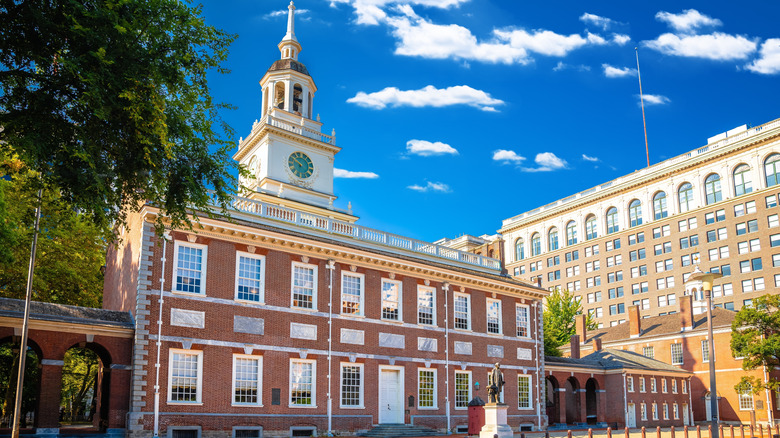
Philadelphia, nicknamed the City of Brotherly Love, reflects founder William Penn's vision of a city grounded in peaceful coexistence. Penn would be happy to know that thanks to its excellent transit and dense, walkable neighborhoods, Philly boasts a Walk Score of 75 – impressive given its population of over 1.5 million residents. This is further corroborated by a City-Data.com user who states that "the core of Philly is one of the oldest and overwhelmingly pre-automobile-developed in the U.S." Perhaps less widely known is Philadelphia's moniker of City of Neighborhoods, with more than 100 distinct communities that maintain strong local identities. All of the neighborhoods fall under the umbrella term of Center City, anchored by the striking Second Empire-style City Hall.
Market East is one of the most compact and energetic parts of Philly, making it easy to move from markets to museums to theater seats. Fuel up at Reading Terminal Market, a 19th-century public market with over 80 vendors; take an invigorating stroll along the three-lined pathways of Washington Square, one of William Penn's original city squares; and catch an enthralling show at the Walnut Street Theatre, the oldest continuously operating theater in the U.S. Offering an ideal blend of dining, shopping, culture, and nature, the upscale Rittenhouse Square neighborhood, with its eponymous park, attracts some 10,000 locals and visitors daily.
In Old City, America's most historic square mile, a slew of fascinating sites and museums are within easy walking distance of each other, including the Liberty Bell, Christ Church, Betsy Ross House, Independence Hall, the Museum of the American Revolution, and the National Constitution Center. Don't miss Elfreth's Alley, which dates back to 1703 and is lined with 32 houses. It's the "nation's oldest continuously inhabited residential street," according to Visit Philadelphia.
West Chester
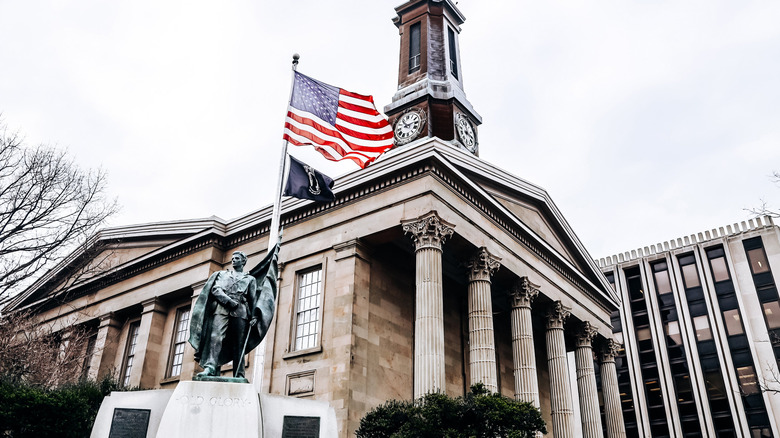
Located roughly 35 miles west of Philadelphia, West Chester melds historic architecture with a vibrant cultural and dining scene, and its Walk Score of 74 is nothing to sneeze at. Downtown West Chester is centered on Gay Street, High Street, and Market Street, forming a compact core of roughly 20 square blocks lined with well-preserved structures. It's perfect for those seeking a small-town experience, with narrow streets, brick sidewalks, and short blocks that calm traffic and encourage strolling. One City-Data.com poster waxes lyrical about the city: "West Chester has a great downtown. People are very friendly, the town has a community spirit, downtown is alive with always something going on, tons of places to explore, live theater, 50 restaurants, [and] many shops."
Dozens of restaurants give foodies plenty of tasty options, and retail shops also abound. Families, couples, and students from nearby West Chester University can marvel at over 4,000 buildings that are listed on the National Register for Historic Places. Among them are the Greek Revival-style Chester County Historic Courthouse and Horticultural Hall, which today houses the Chester County History Center. A slate of events throughout the year — from the Turks Head Music Festival in July to Oktoberfest and a spectacular Christmas Parade.
Avid hikers, photographers, and nature lovers will love the 571-acre Natural Lands' Stroud Preserve, once part of the Laird farm. Alternatively, enjoy a scenic 90-minute ride on the West Chester Railroad, or visit the 42-acre Sandy Hollow Heritage Park, which witnessed the single largest engagement of the Revolutionary War. The Brinton 1704 House, a National Historic Landmark built by a Quaker family, takes you even further back to the early Colonial Era, with its thick stone walls and period furnishings.
Reading
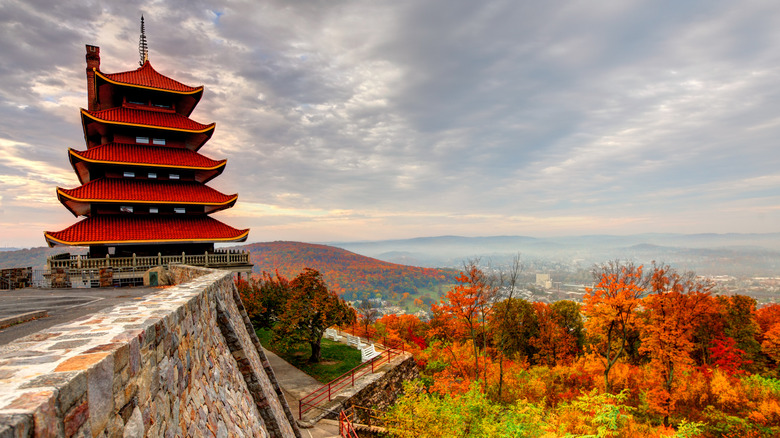
While Reading may not have many bike lanes, its Walk Score of 72 means you can conveniently accomplish most of your errands on foot. The city, whose name was inspired by the town of Reading in Berkshire, England, was laid out in 1748 by Richard and Thomas Penn, sons of William Penn. It served as a military base during the French and Indian War and supplied iron for George Washington's troops during the Revolutionary War. Today, Reading is home to over 80,000 people and features several nearby hospitals, churches, schools, and arts organizations, creating a strong sense of neighborliness among residents and visitors. For example, a Reddit user reminisces about their time in Reading: "I do miss being able to walk to the avenue and the museum."
Downtown Reading boasts the GoggleWorks Center for the Arts, the largest interactive arts center of its kind in the U.S. You can catch a concert or hockey game at The Santander Arena, or opt for a Broadway show at the historic Santander Performing Arts Center, which was built as a market in the 1870s. Open daily from 11 a.m. to 5 p.m., the Reading Public Museum delights the young and young at heart with a planetarium, arboretum, interactive displays, and more. And just north of downtown, Reading City Park — also called Penn's Common — offers a leafy green space where residents and visitors can read while the kids frolic in the playground.
No symbol is more representative of Reading than its landmark Japanese-inspired pagoda. Perched atop Mount Penn, it affords panoramic views of downtown Reading and Berk County's rolling hills. While not quite within walking distance of the aforementioned venues, the short drive is well worth it — if only to capture Instagram-ready photos of this marvelous landmark built around 1906.
York
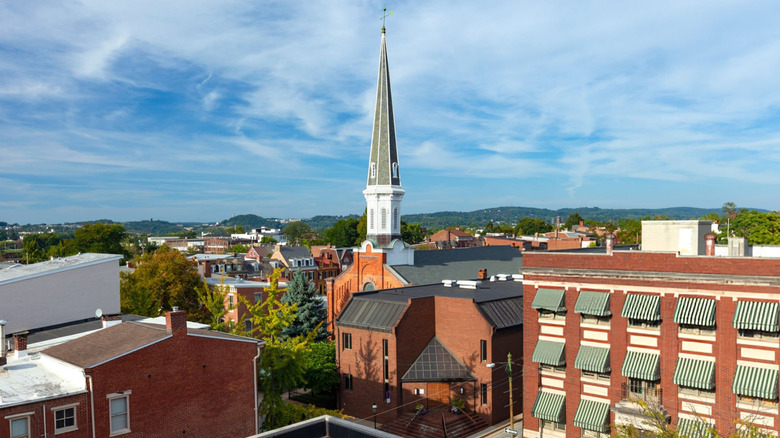
Last but certainly not least, with a Walk Score of 71, is the city of York, which punches above its weight for food, culture, and history, all in a compact footprint. Its core downtown neighborhoods –Royal Square, the Market District, and WeCo (West of the Codorus) — are easily navigable on foot. York is designated a bronze‑level Walk Friendly Community, reflecting its access to green spaces like Penn Park, pedestrian infrastructure, transit connections, and city‑supported walking initiatives. A Reddit user cites the city's safety and adds, "Downtown York has a really beautiful arts district, with lots of small businesses."
Convenient to Philadelphia, Baltimore, and Washington, D.C., York is lined with outstanding galleries, boutiques, and restaurants, many of which stay open late on the First Friday of each month. With Victorian and Classical Revival-style buildings that create an eye-catching streetscape, vibrant storefronts, and community-driven events year-round, it's no wonder York's Main Street has been recognized by HGTV and Reader's Digest. Operating continuously since 1888 is Central Market York, where you can snag baked goods and fresh produce.
The York County History Center manages several historic sites and museums, with many of its most significant holdings in the Colonial Complex. From the General Horatio Gates House to the reconstructed Colonial Courthouse and the Golden Plough Tavern (believed to be the oldest surviving structure in York), you'll dive deep into York's place in Revolutionary history. The city served as the meeting place of the Second Continental Congress, where it drafted and adopted the Articles of Confederation. Additionally, you can attend special events throughout the year such as the annual Oyster Festival, featuring music and children's activities.
Methodology
To identify the walkable cities in Pennsylvania, we consulted WalkScore, a walkability scoring tool. Each selected city earned a score of 71 or higher due to factors like proximity to amenities and the presence of pedestrian-friendly street networks. Moreover, we utilized Reddit (a forum-style social media platform) and the forums at City-Data.com (which focuses on topics related to cities, neighborhoods, demographics, and local living) to gather honest feedback and suggestions from Pennsylvania residents.
We also leaned on editorial coverage to determine which downtowns have earned national recognition and which restaurants, parks, museums, and other attractions contribute to each city's cultural fabric and sense of community.