
Wilmington's Wildly Unique Park Shows Off A 'Garden Of Carnivores' Along A Wonderfully Scenic Trail
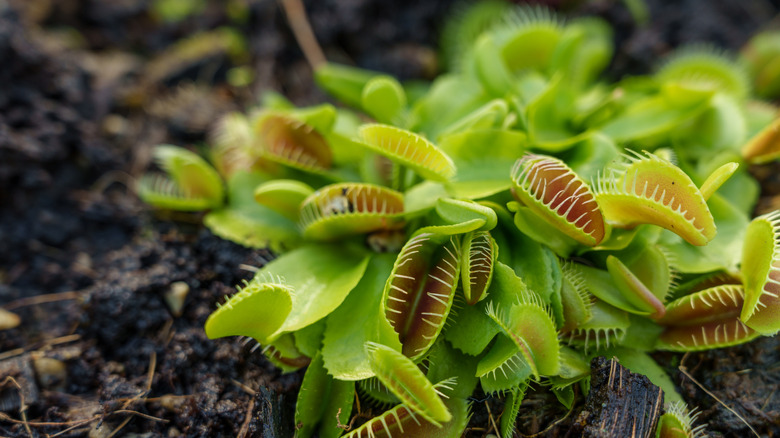
The city of Wilmington, North Carolina, is home to more than 40 parks, including Greenfield Park, a nature lover's playground featuring a lake with boat and kayak rentals, and Riverfront Park, with an open-air concert venue overlooking the Cape Fear River. Perhaps the most unique of all is the Stanley Rehder Carnivorous Plant Garden, which showcases a garden of rare carnivorous plants along a wonderfully scenic trail.
Managed by the city and the North Carolina Coastal Land Trust, the garden is part of the Piney Ridge Nature Preserve. It's small, occupying less than an acre of lush, forest-framed land. But the garden features an impressive display of Venus flytraps, pitcher plants, and sundews — the so-called "meat-eaters of the plant world." These predatory plants are characterized by their ability to lure, trap, and consume animals, like insects, and in some cases, reptiles or even mammals.
Globally, there are hundreds of species of carnivorous plants. But the famous Venus flytrap (Dionaea muscipula) is native only to the area around Wilmington. And thanks to one local plant enthusiast, George Stanley Rehder (1922-2012), nicknamed "The Flytrap Man" for his avid interest in carnivorous plants, the city has its own flourishing collection. Over several decades, Rehder collected and planted specimens on a patch of land beside an elementary school. Not long before his death in 2012, the Stanley Rehder Carnivorous Plant Garden was officially dedicated.
Exploring the Stanley Rehder Carnivorous Plant Garden
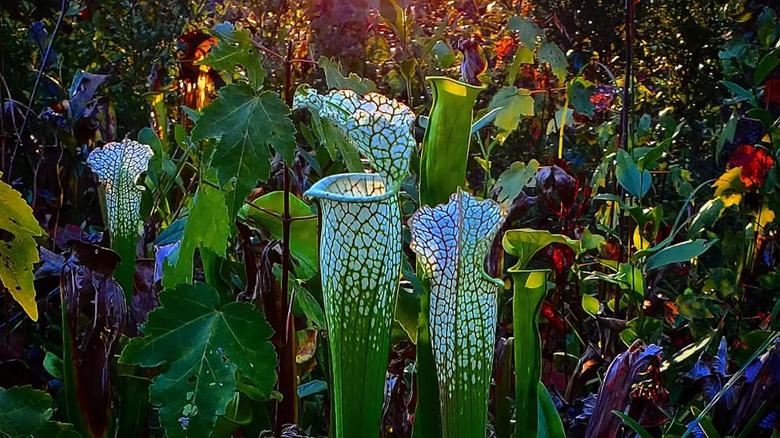
Stroll along the garden path, a scenic half-mile trail that leads through fields where you can get a close-up look at carnivorous plants. Partly paved and partly made of dirt and cobblestone, the walk culminates at an overlook platform. The easy out-and-back hike is less than half a mile long and can be completed in an hour or less. Interpretive signs along the way offer background information about carnivorous plants and the local ecosystem. "Looking for the Venus flytraps felt like a little scavenger hunt," wrote one past visitor on AllTrails. "Such a cute hidden gem," said another. "Absolutely beautiful and a real treat."
Many visitors noted that you have to look closely to spot Venus flytraps along the trail, as they're smaller and flatter than expected. Travelers should also consider timing their visit based on what they're hoping to see. Yellow and crimson pitcher plants bloom in March and April, while purple, hooded, and sweet/red varieties are most vibrant from April to May. May and June are prime times for seeing the Venus flytrap, while the pink sundew blooms from May through August and the roundleaf sundew from July through September. While in the area, don't miss a visit to the nearby Airlie Gardens with centuries-old oak trees and wandering wildlife.
The Stanley Rehder Carnivorous Plant Garden offers free parking at a small lot near the trailhead. The garden is open to the public year-round and is free to enter, and it's just a 15-minute drive from Wilmington International Airport. To see more pitcher plants and sundews in the wild, take a trip to Lewis Ocean Bay Heritage Preserve, a diverse nature reserve with a massive population of carnivorous plants.