
5 Major Changes Happening In Rome Tourists Visiting In 2026 Need To Know
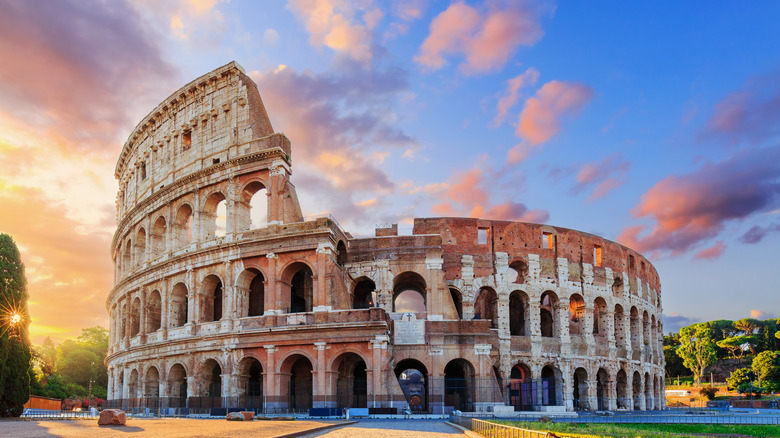
In preparation for the Catholic Jubilee Year celebration, which drew an estimated 33 million travelers and pilgrims to the Vatican in 2025, Rome implemented wide-scale programs to better manage tourism-related vehicle and pedestrian traffic and improve the city's transportation infrastructure. The Jubilee officially came to a close on January 6, 2026, but the momentum of change continues, promising a new era of both tourism and residential life in the Eternal City.
Of all the changes that recently swept through Rome and continue to unfold in the current moment, which ones will most significantly affect Rome visitors' experiences in 2026, for better or for worse? We conducted a deep analysis of current news sources, travel websites, and popular Rome influencers' social media platforms to provide the most factual and up-to-date answers to this important question so you can better plan your trip. Here's what you need to know.
A controversial new fee at the Trevi Fountain
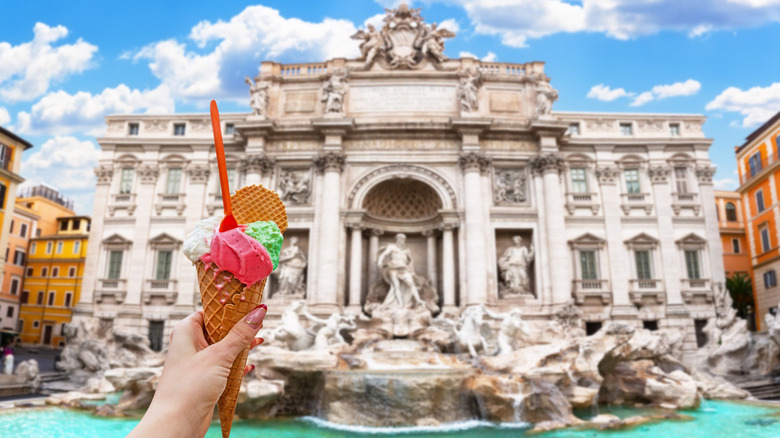
The first notable change is one that's all over the news right now. Everyone seems to be talking about the new fee visitors must pay to access the Trevi Fountain. On day one of the implementation of the access fee (February 2, 2026), one visitor to the fountain commented, "It's not right to charge people –- this is history, it should be free," (per The Guardian). Another visitor disagreed: "I think it's normal and €2 is nothing — the price of a coffee."
Whether people agree or disagree with the measure, which is intended to raise money for maintaining the landmark and to help tourism officials better regulate pedestrian flows around it, the €2 fee (equivalent to around $2.35 USD) appears to be here to stay.
Discussing this measure, YouTuber Rozier Roma notes that you can still stand in the square and view the Trevi Fountain from a distance. But if you want to access the area around the fountain's basin between the hours of 9 a.m. and 10 p.m., you will need to queue and pay. However, visitors to the fountain who arrive in the evening after 10 p.m. or in the early morning before 9 a.m. can access the basin area without having to pay the fee, and Rome residents, children younger than 6 years old, and those with disabilities and their carers can still access the basin area anytime for free.
Exciting cultural openings across the city
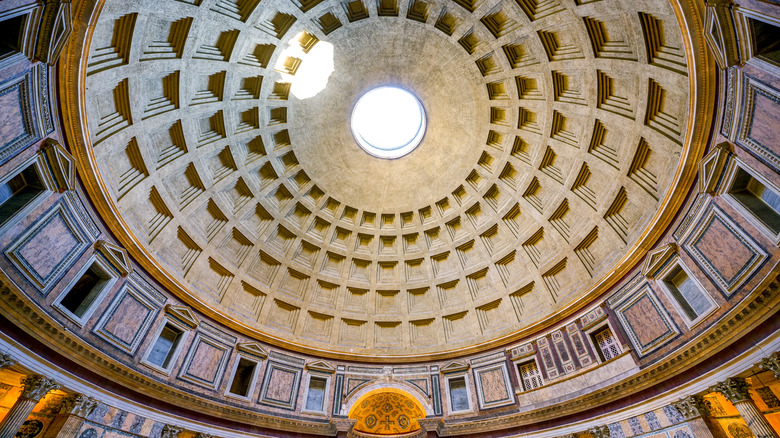
On a less controversial note, in 2026, Rome visitors will also be treated to a smorgasbord of openings and reopenings all around the shining city. One of the most exciting of these is at the Pantheon, the city's spectacular ancient domed temple, built between 25 and 27 B.C. Oltre il Pantheon (Beyond the Pantheon) is a new 45-minute tour of spaces within the temple and the adjacent Basilica of Neptune that have never before been accessible to the public. The tour employs innovative technologies like immersive video mapping and three-dimensional models to tell the story behind one of Rome's most important monuments.
Elyssa Bernard, host of the popular YouTube channel Romewise, highly recommends the tour: "I think this is a fantastic exhibit because you get a much better understanding of what the Pantheon and the spaces around it were like in ancient Rome." General admission to the Pantheon is about $6, while it's around $12 for the Oltre il Pantheon tour.
Another Rome exhibit that's new in 2026 is Pétros Ení (Peter is Here), an immersive exhibit in the exclusive Octagonal Halls of the Vatican that tells the story of the life of Peter and the evolution of St. Peter's Basilica. For art lovers, the big announcement in 2026 is the reopening of Rome's museum of contemporary art, Museo MACRO, under new director Cristiana Perrella. Entrance to the museum now costs around $7. After paying this fee, visitors can access four concurrent exhibitions, including UNAROMA, which showcases the work of more than 70 artists and depicts the heterogeneous and intergenerational communities of Rome across a wide range of creative media.
Public transportation and mobility improvements
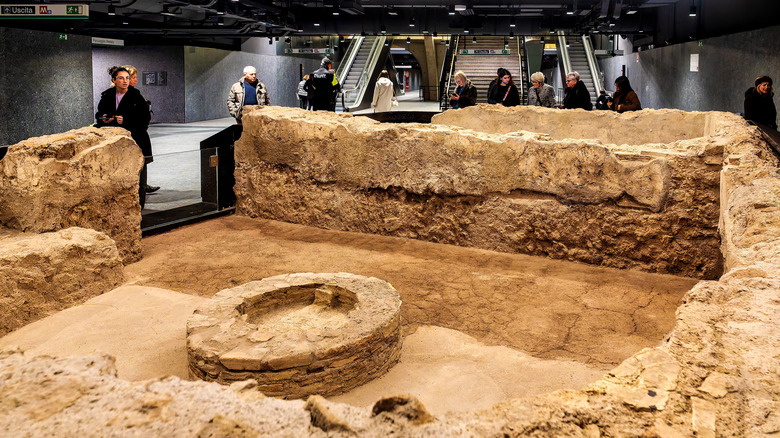
A big theme of the city-wide Jubilee preparations was enhancing the mobility sector, meaning expanding public transportation systems, pedestrian walkways, and more. Rome's underground metro was long overdue for a makeover, with no major upgrades across much of the system for over 100 years. These efforts focused on improving the appearance and functionality of 27 stations along line A and adding two new stations on line C: at Porta Metronia and the Colosseum. On her Romewise YouTube channel, influencer Elyssa Bernard described the new Colosseo metro stop: "It's like a destination all by itself," an actual "museum that you can visit," with excavated ruins and displays of artifacts like vases and plates and stone wells with suspended buckets. The Porta Metronia stop isn't too shabby either, with its impressive mosaics and preserved military barracks from the 2nd century.
Also in preparation for the Jubilee, Rome greatly expanded its pedestrian-friendly spaces, widening and beautifying sidewalks and piazzas and restricting traffic to prioritize people over cars. One of the most ambitious projects was at Piazza Pia near the Vatican, which was enlarged to accommodate up to 150,000 people and is now the largest pedestrian area in the city. Perhaps in part due to these bold efforts, sun-drenched Rome became the world's most walkable city in 2025, according to GuruWalks. And in 2026, visitors can still enjoy access to the Jubilee-improved squares and walkways without having to elbow their way through Jubilee-level crowds.
Side note — you can run or jog in these areas as well as stroll in them, if you're inclined to do so. And did you know that one of the coolest ways to see Rome like a local is with the city's free running groups along scenic routes? Think about tagging along for a run, as you can cover even more ground and indulge in more pasta and gelato without affecting your waistline.
Burgeoning luxury hotel sector
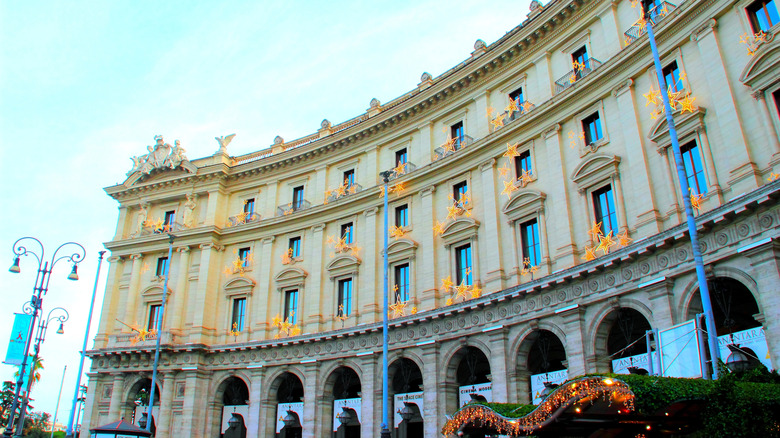
Another post-Jubilee development that visitors can take advantage of is Rome's flourishing high-end hotel sector. Luxury travel company Open Doors Global observed in an Instagram post that "2026 is shaping up to be one of the biggest years for luxury hotel openings we've seen in the last decade." Slated to open (or reopen) in 2026 are three luxury hotels: Corinthia Rome, Rosewood Rome, and Baccarat Rome.
The first, five-star Corinthia Rome, is located in the Piazza del Parlamento, housed in what used to be Italy's Central Bank. Mere blocks from iconic destinations like the Trevi Fountain and the Pantheon, the hotel will feature exquisitely appointed rooms, three different dining and drinking venues, and a serene spa nestled into former bank vaults. According to its website, the hotel is slated to open in late February 2026, with room rates starting at around $1400 per night.
Rosewood Rome, which will open in 2026 according to a press release, also occupies a former bank building plus two other historic buildings, all overlooking the Via Veneto, one of the most storied streets in Rome. This hotel will also feature three restaurant venues, including a rooftop bar, along with a rooftop spa with a wellness terrace, reflecting pool, and fitness center. Also slated for a 2026 opening is the Baccarat Hotel Rome, which will be a "maximalist reinterpretation of a storied palazzo, designed for travelers drawn to design, craftsmanship, and experiential glamour that feels personal rather than performative," according to Open Doors Global. Stay tuned!
Late 2026 European visa requirements

This last change is not specific to Rome or Italy; it will affect travelers to 30 different EU countries. But we thought we would include it here (as some of our sources did) since it's quite different from past years and very important for your Rome trip planning.
Starting in the last quarter of 2026, people traveling from visa-exempt countries and territories — there are 59 of these, and the U.S. is one of them — must obtain an ETIAS travel authorization to enter Italy and another 29 countries in the EU. The application process is simple and, in most cases, can be done online in several minutes using just a valid passport or other travel document and a credit or debit card. You will need to supply the following information during the application process: personal information (e.g., name, birthdate, address, etc.), passport or travel document details, a description of your educational and professional background, your travel plans, and information about any criminal convictions, travel to conflict zones, and official decisions requiring you to leave another country.
Once you obtain your ETIAS, you can enter Italy (and the other EU countries) for up to 90 days in a 180-day period. The ETIAS is valid for three years or until the passport that you used to apply for the authorization expires.
Methodology
For this analysis, we studied a range of news publications, websites, and social media postings to determine the most significant new developments in Rome's tourism landscape. These were from well-respected news outlets like The Guardian and ABC; Rome-themed travel sites like From Home to Rome and Alice in WondeRome; YouTube videos from popular Rome influencers Rozier Roma and RomeWise; and Instagram posts from established travel companies like Open Doors Global and Exploring Italy.
Across all these sources, the most commonly noted change in 2026 was the Trevi Fountain fee, followed by the new Pantheon exhibit (and other openings), the transportation and mobility improvements, the luxury hotel openings, and finally, the EU visa changes. Though one of these changes (the new Trevi Fountain fee) was described as controversial, most of the changes cited in the sources were ones that should quite positively affect traveler experiences in 2026. Buon viaggio!