
What's The Difference Between A National Park And A National Monument?
Visiting protected natural and cultural sites is a huge part of traveling around America. You might travel along a national scenic byway to visit a national forest, go birdwatching in a national preserve, or explore the history of the nation at a national battlefield. Two of the premier designations handed out to protected sites are the national park and the national monument. But have you ever considered what distinguishes one from the other?
According to the National Parks Conservation Association, national monuments are nationally significant lands and waters that have been designated for permanent federal protection. Despite the name, a national monument needn't contain any structures like statues or historic memorials; the difference between a monument and a park is as much about bureaucracy as it is about features. Since the Antiquities Act was signed into law in 1906, the executive branch of government has been granted the authority to create a national monument on federally owned land and to protect any significant archaeological resources uncovered there. Over the past 120 years, presidents have enacted this power almost 300 times.
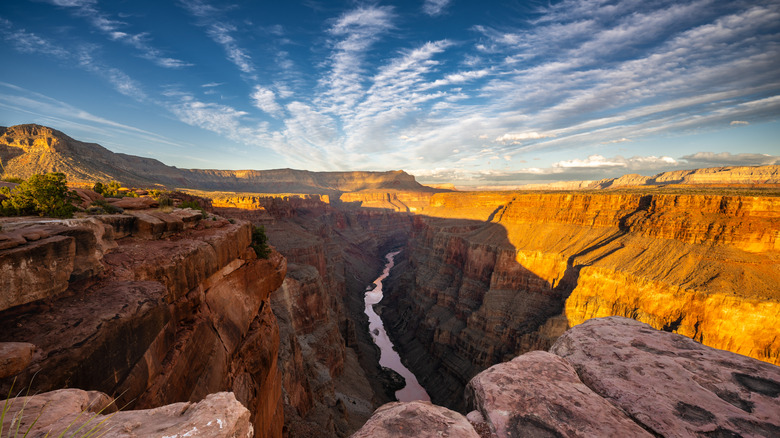
For a site to become a national park, it must be passed through Congress, meaning many national monuments are positioned to become national parks. Somewhat confusingly, though, the former is not a precursor or stepping stone to the latter; there's no strict hierarchy. Rather, national parks, managed by the National Park Service, are designated to protect the land itself and the wide variety of resources therein. Whereas national monuments, under the auspices of one of seven different managing agencies, are focused on a specific natural, cultural, or historic feature. In cases where that protected feature is extremely significant — in terms of scale and cultural resonance — it's common for a national monument to become a national park, as happened with the Grand Canyon in 1919 and South Dakota's Badlands in 1978.
National parks and monuments in practice
The National Park Service is guided by a simple principle: to conserve the land, unimpaired, in its original form. We see this in America's first and (arguably) most iconic national park, Yellowstone, more than 2 million acres of sumptuous, volcanically enlivened wilderness. Though diminutive by comparison, Acadia National Park in Maine offers similarly postcard-worthy scenery, with islands, mountains, peninsulas, and intertidal zones among its swathes of untouched beauty.
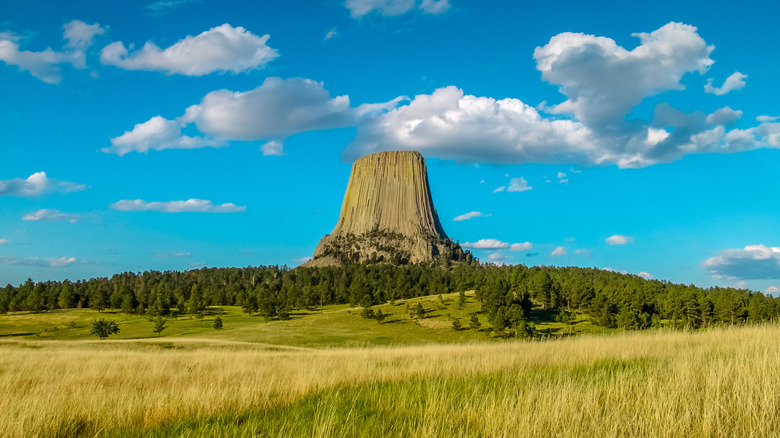
National monuments are often just as awe inspring. One of the most famous is Devils Tower in Wyoming, America's first national monument (designated in 1906), a lone butte rising 1,267 feet above the prairies in a magnificent thrust of columnar jointing. It's a sacred place for Wyoming's indigenous communities and welcomes more than half a million visitors annually. At the opposite end of the chronological scale are a pair of monuments that received designation in January 2025: Chuckwalla National Monument, a jagged geological formation where the Sonoran and Mojave deserts meet; and Sáttítla Highlands National Monument in northern California, a 225,000-acre landscape of tribally significant forests and rich obsidian deposits surrounding the massive Medicine Lake Volcano.
Though all three are national monuments, each is managed by a different agency — Devils Tower (National Park Service), Chuckwalla (Bureau of Land Management), Sáttítla Highlands (U.S. Forest Service) — meaning the kind of protection afforded them is different. The Bureau of Land Management's mission is to "sustain the health, diversity, and productivity of public lands," often involving commercial and recreational activities. Whereas the U.S. Forest Service, managing an area of land equivalent to the size of Texas, aims to sustain the vitality of America's forests and grasslands. Each agency also determines what activities are permitted on the land, from horseback riding, camping, and climbing to hiking, hunting, and fishing.