
Hawaii's Premiere Cultural Center Brims With Six Lovely Island Villages, Authentic Eats, And Family Fun
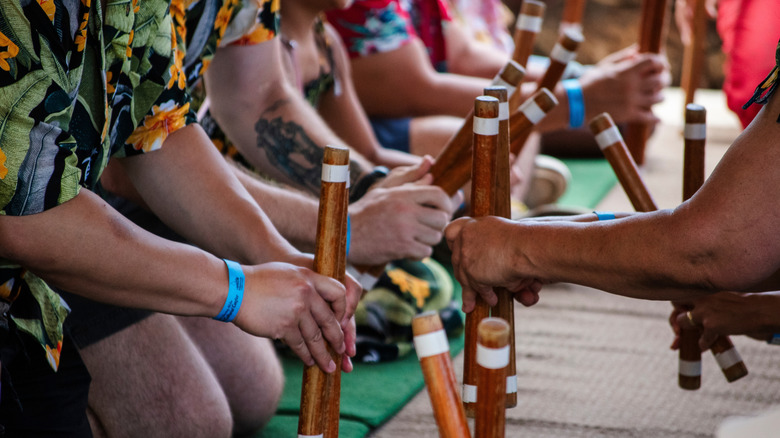
It's easy to get emotional, watching someone play the ipu heke. The instrument is made from two hollowed-out gourds, and players use their fingers and palms to rap on its polished surface. Combined with chants and songs, the ipu heke provides a musical base for the world-famous hula dance. Not the rough approximations at backyard tiki parties, but the traditional movements that have informed Hawaiian celebrations and spirituality since time immemorial. To hear a "mele" is to travel back in time, to the centuries of Hawaiian life that predate Western contact.
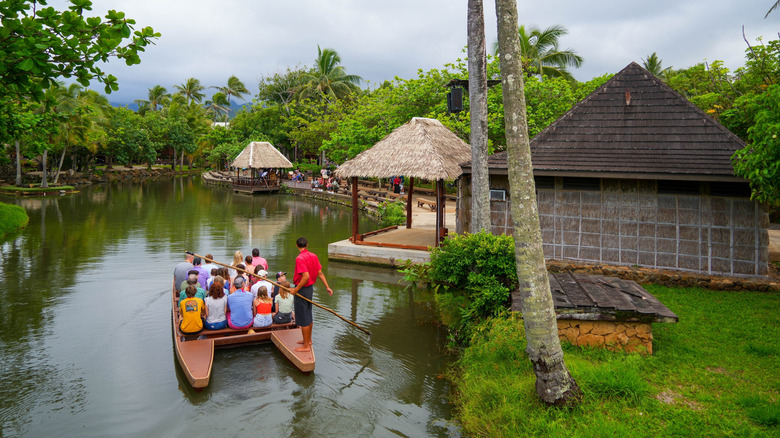
This is the power of the Polynesian Cultural Center, a living museum on the Hawaiian island of O'ahu. The 42-acre property includes a recreated Hawaiian village, where staff dress in traditional attire and demonstrate pre-colonial arts and skills. Among these thatch-roofed houses, Native Hawaiians cast nets, share staple foods, and teach age-old performing arts. About 30 miles north of the high rises and motorways of Honolulu, the Cultural Center illustrates how people once lived, before Captain Cook fatefully dropped anchor here in 1779. Guides share hands-on experiences with guests in a family-friendly atmosphere, and you can taste local specialties, like roasted pig and the pudding-like poi.
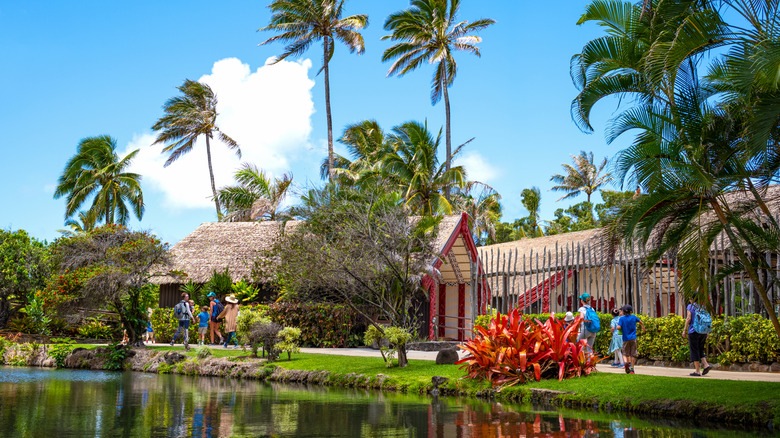
Yet there's much more to the Polynesian Cultural Center than Hawaiian heritage. Five additional villages pay tribute to island peoples across the Pacific diaspora, with structures built in the Fijian, Samoan, Tahitian, Tongan, and Maori styles. Villages are arranged in cozy circles and clusters, with lush tropical settings and ample water features. For visitors whose knowledge of Polynesia begins and ends with Disney's "Moana," the Cultural Center illustrates the distinctive customs and qualities of each community. This is one of the many amazing experiences you can only have in Oahu.
The Polynesian Cultural Center's doorway to the past
The story of the Polynesian Cultural Center is full of surprises, starting with the year of its inception, 1963. The center's founders sought to showcase Polynesian cultures and educate the public about their nuances, and they found an unlikely champion in Brigham Young University; the property is technically owned by the Church of Jesus Christ of Latter-Day Saints, and BYU-Hawaii operates closely with the PCC. The two campuses overlap in the town of Laie, and more than 700 BYU students work here each year. The center is now one of the most popular destinations in O'ahu, having drawn 35 million visitors so far.
The PCC makes cultural education easy for visitors, especially kids. Wood-carved outrigger canoes help children imagine what it was like to migrate across the ocean and catch fish off island coasts. Lively "Haka" demonstrations and temporary tattoos vividly highlight the Maori customs of New Zealand (known here as Aotearoa). Just as the overlooked O'ahu town of Waipahu offers a glimpse of Hawaii's sugarcane history, the PCC reveals the many ways Polynesian peoples shared technologies, origin stories, and worldviews. "[I've] been there twice with family and friends," wrote one visitor on Reddit. "The dinner menu is amazing. Trying Kava was interesting, and the kids got to make a lei bracelet, weave a headband, and had fun playing the 'ipo."
While the villages are technically open from 12 to 9 p.m., you can also stay for a massive luau buffet — complete with live performances — or hop the Laie Tram Tour, which makes its way through the whole town and departs as late as 6:40 p.m. The PCC offers several different packages, which combine dining and entertainment.
Planning your visit to Hawaii's Polynesian Cultural Center
If you sign up for the Aliʻi Lūʻau Buffet, bring a big appetite: You can sample poké bowls, fruit platters, teriyaki brisket, and crispy garlic shrimp from O'ahu's north shore. The main attraction is Imu Pua'a Pork — traditionally roasted in an underground oven — while special kids' plates cater to selective eaters. The Gateway Buffet is a little more casual sit-down experience, with options like whole chicken, seafood, and grilled pineapple. Snack bars are scattered across the property and serve panipopo (Samoan coconut rolls), pineapple pies, and sausage with gravy, among other treats.
When you've had your fill, you can pick which among the Polynesian Cultural Center's six lovely island villages you'd like to explore, with each designed to reflect different aspects of Polynesian culture. Expect ancient games and dances at the Hawaiian village, while Samoa is known for its "happy people" with impressive strength. In Tahiti, have fun moving your hips to the music, while Tonga features drummers and a canoe. Make your own coconut oil in Fiji, then head to the Aotearoa village to learn about Maori tattoos and "the Haka" dance. Together, these villages create a walkable journey across the Pacific, allowing visitors to experience the distinct Polynesian identities in one thoughtfully designed setting.
To get to the Polynesian Cultural Center, you'll fly into Daniel K. Inouye International Airport in Honolulu. If you rent a car, you can arrive at the PCC's parking lot in almost exactly an hour. It's a great excuse to tour Oahu's best destinations for flawless beaches. Laie only has one major hotel, the Courtyard by Marriott Oahu, so many travelers will plan their visit as a day-trip from Honolulu or one of Oahu's many coastal resorts.