
5 Of The Oldest Olympic Stadiums You Can Still Visit Today
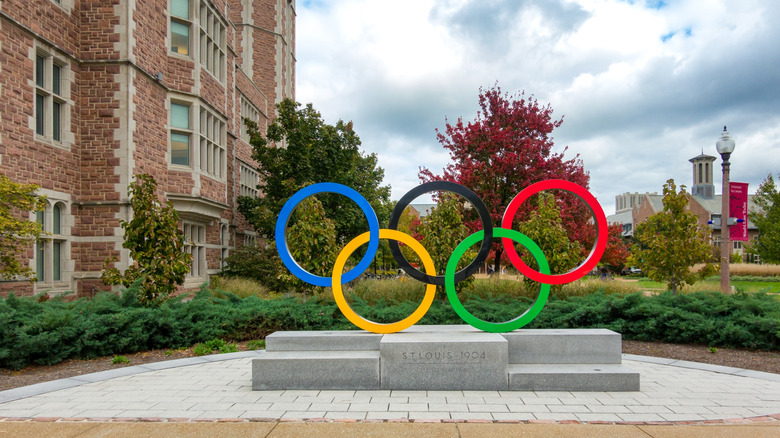
As everyone's attention periodically turns to the Olympic Games, one of the most enduring aspects of arguably the world's biggest sporting event is its venues. No Olympics would be complete without a memorable opening ceremony to kick things off — the first opportunity for a host nation's Olympic stadium to shine. During the 2026 Winter Olympics, that spotlight falls on Milan's San Siro Stadium as part of the Milano Cortina Games.
Beyond opening and closing ceremonies, Olympic stadiums often host some of the Games' most thrilling moments. While Milan and Cortina d'Ampezzo share hosting duties for the 2026 Winter Olympics, it's also worth looking back at what has become of some of the world's oldest Olympic stadiums.
Using information from research by The Olympic Studies Centre, we examined some of the oldest Olympic stadiums around the globe. Whether they continue to serve as sporting venues or have been repurposed for new uses, these historic sites remain closely tied to the legacy of the Olympic Games. From the first modern Olympics in Greece to the inaugural Winter Games in France, each stadium has a story to tell.
Panathenaic Stadium, Athens
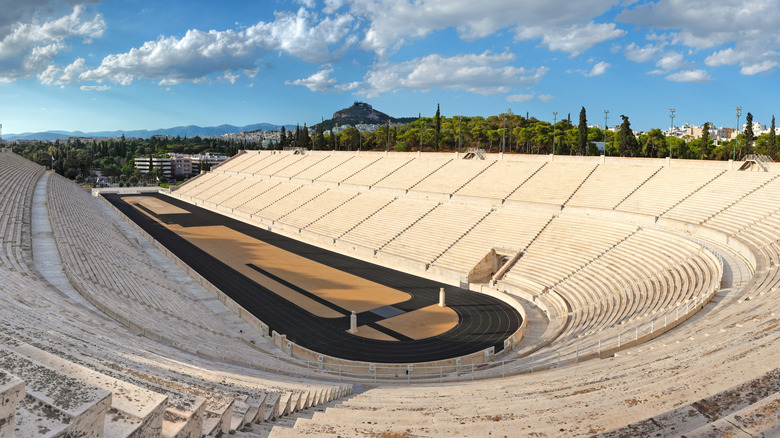
No list of Olympic stadiums would be complete without Greece, the birthplace of the Olympic Games. Athens played host to the first modern Olympics in 1896, drawing on both newly built and existing structures, including the Panathenaic Stadium. Originally constructed around 330 B.C., the horseshoe-shaped stadium was later rebuilt in white marble during Roman times before it was eventually abandoned. It was reconstructed again in the late 19th century specifically to host the Olympic Games, providing a grand stadium for the event.
During the 1896 Olympics, the Panathenaic Stadium hosted events such as athletics, weightlifting, and, curiously, gymnastics. Renovation work was still underway when the Games began, prompting organizers to install wooden bleachers. Afterward, the stadium continued to serve as a sporting facility, hosting the Panhellenic Games and a myriad of international events.
When Athens hosted the Summer Olympics again in 2004, the stadium was used for archery competitions and as the finishing point for both the men's and women's marathons. It continues to play a ceremonial role today as the site of the official handoff of the Olympic flame to the next host city. Today, the venue is open to the public and offers guided audio tours in multiple languages that detail its long history. As of this writing, a general admission ticket costs €12 or roughly $14.
Francis Olympic Field, St. Louis
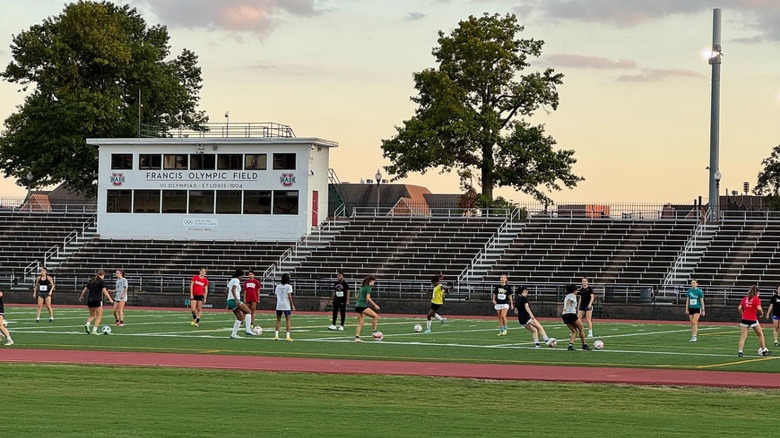
The inaugural Olympics in North America — and the first outside of Europe — took place in St. Louis in 1904. Held alongside the Louisiana Purchase Exposition, the Games were also the first to award gold, silver, and bronze medals to top finishers. Francis Field Stadium, built in 1902, was one of six venues used during the competition.
At the time, the stadium could accommodate up to 20,000 spectators and hosted events including athletics, gymnastics, cycling, and wrestling. After the Olympics, it remained an active sports venue and became home to the Washington University in St. Louis Bears football team. Incredibly, the stadium remained largely untouched for 80 years, until major renovations in 1984 reduced seating capacity and replaced the original cinder track with a modern synthetic surface.
Today, Francis Field holds the distinction of being the oldest Olympic stadium still in continuous use for athletic competition. Athletes from Washington University make active use of the field for football, soccer, and track and field events. Listed on the National Register of Historic Places, the venue was officially renamed Francis Olympic Field by the International Olympic Committee in 2019 to honor its important role in the history of the Games. During football or soccer season, you can grab a ticket to watch the Washington University Bears play, or simply stop by the campus, where locals report that the track is open to the public outside of team use.
Stockholm Olympic Stadium, Stockholm
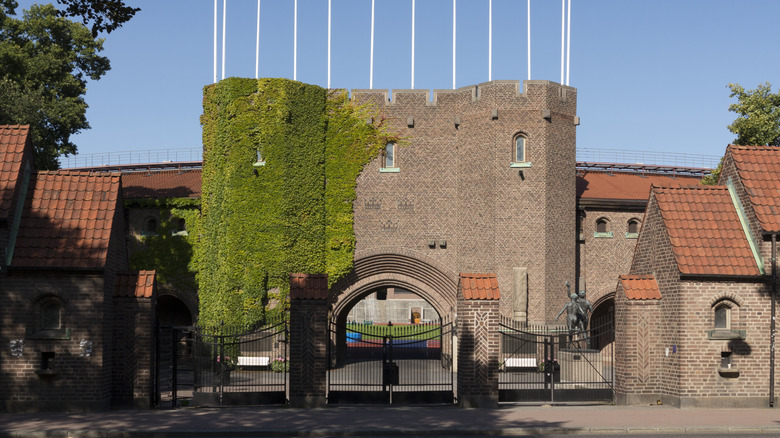
Stockholm hosted the fifth Summer Olympic Games in 1912, and its Olympic Stadium was purpose-built for the occasion. Known locally as Stadion, the Stockholm Olympic Stadium has quite a fascinating history. The original design called for a temporary, wooden structure, but it was ultimately constructed in brick in the Swedish National Romantic style.
During the 1912 Games, the stadium hosted the opening and closing ceremonies, along with equestrian events, gymnastics, and wrestling. Its Olympic role resurfaced in 1956, when Stockholm hosted equestrian events for the Melbourne Olympics due to Australia's strict animal quarantine laws. Outside of the Olympics, the stadium is regularly used to host equestrian competitions and the annual BAUHAUS-Galan track and field meet, part of the Diamond League.
The venue has been so active for so long that it's actually set more world records in athletics than any other stadium, with 83 record-breaking performances between 1912 and 2008. Before newer venues opened in the 2000s, it also served as Stockholm's primary concert venue, hosting acts such as The Rolling Stones, Michael Jackson, and Bruce Springsteen. In the winter months, it transforms into a cross-country skiing area, providing locals with a central place in the city to practice one of Sweden's favorite winter sports. The stadium is open to the public daily, free of charge, though hours and access may vary depending on events.
Stade Olympique de Chamonix, Chamonix
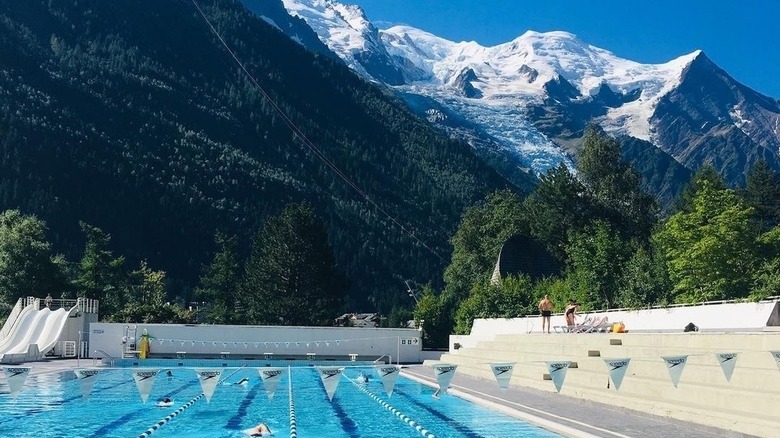
When the first Winter Olympics were held in 1924, there was no better choice than the incredible Alps to host the event. Chamonix, a French resort town at the base of Mont Blanc, hosted the inaugural Games, and to do so, the organizers constructed the Stade Olympique de Chamonix (Chamonix Olympic Stadium). Throughout the Games, the stadium hosted events like figure skating, ice hockey, and speed skating, as well as the opening and closing ceremonies.
Built around an existing speed skating rink, the stadium featured what was then the world's largest artificial ice sheet. After the Games, it continued to host national and international competitions until the French All-Around Figure Skating Championships in 1961, when maintenance of the ice sheet ceased. The facility took on new life in 1970, when it was renamed the Centre Sportif Richard Bozon and transformed into a sports center to serve the community.
Still in use today, it now has both an indoor and outdoor pool, a waterslide, sauna, fitness center, indoor climbing wall, and tennis courts. Of course, winter sports are not forgotten. An ice rink, which hosts the local hockey team and is also open to the public for skating, completes the complex. Open to the public, anyone can enjoy the picturesque setting of its facilities at affordable prices. Adult entry to the pool at the time of writing is around $7.40, and $8 for the ice rink. There are also reduced prices for children, making it a fun way for the whole family to say that they've skated in an Olympic stadium.
Olympiastadion, St. Moritz
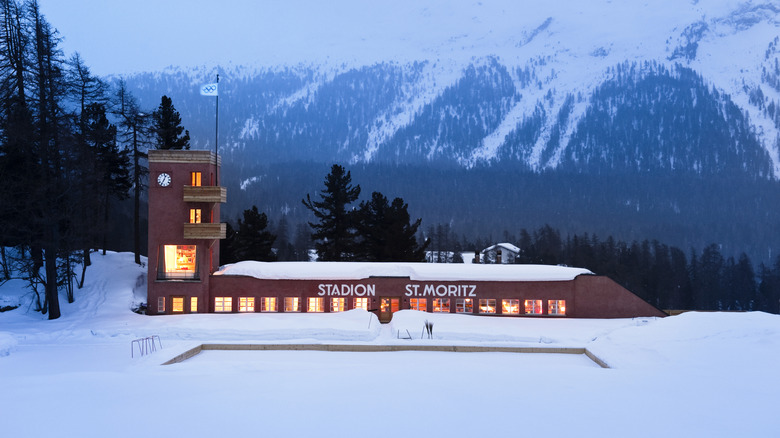
Few people can say they live in an Olympic stadium, but German artist and designer Rolf Sachs is an exception. He purchased the Olympiastadion St. Moritz (St. Moritz Olympic Stadium) in 2006 and transformed it into his residence. It's a fascinating end to the stadium, which was used in the 1928 and 1948 Winter Olympics before falling into disrepair.
During the renovation, the stadium's facade was faithfully restored. As the stadium sits on the grounds of the Kulm Hotel, guests of the iconic St. Moritz hotel can still marvel at its architecture from the exterior anytime they like. Each summer, the former ice rink in front of the house becomes a driving range for the Kulm Golf Club, making a unique setting for getting in some practice swings. During golf season, the course is open daily.
Interestingly, a visit to the site also brings visitors into proximity with two other venues from the 1928 Winter Olympics. The Cresta Run and the Olympia Bob Run St. Moritz-Celerina, both dating back to before the 1928 Games, continue to operate seasonally. The Bob Run, first built in 1903, is the world's oldest bobsleigh track and the only natural track still hosting international competitions. Similarly, the Cresta Run has been in operation since the winter of 1884 and continues to host competitions, as well as allow the public to book rides on the natural ice run.