
'The Brooklyn Of San Juan' Is A Colorful Urban Enclave With Creative Energy And Afro-Caribbean Food
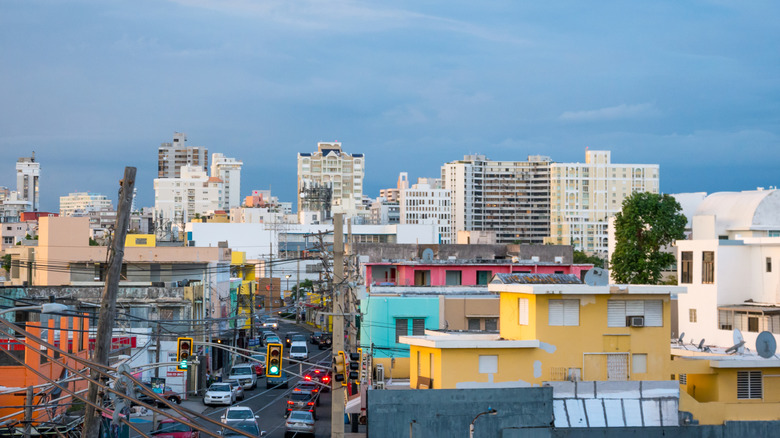
When your plane descends into Puerto Rico's Luis Muñoz Marín International Airport in San Juan, it will likely fly low over the colorful buildings of Santurce, a sprawling district famous for its creative residents and Afro-Caribbean influences. Neglected for decades, Santurce is rapidly reclaiming its title as one of San Juan's most exciting quarters — a transformation that has earned it the nickname "The Brooklyn of Puerto Rico." And if you're looking for Afro-Caribbean cuisine, you're coming to the right place.
Although the area isn't well known outside of the island, Santurce is one of San Juan's largest districts, home to around 70,000 residents. This district comprises 40 smaller neighborhoods, including beachfront Condado and upscale Miramar. The many artists who live here may remind visitors of Brooklyn, but there are other similarities as well: Santurce is big and diverse, located just southeast of Old San Juan, much the way Brooklyn relates to Manhattan. This area is well known for its queer communities, a major reason Puerto Rico is considered one of the 15 most welcoming LGBTQ-friendly islands.
Meanwhile, famous local eateries specialize in fruits, seafood, and sofrito sauces that shape Afro-Caribbean cuisine. Patrons have praised the mofongo — mashed plantain dish — at La Casita Blanca, and La Alcapurria Quemá serves up the eponymous meat-stuffed fritters, which are rooted in African and Indigenous traditions. The restaurant Veyvé is known as "The Mangú Place," where you can find the versatile Dominican porridge (mangú) that also originates in West Africa. Puerto Rican culture is well known for its African influence, but it's especially evident here. And one of the best ways to experience it is through diverse Creole dishes.
The rollercoaster renaissance of Santurce
Puerto Rico is drenched in history, and the old settlement of San Mateo de Cangrejos in Santurce is one of its most striking chapters: This area was first settled by Afro-Puerto Ricans who had been freed from enslavement. The island was a nexus of Caribbean slavery, and San Mateo — which was later absorbed into modern Santurce — provided a sanctuary for workers who had gained freedom. Symbols of this heritage are palpable throughout the district; you can easily catch bomba dance performances in the streets. Santurce grew exponentially in the mid-20th century, with the construction of modern apartment buildings and commercial strips. This growth stalled out in the 1970s, when Puerto Rico's sugar economy slumped, and many residents left for San Juan's suburbs.
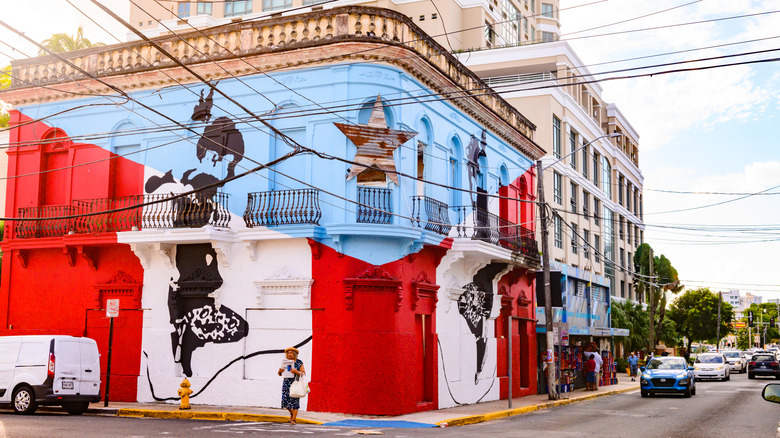
Yet the Santurce revival is in full swing. The most visible signs of better days are the dozens of spectacular murals that decorate local walls. These public art projects cover the gamut of subjects, from stylized human figures to abstract forms to political symbols, displaying Puerto Rican themes and identities for all passersby. For a more in-depth exploration of local arts, visit the Museo de Arte de Puerto Rico, located in the geographic center of Santurce. This museum complex is still relatively new, having opened in 2000, and it represents a major improvement in Santurce's fortunes.
A hub for local dining and nightlife is La Placita. While the name technically translates as "Little Plaza," this place is grand in spirit, with fusion restaurants, popular bars, and numerous dance clubs. This area is dynamic and fun, though first-time tourists should heed the five unwritten rules of visiting San Juan.
How to get to Santurce and where to stay
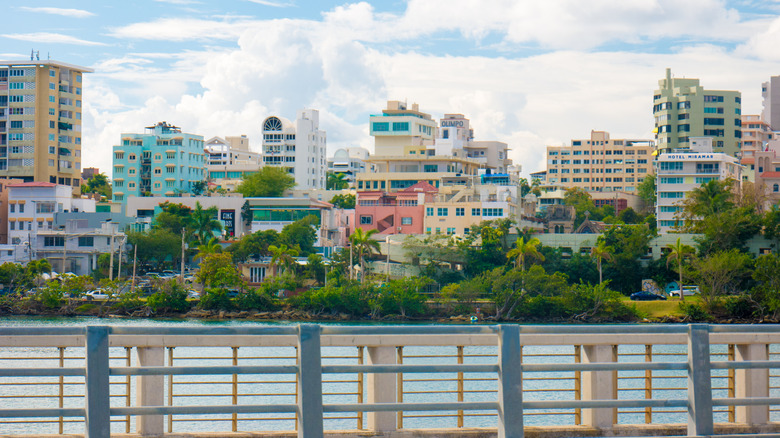
Part of Santurce's appeal is its location: Puerto Rico's main airport is on Isla Verde, right next to Santurce, and you can drive almost anywhere in the district in 10 to 15 minutes. Santurce is right across the water from Viejo San Juan (Old San Juan), Puerto Rico's oldest district, where Caribbean and European charm collide, which makes it an appealing second place to visit, once you've gotten your fill of colorful colonial facades. The western edge of Santurce is less than 3 miles from El Castillo San Felipe del Morro, the city's main fortification and one of the most famous monuments in the entire territory. Although in practice that distance may take as long as 15 minutes by taxi, owing to the old quarter's narrow streets.
As for places to stay, Santurce is positively crowded with hotels, especially near the water. These come in all forms, from luxury seaside resorts to easygoing backpacker hostels. This is a coveted location, with prices to match; the majority of hotels will cost over $100 per night, if not more. Still, for many visitors, its central location and dense mix of cultural attractions make Santurce a practical base for exploring the island.