
Wyoming's Once-Thriving Coal Town Is Now An Abandoned Ghost Town With Explorable Ruins
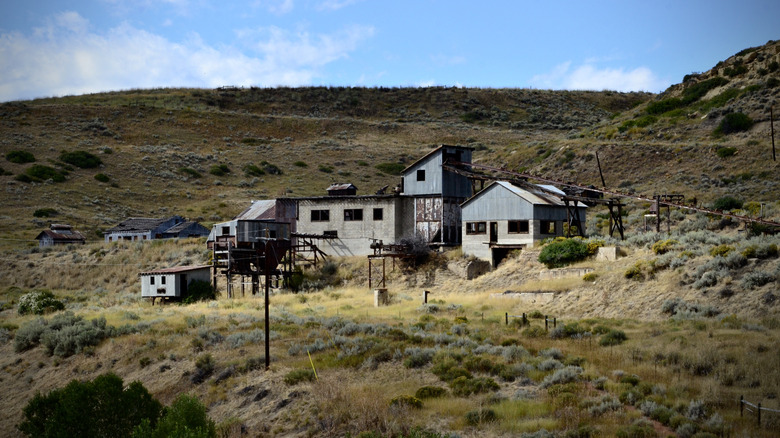
The United States is home to more than 4,500 ghost towns, settlements that were once thriving but are now abandoned due to economic decline, the closure of mines, changes in transportation routes, or population migration. While some larger states, such as Kansas, Texas, and California, contain hundreds of these deserted towns, including the mining town of Eagle Mountain, one of the Golden State's largest abandoned human settlements or Terlingua, an abandoned ghost town with a vibrant art community hidden in the Lone Star State's Chisos mountains, smaller ones still have a lot to offer to tourists drawn to these remote, nostalgic places. One of the most fascinating is Gebo, Wyoming, a former coal-mining town that offers a compelling glimpse into the industrial forces that shaped the American West in the early 20th century.
Despite consistently ranking among the least visited destinations in the country, the "Cowboy State" was once a key passage in westward expansion and, later, in the development of rail-based industrial infrastructure. By the early 1900s, coal-powered trains had indeed become the primary means of crossing the region, fueling the rapid growth of extractive industries.
It was within this context that Gebo was founded in 1907 as a company coal town supporting Owl Creek Coal Company's mining operations in Hot Springs County, not far from its seat, Thermopolis. Named after mining entrepreneur Samuel Wilford Gebo, the settlement grew rapidly as coal became a vital fuel for railroads and local industries across the region. Over the following decades, it came to support over 2,000 residents from more than 15 different countries. At its peak, the town functioned as a fully self-contained community, featuring a school, a hospital, a general store, sports fields, and even a miners' band that played at community events.
Take a tour of the explorable ruins of Gebo
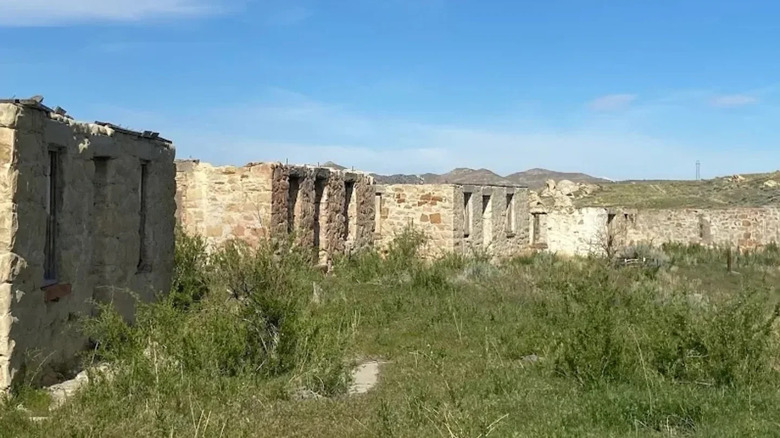
Unlike many restored or curated ghost towns in the American West such as Shaniko, Oregon's former "Wool Capital of The World" reborn as a hotel and shopping destination, Gebo has been left largely untouched after its collapse. When coal production ground to a halt in the late 1930s, families packed up over the following decades. Their homes and shops were slowly surrendering to the passing of time and the region's harsh weather conditions.
By the early 1970s, what remained of the town had decayed so badly that local authorities decided to demolish much of the site. Besides a few scattered foundations and remnants of buildings, the best-preserved part of Gebo is its cemetery, which continues to receive occasional visitors, as testified by the small tributes dotting the graves. The site contains about two hundred of them, many still marked with readable headstones — among them, you will be able to spot the graves of dozens of children who died from illnesses that are now largely eradicated.
Because the town is so remote, immersed in the wild desertic landscapes of central Wyoming, and far from main roads and popular attractions, very few people make the journey each year — meaning it's easy to have the place almost entirely to yourself. There are no guided tours, ticket booths, or information panels. However, you must be extremely careful when visiting the site. Many remnants are fragile and have stood largely exposed to the elements for decades, so it's important to stick to the main paths and watch your step among crumbling foundations.
How to get to the once-thriving Gebo and what you should know before visiting the abandoned ghost town
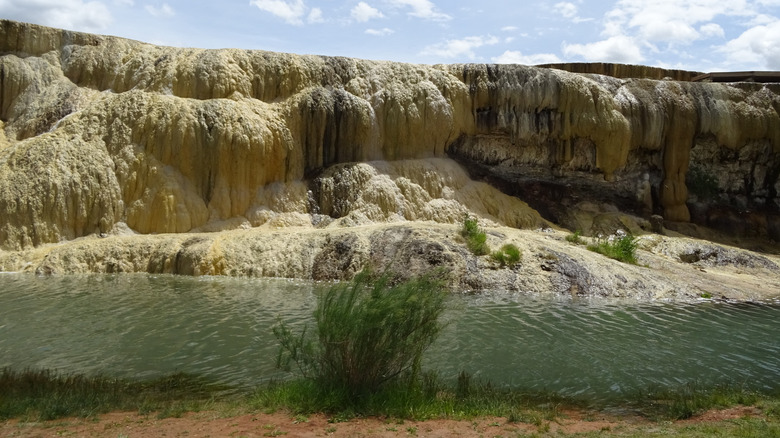
Despite feeling worlds apart from modern civilization, Gebo is relatively easy to reach by car, especially if you decide to make it a stop on a tour of Central Wyoming's natural and historic highlights. For instance, the ghost town is not far from the Thermopolis Hot Springs State Park (around 15 minutes away), featuring some of the world's biggest natural hot pools, including the famous "Big Spring." It is also close to the Wind River Canyon Scenic Byway (about a 25-minute drive), and the family-friendly Wyoming Dinosaur Center (just 20 minutes from Gebo).
From Thermopolis, follow Highway 20 north for about 12 miles, then take a left onto Sand Draw Road. Continue roughly 1.4 miles, then turn onto Gebo Road and drive just under a mile to arrive at the ghost town. The site itself is accessible by most vehicles, though an off-road or four-wheel-drive car is recommended for the final unpaved stretch. That's especially true during the rainy season (May, June, and early July), when the road can become muddy, and during the winter months (December through February), as snow and ice may make the route slippery or impassable.
Once there, you won't find any official parking, but you can pull off along the roadside and walk about 10 minutes to reach the ruins. Given its isolated position amidst the arid hills of the Hot Spring County, the town is a popular destination for both urbex (urban exploration) and nature photography.