
Rick Steves' Team Shares New 2026 Border Procedures For Travel In Europe
Though many might know Rick Steves as the author of well-received travel guidebooks and an extensive travel blog, Steves and his teams work in other mediums, too. For example, his interactive web series with hidden treasures showcases this approach in a fun way. Looking ahead to 2026, Steves and company hosted a virtual Travel Festival with a focus on European travel, broken into segments covering everything from crowd management to European food tasting. One segment titled "State of European Travel 2026" provided an overview of what's changing and what to expect, including three major challenges for European travel in 2026. On the policy side of things, Steves' researcher, Travis Parker, explained a new border control measure coming to Europe called the Entry/Exit System (EES).
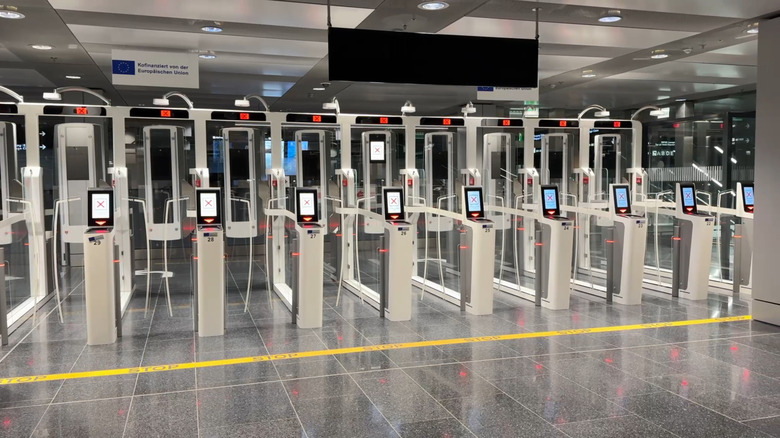
The EES is essentially the result of new technologies being implemented for border management. "Border crossings, customs and immigration... is becoming more high-tech," Parker said in the segment. He explained that "when you land in Europe [in 2026], you're bound to encounter things like self-service scanning machines or kiosks that scan your face or finger instead of actually chatting with a human border guard."
At its core, the purpose of the EES is to track who goes in and out of countries more efficiently. Whenever a non-EU national crosses the border into any Schengen area country, their information will be digitally registered in real-time, without the need for questioning by an officer or physical stamps. Not only is the system designed to streamline border crossing, but it's also supposed to be more effective at detecting identity fraud and overstaying visas.
How does the new European border control system affect travelers?
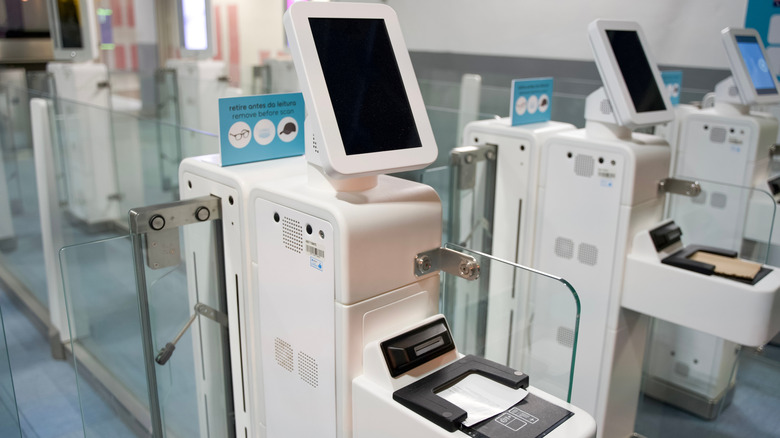
If you're a non-EU national traveling into Europe, your new rite of passage for entry will look a lot more digital, and passport stamps will become a thing of the past. At first entry (with the new system), you'll have to provide some biometric data — you might get your photo taken, fingerprint scanned, or both. Though the system's long-term goal is to make queues shorter, the initial registration process can be a slog. The BBC reported that waits could be up to six hours at busy travel destinations, particularly in the summer. There may be some pauses to the system in the summer if the waits become excessive, though, according to Euronews.
In any case, it might be helpful to save yourself some time by uploading some of their data ahead of time with an app called Travel to Europe (just note, it may not be available for all countries). Once you've done the initial enrollment process, subsequent border crossings will usually be quicker; instead of uploading the biometric data again, it just needs to be verified. There are also many exceptions, even for non-EU nationals, for people who don't need to use the EES, such as if you're traveling for studies or research.
Some countries already started using the EES as early as October 2025, but the system will come into full effect across the Schengen area by April 10, 2026. Eventually, as Parker noted in the video seminar, the EES will expand into an additional European travel authorization system, which will require a fee. But that's not expected to launch until the end of 2026.