
5 Once-Thriving Gold Rush Towns To Visit That Are Now Abandoned
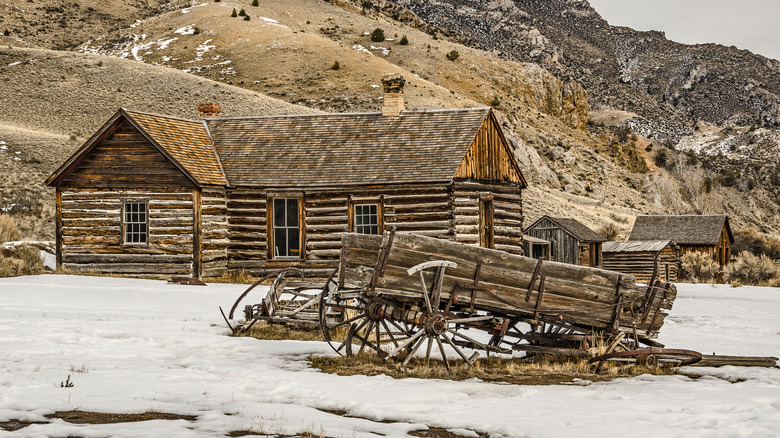
As the United States began expanding westward after the American Revolution, new settlements sprang up across the prairies of the frontier to cash in on the prosperity of industry. The railroad turned backwater fur-trading outposts like Chicago into metropolises, while boomtowns like New Orleans flourished through the riverboat trade. Meanwhile, gold lured swarms of prospectors out to California, across the deserts of Nevada, and up into the Rockies of Colorado, with settlers following in their wake to establish towns around the mines. But not all that glitters can last forever, and many of the mines eventually dried up. Towns were abandoned as prospectors fled to seek new fortunes, leaving behind a ghostly footprint of the era.
Prospectors striking veins of gold have been a common theme throughout America's history. Before the "Forty-Niners" flocked to California during the 1849 Gold Rush, it was the Reed Gold Mine in North Carolina that first sparked the scramble to strike it rich at the turn of the century. In the 1830s, prospectors panning for gold in Georgia established new settlements, while the 1859 Pikes Peak Gold Rush in Colorado led to the formation of mining towns like Fairplay, where tourists today can enjoy quirky festivals. From Colorado, the gold fever spread to the Black Hills of South Dakota and into Montana, where tourists can explore the dusty saloons of Garnet, Montana's "best preserved ghost town."
While some Gold Rush towns, like Boulder in Colorado and Fairbanks in Alaska, emerged from the scramble unscathed, others suffered as ore from the mines dwindled. Scattered across the country, these deserted Gold Rush towns were once thriving settlements that are now merely an echo of a bygone age. Though their boom days are long gone, these abandoned towns offer visitors a rare chance to walk through living history.
Bodie, California
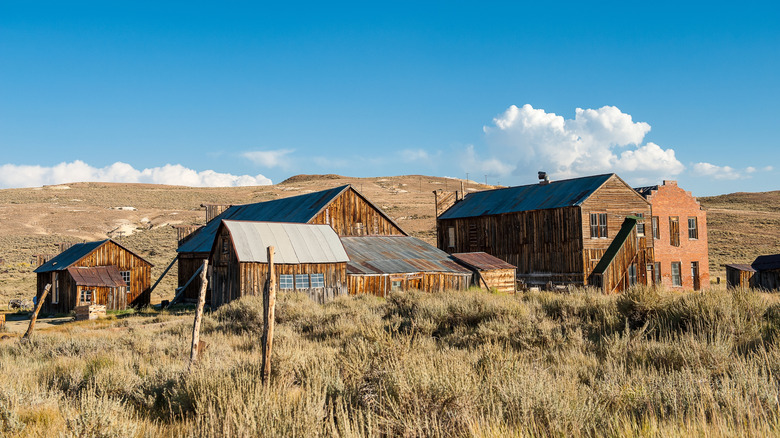
A decade after the California Gold Rush of 1849, new deposits found amidst the foothills of the Sierra Nevada turned the humble settlement called Bodie into a boomtown. Though prospectors originally discovered a few nuggets in the area back in 1859, miners were occupied with more prosperous veins to take notice. It wasn't until the late 1870s that settlers began a mass exodus to Bodie after the Standard Company purchased the town mine, surging the population to at least 10,000 by 1880 and generating at least $38 million. Cradled in a shallow valley at over 8,000 feet above sea level, visitors can wander the lonely streets between Bodie's ghostly cabins, which are now part of the Bodie State Historic Park.
Dozens of saloons entertained the miners after a hard day's work, while general stores, schoolhouses, motels, a barbershop, and two churches served Bodie's booming population. The town even boasted a Red Light District, a seedy maze of brothels, opium dens, and gambling halls. Bodie's bustling gold mines slowly went bankrupt throughout the 1880s, and a tragic fire in 1892 ravaged the town. The settlers who had once swarmed to Bodie eventually began to pack their bags.
Though only a handful of Bodie's structures still survive, what remains is a fascinating peek back in time. Log cabins stand dilapidated, while heavy mining equipment lies toppled on the ground. Many of the buildings still have some furnishings, which only adds to the eerie atmosphere. It's a "proper ghost town in the middle of nowhere", a previous visitor shared on Google reviews. Tourists can even book ghost walk tours to explore Bodie's eerie streets after dark. Though the town is indeed abandoned, make sure to still treat the site with respect.
Bannack, Montana
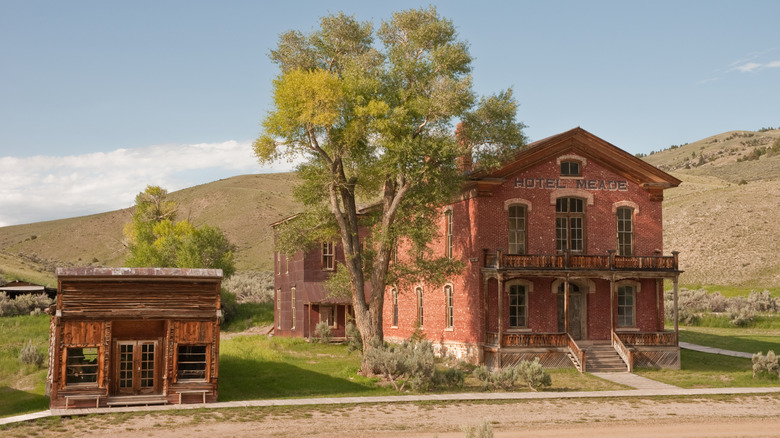
Fringed by gentle slopes on the edge of pleasant meadows, a cluster of rustic wooden cottages stands on either side of a wide gravel boulevard amidst the scenic wilderness of the Big Sky Country. Now part of Bannack State Park, these abandoned structures were once a bustling hive at the site of Montana's first major gold strike in 1862. Though the saloons now echo with emptiness, from the 1860s until the start of World War II, Bannack flourished as a boomtown for gold and quartz, and in 1864 was even the capital of the newly created Montana Territory.
The rush for gold in Montana began in 1862, when prospectors camping along the state's windswept prairies discovered the elusive mineral in the creeks where Lewis and Clark had once set foot. News spread like wildfire, and less than a year later, Bannack had literally boomed into a settlement many called the "New Eldorado of the North." Saloons and billiard halls sprang up alongside hotels, breweries, and grocery markets, with almost 10,000 residents all fighting for living space. The red-brick Hotel Meade still stands proudly between false-front façades and log cabins. "Amazing that this many [150-year-old] buildings are still intact in one place", a previous visitor shared in a Google review.
Tourists visiting in July can take part in Bannack Days, a yearly festival that brings the Gold Rush era back to life. Costumed interpreters gather in the street to recreate shootouts, while horse-drawn buggies whisk passengers on rides through town. Aspiring prospectors can try their hand at panning for gold, and old-timey music performances encourage visitors to dance like they're back in the Wild West. Visitors in October can even join after-dark walking ghost tours to witness spooky costumed reenactments. Even though Bannack is abandoned, the Gold Rush atmosphere still echoes loudly.
Rhyolite, Nevada
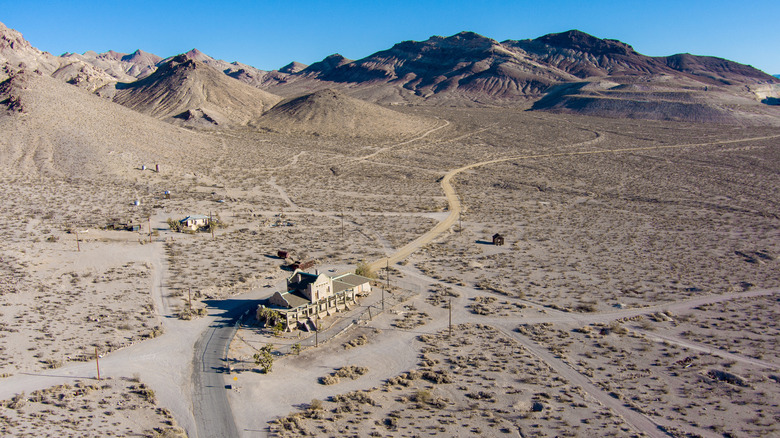
In the arid plains of eastern California is Death Valley National Park, comprised of surreal Mars-like landscapes. More than a century ago, this vast stretch of sun-baked sand also hid a glittering mineral. Right across the border in Nevada, between the barren slopes just a stone's throw from Death Valley, dust blows through the crumbling buildings of Rhyolite. The clink of miners striking gold has long faded, the mines are empty, and the saloons are quiet. But at the dawn of the 20th century, Rhyolite was a busy mining district home to at least 5,000 inhabitants.
For a town in the parched desert, Rhyolite was cosmopolitan. Children attended school, ladies gathered for fundraisers and parties, men played baseball and tennis, and an opera house entertained evening crowds. Locals frolicked at the town's public swimming pool, while an ice cream parlor offered refreshment from the desert heat. Rhyolite even had electricity and paved sidewalks, which set it apart from the hardy mining settlements of the previous century. In 1907, the population of Rhyolite swelled to an estimated 12,000 people — but just four years earlier, Rhyolite didn't even exist.
When a pair of prospectors made a discovery of gold in the hills along Nevada's border with California in 1904, it prompted a scramble of miners rushing to stake their claims. However, Rhyolite's prosperity was short-lived — investors lost the cash to support the mines after the New York Stock Exchange crisis in 1907, and just three years later, the population had dwindled to less than 1,000 residents. Today, visitors can take a scenic drive along the highway cutting through town, or stroll the dusty paths between the skeletons of Rhyolite's once-bustling buildings. "I love old mining towns, and this one did not disappoint," a previous visitor shared in a Google review.
South Pass City, Wyoming
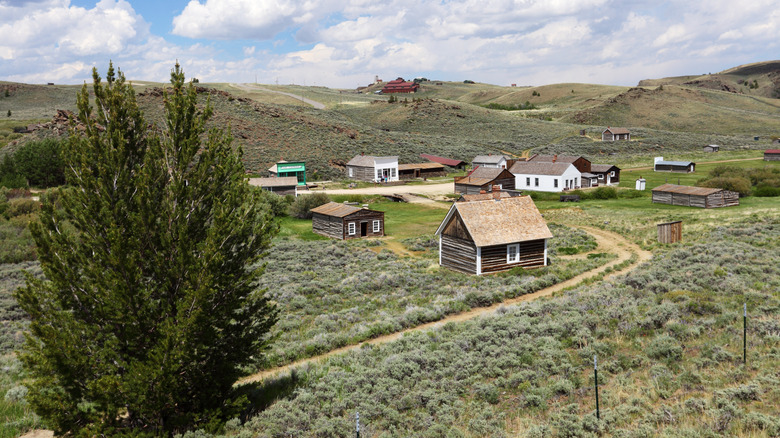
While pioneers were struggling to move their wagons across the Oregon Trail, miners in southern Wyoming were hoping to strike it rich. The summer of 1867 saw their dreams become reality — they found gold in the hills of the South Pass, and investors and prospectors converged upon the land hoping for a piece of the pie. Like most gold boomtowns, however, success was brief. Today, visitors can poke around the abandoned timber cottages to explore what remains of South Pass City, where the Carissa Gold Mine once produced almost $7 million. The town is now a State Historic Site.
False-front architecture flanks the main boulevard through town, evoking an atmosphere of the Wild West. Still intact are the Carissa Saloon, boasting a bright green façade and a handful of cabins once belonging to South Pass residents. The town's gold mine ran dry almost as quickly as it was discovered, and by 1870 the population dwindled — but South Pass City had also made its mark in history in other ways. Locals passed a bill allowing women the right to vote, and a woman was appointed as the town's judge, placing Wyoming among the pioneers of women's suffrage.
Unlike other deserted boomtowns, visitors to South Pass City can still take guided tours of the Carissa Gold Mine, where booming machinery demonstrates how the mineral was extracted from the ground. Like Bannack in Montana, crowds are also drawn to South Pass City in July to join in the annual festivities of the Gold Rush Days. The saloons are once again merry with music as tourists are entertained with craft demonstrations, tasty snacks, and evening concerts, topped off with fireworks displays. "Best historical event we've ever been to," wrote a previous visitor in a Google review.
Nelson, Nevada
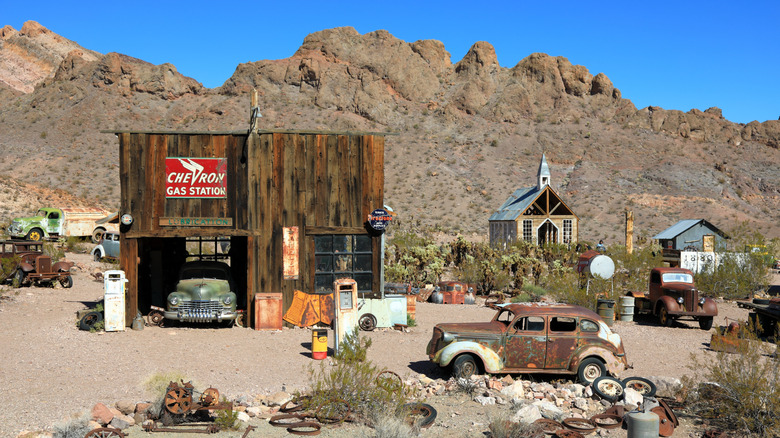
Down in the southernmost, pointed tip of Nevada, near the gentle bends of the Colorado River are a smattering of wooden cabins forgotten by time. Rusted mining equipment lies abandoned beside broken automobiles and the skeletal remains of a timber-framed chapel, making Nelson a classic Gold Rush ghost town. Nelson had a turbulent history, experiencing periods of lawlessness, prosperity, and decline across the turn of the century until it was finally deserted after the mines closed at the end of World War II. Ruthless vigilantes and Civil War deserters were some of Nelson's first inhabitants, epitomizing the gunslinging history of the Wild West.
Gold diggers struck ore in the 1850s, and the remote Nevada desert was suddenly overrun with miners. Dreams of wealth had already lured Spanish explorers to that same part of the Colorado River as long ago as the 1770s, and they christened the hilly landscape Eldorado Canyon after finding silver deposits there. But it was gold that turned Nelson into a boomtown — and a hotbed for violence. Gunfights broke out regularly, and squabbles between the miners and Native Americans led to the murder of Charles Nelson; the town was renamed in his honor.
Stroll through the deserted mining shacks today, and it's not hard to imagine the flurry of activity during the Gold Rush days. One visitor shared on Google that the town feels like a "scene straight out of an old western movie." Though the land is now privately owned, Nelson is still open to the public. Visitors can even take tours of the Techatticup Mine, which once contributed to a yield of at least $10 million during Nelson's heyday. Just under an hour by car south of Las Vegas, take a trip to Nelson to relive the days of the Wild West.