
The Region Called The 'Brazilian Serengeti' Is An Affordable Alternative To An African Safari
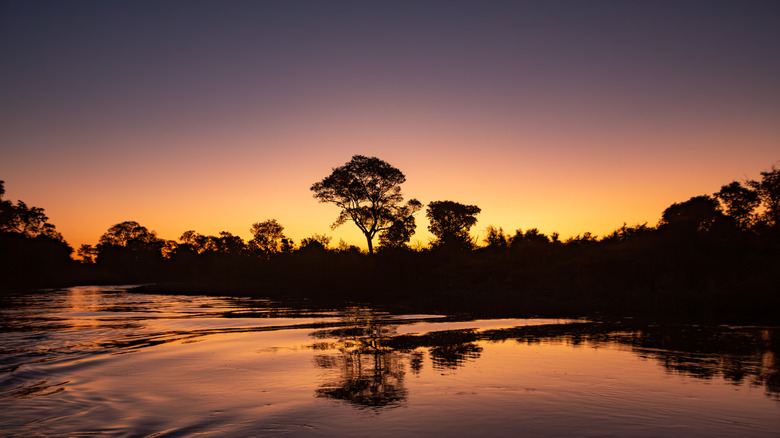
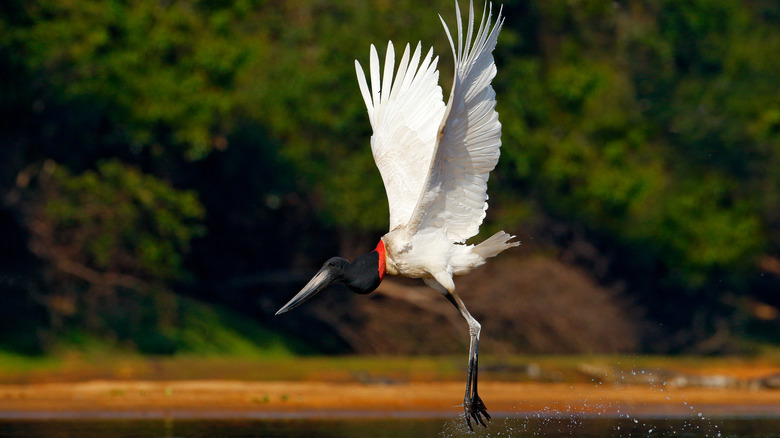
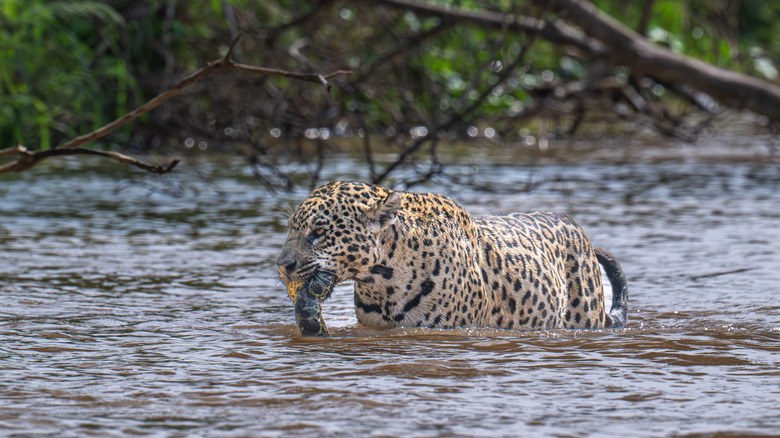
The word "safari," from a Swahili term meaning "journey or expedition," has long been associated with Africa. But safaris are becoming popular on other continents, and among the best is Brazil's Pantanal, a sprawling tropical wetland, full of marshes and lakes and prowling jaguars. It exhibits great biodiversity, with giant anteaters, tapirs, capybara, and magnificent large-billed birds like toucans and jabiru storks also calling it home. Time magazine featured the 75,000-square-mile Pantanal in its World's Greatest Places list of 2023, crediting the diversity of its flora and fauna and its conservation of rare, indigenous species.
Though straddling the borders with Bolivia and Paraguay, most of the Pantanal is in the Mato Grosso and Mato Grosso do Sul states of western Brazil, several hundred miles south of the Amazon. It's the largest tropical wetland in the world, covering an area comparable to Montana and attracting up to a million tourists annually. Visitors board safari boats and weave through the waterways looking out for jaguars hunting on the riverbanks or hyacinth macaws, the world's largest parrot, sitting in the manduvi treetops and preening their blue and yellow plumage. The Pantanal also has the largest concentration of crocodiles in the world, with as many as 10 million caimans.
The abundance of species has earned the Pantanal the epithet, "Brazil's Serengeti," offering further incentive to schedule a trip to 2026's "Travel Destination of the Year." While the original Serengeti in Tanzania is rightly considered one of the Wonders of the World, some travelers have been priced out. Even mid-range excursions can cost upwards of $450 per day, while luxury packages could easily be triple that amount. And if you're traveling with family, you could be forking out eye-watering sums of money, making the Pantanal a comparatively cheap and alluring alternative to the traditional African safari.
How to do a cheap safari in the Pantanal
It's worth noting that many Pantanal safari companies offer their own luxury packages, too, with multiday trips costing several thousands of dollars. Furthermore, because jaguars roam in the Northern Pantanal, safaris are pricier here than in the south, with excursions typically starting at $400 to $500 per person, per night at the time of writing. Self-driving in the Northern Pantanal is a cost-cutting option, but it requires extensive planning and individual tour bookings. Furthermore, given the remoteness of the location, having some basic survival skills and facility with the Portuguese language come in handy here, too. But thriftier travelers aren't necessarily excluded from organized safari tours.
With Fazenda San Francisco Agro-Ecoturismo, a couple could stay for 5 days, 4 nights in a farm lodge in the Southern Pantanal for 4,864 BRL — around $1,000 total. This would include piranha fishing, hiking to a viewpoint overlooking a lagoon, horseback riding, and nighttime viewing activities. The price also covers all meals, guide costs, and tour insurance.
Planeta Exo's 3-night, 4-day safari (also located in the southern region) costs around $1,150 per person and includes full room and board, transfer between Campo Grande and the Pantanal, and guided tours of the waterways and grasslands. Before and after the safari, budget-conscious travelers also benefit from Brazil being one of the best vacation destinations where the U.S. dollar goes furthest.
When to go to the Pantanal
The Pantanal experiences a dramatic seasonal cycle. July to October is peak dry season, when floodwaters recede and wildlife is inexorably drawn to the remaining water sources. It's the busiest season for tourism, but also the best time to see jaguars. It's followed by the early wet season, lasting through December, when rainfall starts, temperatures cool, and elusive anteaters come out. Flood season (January to April) sees water envelop the wetlands and the humidity spike. You can still travel the region by boat, spotting vibrant aquatic blooms and diverse waterfowl. The early dry season, from April to June, is known as the "secret season" because it offers ideal conditions for fishing and kayaking.
Shorter excursions on the Pantanal tend to last for 3 or 4 days, meaning if you want to make the most of things, you'll have to focus on one section, like "Jaguarland" in the north, where the lack of human activity means it's one of the best places in South America for wildlife viewing. If you extend your stay to a week, this would give you time to explore the Southern Pantanal as well, where you can stay in eco lodges, see jabiru storks and hyacinth macaws in their natural habitat, and explore the open grasslands on horseback under the guidance of Pantaneiro cowboys.
If you're heading to the Northern Pantanal, you'll probably fly to Marechal Rondon International Airport in Cuiabá, about 90 minutes by car from Poconé, from where many travelers begin their safari. For the southern region, Campo Grande International Airport will likely be your arrival point. Aquiduana (2 hours away) and Miranda (2.5 hours away) serve as bases for wildlife activities in the Pantanal. Both airports field flights from major cities in Brazil.