
Flight Attendant Reveals How Airlines Choose What Snacks Are Served In The Air
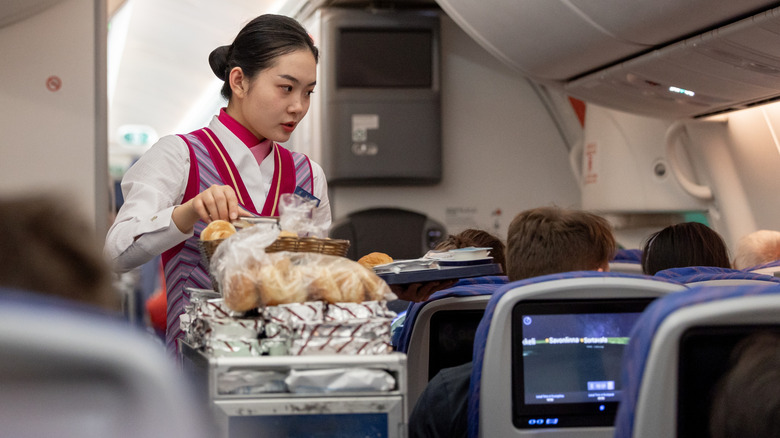
Have you ever been mid-flight and thought about where your airplane food comes from? Do you wonder why certain airlines have the best in-flight dining experiences in the world, while others serve items that seem barely passable for human consumption? And what actually goes into the process of choosing menu items, like snacks? A flight attendant revealed the answers to these questions and others in a December 2025 interview.
Tiffanie Johnson, a self-described "aeronautical beverage engineer, cloud chaser, [and] globetrotter," is a flight attendant with United Airlines. She told Travel + Leisure that when the airline is rolling out a prospective new snack, the flight crew often get first dibs on it. Their opinion may be taken into consideration by the food and beverage team, but there's another opinion that matters more: the customer's.
The selection process, of course, differs from airline to airline. But generally, customer feedback is essential in helping most airlines decide on which in-flight offerings to introduce, continue, or remove. Johnson does add that she has "yet to see people collectively dislike a snack." However, if you're personally unhappy with a particular item, don't be shy about making these feelings known. If you receive a customer evaluation form after a flight, be honest about your experience. Share which snacks you enjoyed and which ones you'd like to see (or not see) in the future. Additionally, you can refuse an item or leave it unopened — this will reduce waste, if you don't plan on eating it, and it will show the airline which snacks are unpopular. Johnson notes, "I've seen more passengers get upset that we no longer serve a certain snack option they loved." This can unfortunately occur if the airline just doesn't have the proper feedback to inform its decision to remove a product.
Other contributing factors that determine what snacks airlines serve in the air
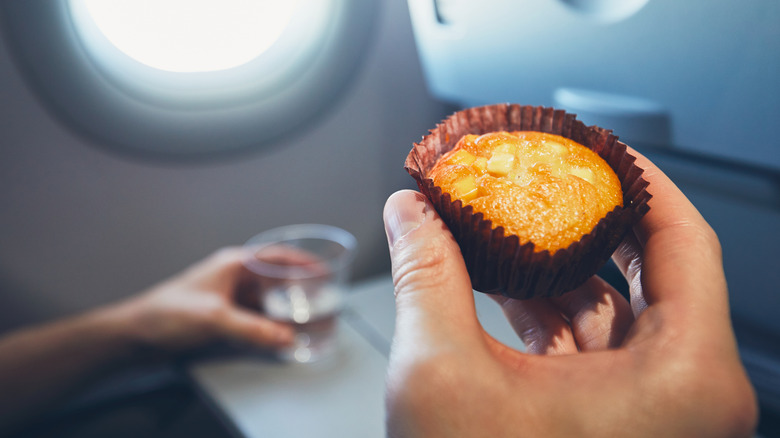
Logistics, dietary concerns, and economics, among other factors, certainly play a role in final snack selection, too. The airline requires ingredients (or full items) that can be easily sourced and stored, along with vendors who are able to make and deliver them in the required quantities on a consistent basis. Balance is also essential. Typically, airlines want to ensure that they're offering both salty and sweet options, along with addressing additional dietary needs (having vegetarian and non-vegetarian options, for example, or discontinuing foods that could present dangerous allergy issues, like peanuts). And food tastes different on planes. Our ability to perceive sweetness and saltiness can be diminished by 30% due to lower air pressure and humidity in the cabin. So, food and beverage teams may choose items with stronger flavors that still taste good on a flight.
Finally, while snacks are typically one of the things you get for free, even on an economy flight, it costs the carrier money — lots of it. One airline alone could be delivering thousands of in-flight meals and snacks to its passengers daily. Therefore, finances may be a significant part of the reason behind the difference in quality across airlines. It could come down to the specific catering company used and the carrier's budget. But you might even notice the variance across flights with the same carrier. Long-haul flights typically offer higher-quality food and more options than short-haul ones. Additionally, if you're flying in a premium class, you can expect better snacks and meals, as more money is usually invested here.
All in all, many factors are responsible for determining what snacks you're served in the air. But remember, as Johnson has explained, your feedback as a customer is still integral. Don't miss out on opportunities to share it.