
4 Beautiful American Cities That Have Never Seen Snow, According To Data
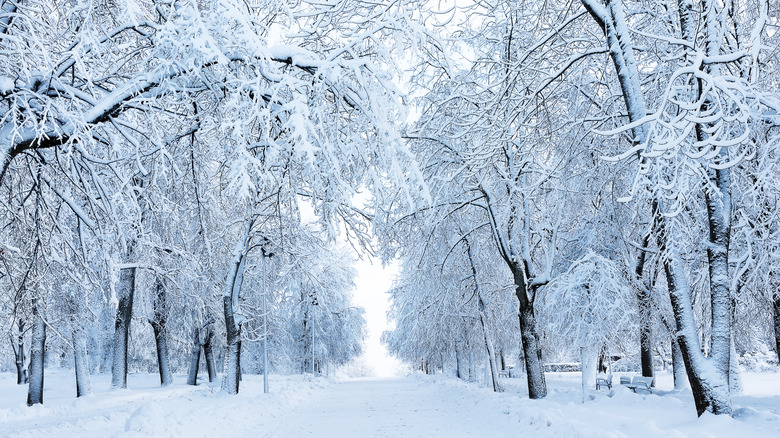
If you're seeking snow in the U.S., you probably already know about the five states that get the most snow. But 2026 threw that list on its head, when Winter Storm Fern stretched roughly 2,000 miles and dumped over 6 inches of snow in unlikely places, including Dallas-Fort Worth, Tulsa, and Little Rock, covering a broad swath of the continental U.S., from New Mexico all the way to Maine. Yet some places escaped getting a wintry glaze, as they always seem to do. In fact, for those militantly against wintry precipitation, there are a handful of beautiful American cities that have never recorded measurable snowfall.
After Fern, discovering that some parts of the U.S. have historically avoided snowfall altogether may come as a surprise. Doesn't everyone have to deal with the occasional Arctic blast — even Florida? Historical data from the National Weather Service (NWS) shows that even Death Valley received half an inch of snow in 1922. Yet geography — the U.S. spans 3,618,783 square miles — and climate have conspired to create true no-snow zones. Think tropical climates, low latitudes, and warm oceans. Even when an Arctic blast passes through, these cities at worst get chilly rain. Those who enjoy the change in seasons can use this as a list of places to avoid.
No Snow Zone Layer in Key West, Florida

Florida doesn't have a reputation for wintry mixes. But one would be surprised to learn that flakes do fall, and occasionally accumulate, in the Sunshine State. Just ask Tallahassee residents who were there in 1958, when a record 2.8 inches fell, according to historical data from the NWS (perhaps a few more remember a dusting of snow coating their cars in 2018).
Key West, about 430 miles south of Tallahassee, managed to avoid snowfall that year — and every other year on record. Key West's weather station has, at best, recorded trace amounts of snowfall since it began recording in 1948, according to the NWS' NOWData database. (Those who'd argue "trace" is the same as some snowfall should take their case up with folks living near Washington's North Cascades National Park, one of the world's snowiest places).
That's not to say Key West is dry. Far from it. The island chain averages almost 40 inches of precipitation per year, with a sizeable chunk of the year getting downright swampy. But Florida's low latitude and low elevation make temperatures cold enough for snow exceptionally rare, per Farmer's Almanac.
Aloha, the snowless life in Honolulu

You may have a lot of fun snapping shots in Hawaii's picture-perfect towns, but there's one thing your lens won't capture: snow. Honolulu, the Aloha State's capital, ranks as the state's happiest city. That's probably partly because its 343,000 residents have never had to shovel snow. While Key West's "trace" amounts may bother some, there's no debating Honolulu's snowlessness. Data from the NWS shows that no measurable snow has ever been recorded in Honolulu since modern record-keeping began. In fact, Honolulu's weather is so predictable and uniform throughout the year – it's almost boring.
"It amazes me just how stable Hawaii's climate really is," one local wrote on Reddit. "That means in all the time we've been recording temperatures here, it's never varied more than 25 degrees from 75, compared to 20 to the max, to 60 to the minimum in New Hampshire."
Yuma's forecast: Sunny with zero chance of snow

The Grand Canyon state presents a study in flipped expectations. Home to the vast Sonoran Desert and imposing bare rocks of Sedona, it's also where you'll find Flagstaff, one of the snowiest mountain towns in America, averaging 108 inches of snow yearly. Even Phoenix had nearly half an inch of snowfall in 1990. Head southwest about 185 miles, and it's a different story. Yuma, known as the "Sunniest Place on Earth," has not seen any snowfall since the NWS began keeping records there in 1892. It's also notoriously dry and hot, something locals have learned to accept.
"I learned about humidity in elementary school, but didn't experience it until I went to college in Tucson," a local wrote on Reddit. "I didn't know what 'air wetness' was called until I started dating a girl from Louisiana at 23 and was visiting her, but I couldn't figure out why I couldn't stop constantly sweating. Someone else had to explain to me what humidity meant at 23, and it was a foreign concept at the time."
Snow way, José, in San Juan

Puerto Rico may be known for its dazzling, colorful towns, but there's one color you won't see drenching the place: white. Boricuas and Boriqueños unfortunately know all about hurricanes, but they don't know a thing about snow. The tropical paradise hasn't seen a single snowflake in its existence, according to NWS data. It sees plenty of rain, though, with an average of almost 57 inches of precipitation every year. The temperature also rarely veers away from its mid-70s to high-80s range. The lack of wintry precipitation doesn't mean you're guaranteed good weather. You still need to pick your travel dates carefully.
"It'll always be hot and humid," one local wrote on Reddit. "Hurricane season ends after October and monsoon season picks up in April/May. Even then, daily short rain/thunderstorms [sic] can be normal on a daily basis."
Methodology
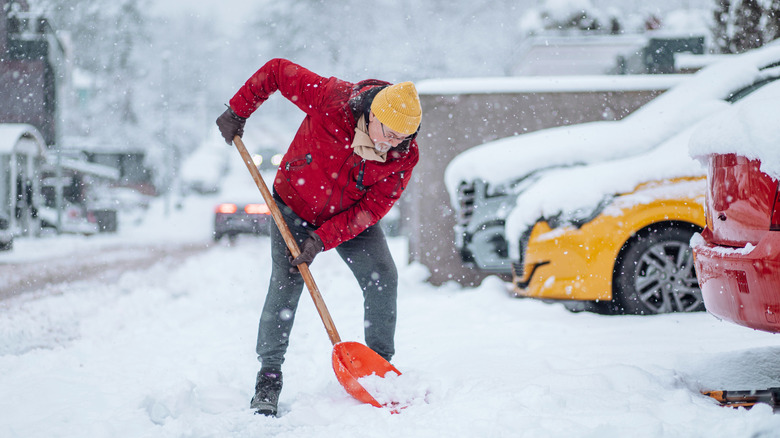
Lest you think summoning the data and creating this list was an exercise in sticking to southern locales — geography only proved to be part of the game, and a relatively inaccurate barometer. Brownsville's weather station, the southernmost in the continental U.S., even recorded snowfall in 2004, when 1.5 inches fell. These four cities were chosen both for their lack of wintry precipitation and for their worthiness as travel destinations. Data from the National Weather Service's NOWdata database helped confirm that a destination was snowless. Locations were also chosen to represent different regions, including the continental U.S. and the Caribbean.
Bear in mind, life without snow for the entire planet would spell trouble. The white accumulations help both cool the planet and insulate it at the same time, both in counterintuitive ways, according to the National Snow and Ice Data Center. It cools the planet by reflecting sunlight rather than letting it be absorbed by the ground. It also insulates by keeping the ground beneath it from freezing, setting off a domino effect of positive outcomes, including lower flood risks.