
The 5 Most Affordable Cities To Visit In Italy, According To Data And Local Insight
When you think of Italy, your mind probably conjures up images of iconic sights like Rome's Colosseum, the Bridge of Sighs in Venice, or Michelangelo's masterpiece in Florence. But while Italy's highlights are majestic, the cities they're found in have grown increasingly expensive to visit. Destinations like Milan, Venice, Rome, and Florence, unfortunately, come with a high price tag. Luckily, there are many other destinations in Italy that won't break the bank.
Visitors can discover ancient sites, delectable food, and quintessentially Italian culture in more affordable cities. I've been visiting Italy for over 20 years and first lived in Venice while working at the Peggy Guggenheim Collection in 2006. Because of this, I've had the opportunity to visit many of Italy's corners. Between my extensive travels, consulting the price comparison site Numbeo, checking in with local bloggers, and utilizing Tripadvisor's handy budget-friendly lists, I've selected the cities discussed below. These are five affordable destinations that will keep any Italy-lover content for days while still being friendly to your bank account.
Palermo
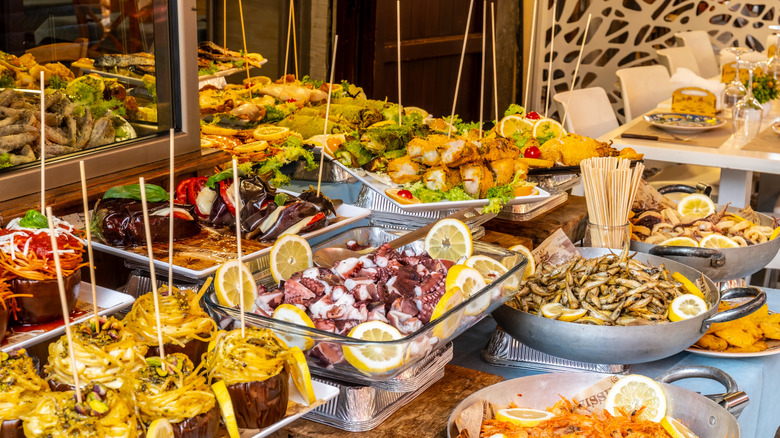
The capital city of Sicily, Palermo, is awash with stunning architecture, incredible food markets full of cheap eats, and gorgeous nearby beaches. It's a city for intrepid travelers like myself, who love taking our time to scratch beyond the surface of a place, visiting corners of Italy that don't attract coach tours. Palermo is significantly cheaper than Rome, as the price comparison site Numbeo illustrates. Meals in restaurants are around 20% cheaper in Palermo, while accommodation rentals can save you 50% of your budget. There are also plenty of free things to do, whether it involves visiting the beach or wandering through historical sites, another indicator that this city is perfect for your budget-friendly Italy trip.
There's no better place to start exploring the city than at Palermo's cathedral, an emblem of the island's ancient history. A UNESCO World Heritage Site, the Arabesque-Norman wonder was built on the site of a former mosque in the 12th century and is a symbol of how multicultural Sicily has been.
But the real reason I'm hooked on Palermo is the city's addictive street food. The markets and small delis like Antonello Street Food sell mouthwatering arancini (breadcrumb-coated rice balls stuffed with various fillings) for just a few euros. There's nothing like the bliss of strolling through the markets and munching on delicious snacks before heading home for "riposo," the Sicilian afternoon nap, to sleep off your food coma.
Naples
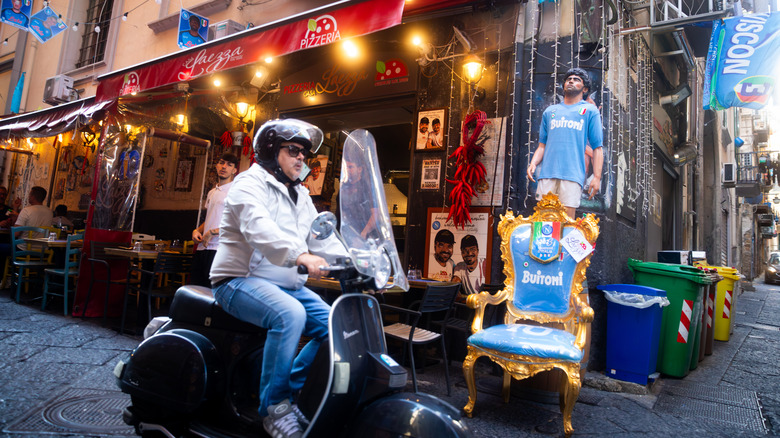
There's an infectious energy in Naples. It's loud, proud, and sometimes a little edgy, but also very charming. Packed full of gripping culture, from its mouthwatering street food scene (do not miss out on eating a "pizza fritta" or, indeed, anything "fritta," which means deep fried) to the stellar museums like the sumptuous Gallerie d'Italia (free to enter on the first Sunday of the month), there are virtually endless things to do in this city. One unique adventure is a day delving into the eerie sites of Naples' underground, where wildly impressive history hides. You can traverse subterranean tunnels, cisterns, domes, and viaducts that date back to Ancient Greece.
Most importantly, Naples is a great value Italian city with a host of free things to do. Visit the sumptuous cathedral Duomo di Napoli, the baroque Chiesa del Gesù Nuovo, and the medieval Basilica di San Lorenzo Maggiore, all absolutely gratis. Foodies rejoice! Sites like Where Food Takes Us and Devour Tours enthusiastically point out that "A Napoli, si mangia bene" (in Naples, you eat well) for less. The aforementioned street food is very cheap, and even grabbing a bite in a restaurant is 20-25% cheaper than in Milan, for example, according to Numbeo.
Naples is a budget-friendly base to explore Pompeii from, and it's very inexpensive to visit Pompeii itself if you avoid guided tours, at just over $5 for a train ride and around $24 to enter, as of this writing. The unmistakable turquoise TrenItalia carriages leave Napoli Central every half hour and take 40 minutes to reach Pompeii, which is, in my 20 years of Italy exploration experience, one of the most captivating historical sights in the country.
Bologna
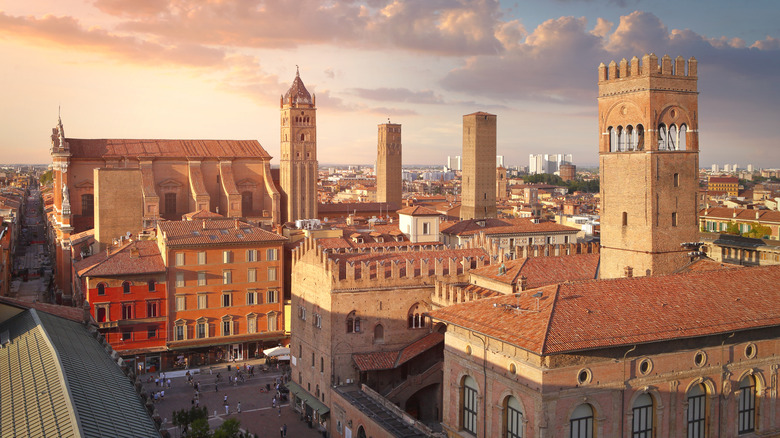
Considered the birthplace of higher education in the Western world, with a university that dates back to 1088, Bologna is another wildly underrated Italian city that's affordable, fun, and, perhaps best of all, is home to some of the world's best pasta. Known by the nickname La Rossa (meaning "The Red") for its red terracotta buildings and left-leaning politics over the years, Bologna is the beating heart and capital of Northern Italy's Emilia-Romagna region. It's a vibrant city with a huge population of students and reams of museums, palaces, live music events, film festivals, and, of course, restaurants, all of which are more than enough to keep culture vulture tourists fully enthralled.
Even better for your travel budget, many of these cultural offerings cost nothing to visit. Over 10 of Bologna's museums are free to enter, and the outdoor summer program, Under the Stars Cinema, hosts 50 nights of movie screenings in the gorgeous main square, Piazza Maggiore, every year, completely for free. And when you get hungry, there are plenty of cheap eateries that cater to the huge student population.
Bologna also has an easy city center to walk or cycle around, which cuts out daily transport costs. Despite accommodation prices being comparable to Rome, for example, your daily excursions will cost significantly less. And, in our experience, thanks to the barely noticeable numbers of fellow tourists (and certainly no big crowds), Bologna is one of the most easy-going cities in Italy.
Genoa
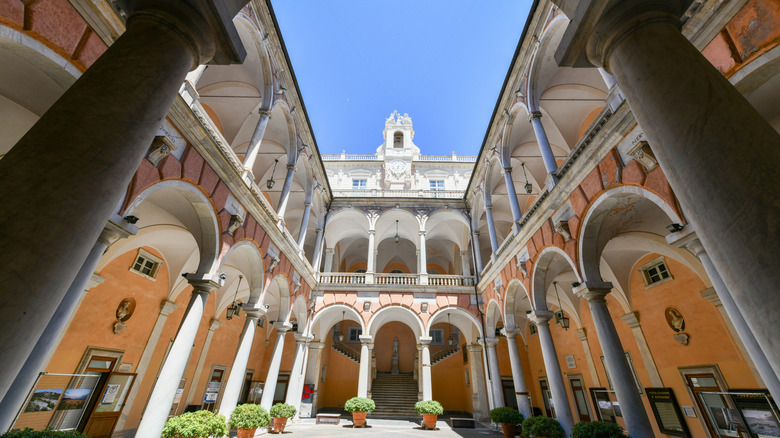
Genoa (or Genova) is one for the romantics. A city frozen in time, the stunning marble palazzos in this coastal metropolis are truly wondrous. But as the city's fortunes slumped, so did architectural development. Thus, the city center hasn't changed much since the 1800s and has that time travel feel we so love about Italian cities. Luckily, you can experience it without the crowds you might find at more visited destinations.
Located in Italy's northwest, about a two-hour drive south of Milan, Genoa is a solid rival to the fashion capital and a lot less expensive. Price comparison site Numbeo shows the cost of living in Genoa to be 28% less than Milan, with meals in typical trattoria restaurants being 25% cheaper. A spacious double room at a four-star hotel like the plush, well-located NH Collection Genova Marina costs around $200 per night (as of this writing), while a similarly well-located four-star Avani Palazzo Moscova Milan Hotel in the city center sees rooms start from around $315 per night.
Genoa is a vibrant student city and university hub, and the food scene is impeccable. The birthplace of pesto, the dining here is top-notch and extremely affordable. Local favorite Il Genovese, which has a classy mid-20th century vibe and usually a queue outside the door, sells plates of trofie al pesto genovese for around $15, while a portion of mussels is in the $17 range — and is the priciest thing on the menu.
Lecce
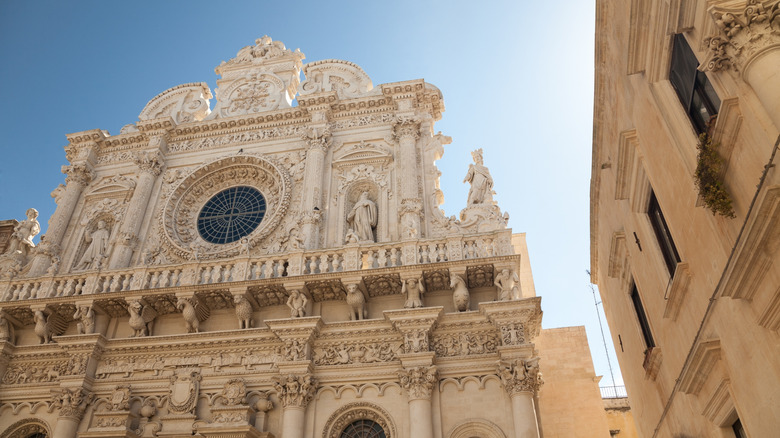
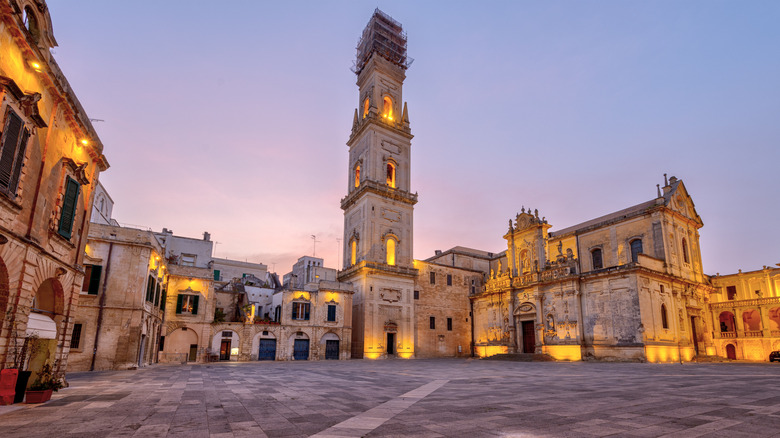
If you haven't heard of Lecce, you'd be forgiven, as this under-the-radar Baroque gem in the south of Italy is very much off the tourist trail. What sets it apart is its mind-boggling architecture and affordable prices. Lecce's limestone streets are packed with fascinating historical sites, like the Roman amphitheater (which is free and easy to view from the exterior), but also with surprising Spanish architecture.
Lecce is often referred to as "the Florence of the south," which is a bit of a stretch, given that the Puglian hub isn't packed with a vast wealth of artistic masterpieces. It is, however, home to incredible architecture and heavenly food, so it certainly makes an excellent substitute if you're into avoiding crowds and keeping a careful budget.
The financial difference between the Tuscan capital and Lecce is made obvious by the price comparison site Numbeo. Menu prices in Lecce are around 27% lower than in Florence, and groceries are 26% less expensive. It's a great city to try the unusual local pasta dishes, too; Lecce deli Ciceri e Tria sells typical Salentino (regional) dishes like the eponymous ciceri e tria, plates of flat pasta and chickpeas, a delicious and filling meal for less than $12.
Perhaps most enticingly, accommodations in four-star stays like The Hilton and Mercure come in at around $110-120 per night for a double room, while staying a night at The Mercure in Florence over the same springtime date is closer to $300 per night. That's quite a difference in price.
Methodology
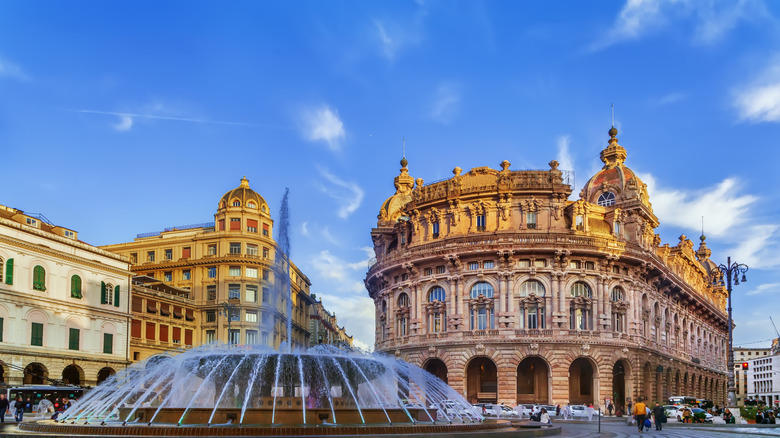
These five affordable Italian cities were selected based on overall cost as well as having fantastic things to see, do, and eat. I referred to blogs, vlogs, price comparison sites like Numbeo, hotel websites, and Tripadvisor to inform these evidence-based decisions. Additionally, after 20 years of traveling (and sometimes living and working) in Italy, I've listed some of my personal favorite recommendations for free things to visit and low-cost eats.