
North Carolina's Wildlife Wonderland Is A Pristine Wetland Refuge With Trails, Paddling, And Peaceful Vibes
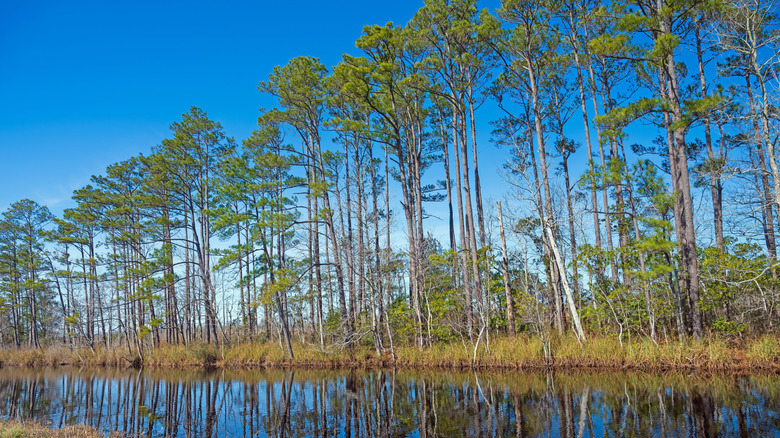
North Carolina's Outer Banks present something of an enigma. The barrier islands' 100+ miles of oceanic shoreline theoretically offer the perfect opportunity for a travel industry-approved haven of resorts, hotels, at least one city, and everything that follows. And yet, it has managed to remain a decidedly homespun collection of coastal towns like Kitty Hawk, an artsy beach town with waterfront shopping and dining. It's also a hub for admirable conservation initiatives, creating wildlife wonderlands like the Alligator River National Wildlife Refuge, its pristine wetlands lined with trails and paddling routes that create the sort of peaceful vibes you wouldn't expect in a coastal destination.
At the beating heart of the Alligator River complex lies a wildlife refuge that spans the eastern half of the Albemarle Peninsula. Authorities established the refuge in 1984 to protect the bonsai-like miniature vegetation of its pocosin wetlands, with swamp forests interspersed and encircled by a ring of marsh. Among the vegetation, river otters, deer, and black bears roam its 160,000 acres. Conservationists and wildlife lovers also have an opportunity to fight on behalf of the wild red wolf, a canid that's nearly extinct yet has a cadre of champions fighting for its survival.
The refuge is a perfect detour on a visit to the towns that line the Outer Banks. It's an ideal day trip for, say, a stay at Manteo, with its cozy B&Bs and tasty local cuisine, which is 30 minutes away. Visitors should bring their best outdoor gear, including binoculars for wildlife spotting and plenty of bug spray. Fledgling wildlife photographers should also bring a camera with a lightning-fast shutter and plenty of zoom to spare. Your attempts at close-up shots of black bears can wait.
Chill out among the bears, or hit the trails
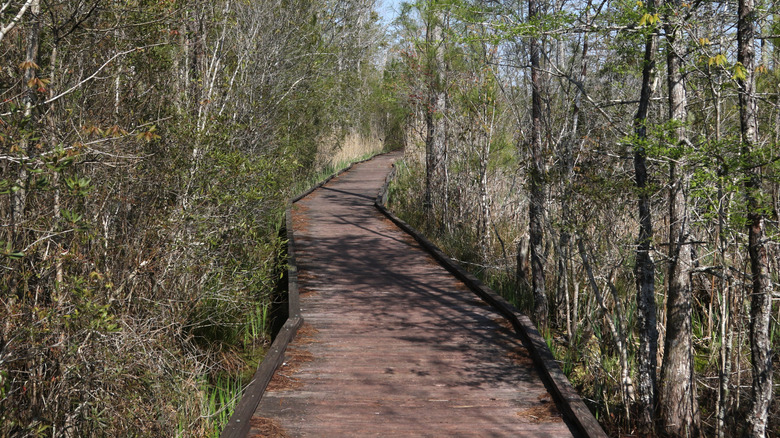
The Alligator River National Wildlife Refuge's peaceful vibe lends itself to a relaxed outing, and your chances of spotting wildlife are increased by mindfulness and patience. Black bear or deer roam the premises more in the morning and evening, while migratory birds crowd the area during colder months. You can take in the refuge's wild inhabitants while walking its two half-mile trails, or hiking along any area open to the public. If you're looking for an education excursion, take the Creef Cut Wildlife Trail, which is lined with interpretive signs that offer context and information about the wildlife and plants you'll encounter. Those looking for a better encounter with wildlife can hit the Sandy Ridge Wildlife Trail, which traverses forests, marshes, and moss beds, covering a broad spectrum of the refuge's vegetation and wildlife, which you may encounter up close. Try to stay on the designated trails, as a wriggling swarm of rattlers, copperheads, and other snakes call the refuge home.
Just don't get too close. Try to maintain a 100 barrier between yourself and any animals, even when they try to approach you. No matter how cute and cuddly the black bear looks, you don't want to interfere with it. Birders already know the feeling of being so close yet so far, and can check a sizeable chunk off their Life List as they spot any of the refuge's more than 250 species. Those not satisfied with merely traversing the refuge on foot can hit one of its four paddling trails, covering 13 miles in total. Rentals are available for anyone who didn't bring their own boat. Feel free to tack on a stop at Coquina Beach, an underrated yet serene and relaxing getaway that's 45 minutes away.