
South America's Largest City Is A Hub For Art, Food, And Vibrant Neighborhoods (And It's Not Buenos Aires)
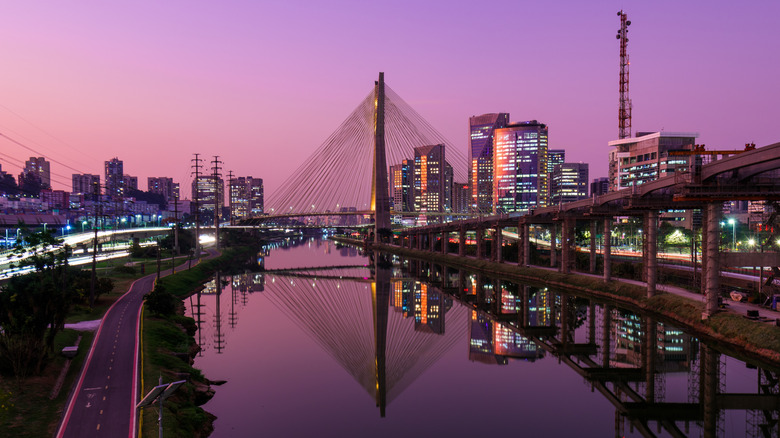
Brazil is South America's largest country with expansive beaches, rainforests, and city life — so it comes as no surprise that its most populous metropolis, São Paulo, is also the continent's largest city. Many travelers assume Buenos Aires (known as the Europe of South America) is the largest, but it comes in behind São Paulo. Unlike the State of São Paulo, this vibrant city doesn't have beach access, but it makes up for it with a world-class art scene, thriving culinary landscape, and lively neighborhoods that represent its true and unfiltered local culture.
One of the reasons why São Paulo has such an eclectic character is that it's a melting pot. Like the United States, its multicultural facet comes from the influx of immigrants from Africa, Italy, Japan, Lebanon, and more. Thanks to their contributions, residents can enjoy a diverse range of cuisines — you can indulge in all-you-can-eat sushi, get yourself a meaty esfiha on-the-go, and treat yourself to Michelin-starred Italian dishes. São Paulo boasts an acclaimed art community, which combines elite galleries and museums with colorful street art. From admiring Van Gogh's paintings to watching a graffiti artist with a spray can in their hand, you can get your art fix both in indoor spaces and out in the open.
You can immerse yourself in these experiences in São Paulo's various neighborhoods, each exposing you to a different side of the city. One area blooms with greenery, another is covered with kaleidoscopic murals, while another transports you to Japan with its food stalls, specialty shops, and oriental streetscape. São Paulo is served by two main airports — international visitors will fly into Guarulhos International Airport, which is considered the main travel hub. Congonhas Airport, on the other hand, offers mostly domestic flights.
São Paulo is Brazil's premier cultural and culinary capital
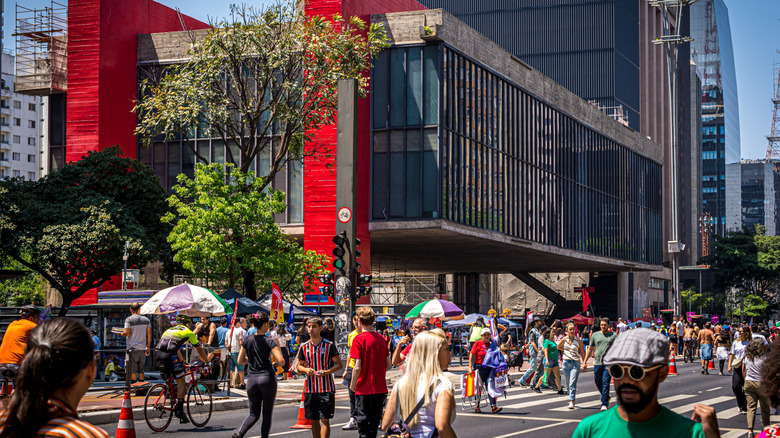
With a strong sense of creativity, São Paulo's art scene branches out into niche subcultures that cater to different interests. Tourists shouldn't miss the São Paulo Museum of Art, which is the eye-catching building with red borders on Avenida Paulista. Its permanent collection houses around 10,000 pieces, including masterpieces by Monet, Van Gogh, Renoir, as well as local artists like Maria Auxiliadora, Albino Braz, and Rafael Borjes de Oliveira. From paintings and sculptures to textiles and mixed media, the displays cover a broad spectrum of eras.
More visual wonders await at the Pinacoteca de São Paulo, home to more than 10,000 items spanning paintings, designs, sculptures, and more. Comprising three buildings, this museum is dedicated to Brazilian artworks from the 1800s through contemporary times. Swing by on a Saturday, and you'll tour it for free. Other museums and galleries include Instituto Tomie Ohtake, Museu Lasar Segall, Galeria Jacques Ardies, and Museum of Image and Sound.
São Paulo's cultural fusion is most evident on the plate — in fact, it stands alone in Latin America for having three establishments with two-Michelin stars. Since Brazil has the world's largest Lebanese diaspora population, you'll come across plenty of Lebanese eateries, such as the top-rated Nojoud Restaurante Arabe, serving classic Levantine meals in a cozy space. A previous visitor wrote: "One of the best gastronomic experiences I've ever had!" Italian cuisine lovers can sample the menu at Famiglia Mancini Trattoria, rated 4.7 on Google. Featuring several pasta varieties, it was named the city's best Italian restaurant over a dozen times by Datafolha. There's no shortage of Japanese food either — you can enjoy Michelin-starred dishes at Jun Sakamote and Kan Suke.
São Paulo's diverse neighborhoods offer distinct urban experiences
It's easy to go on about food and art in São Paulo, but the neighborhoods hosting these spots are destinations in their own right. Each provides a glimpse into the city's multifaceted nature. Meander the streets of Vila Madalena, and you'll end up in the most vivid corner of the city: Batman Alley. This area is a haven for the bohemian and free-spirited, with constantly changing murals, cafes, bars, and tattoo parlors.
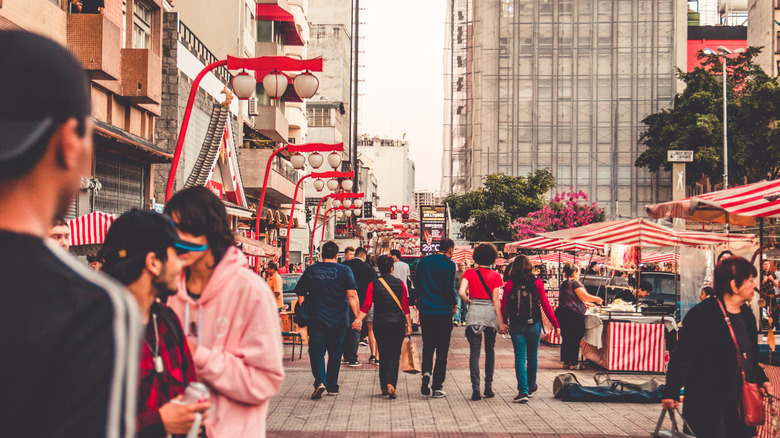
Meanwhile, Liberdade has a whole other vibe — São Paulo's very own Japantown brings a slice of the Far East to Latin America. Every weekend, Liberdade's plaza turns into a bustling pop-up marketplace full of Asian street food and souvenir stalls. Visit on a weekday to have ramen and sushi for lunch. While you're there, stop by the Historical Museum of Japanese Immigration in Brazil to learn how this community came to be. For upscale vibes, make your way to the Jardim Paulista neighborhood. The São Paulo Museum of Art is located in this area, right across the tropical oasis, Trianon Park. Jardim Paulista is also the perfect place to go shopping, with boutiques, vintage stores, and malls worth checking out.
Downtown São Paulo, or Centro, has a few bucket-list-worthy spots, such as the Municipal Market. Outside, the historic building has a neoclassical and Gothic facade, while its interior is a gastronomic feast — this is where Anthony Bourdain tried the legendary mortadella sandwich from Bar do Mané. Farol Santander, Catedral da Sé, and Museu das Favelas are other landmarks within the downtown district. With so much to see and do, it's easy to understand why São Paulo is one of the best travel destinations for Gen Z.