
5 Flop Songs From The '70s That Belong On Every Road Trip Playlist

We may receive a commission on purchases made from links.
A road trip is an American rite of passage. Whether it's your first weekend camping trip or a cross-country road trip via the iconic Route 66, the perfect road trip takes patience and planning. Of course, you'll need to do your due diligence and pack safety essentials, like this rugged and dependable Costco lithium battery starter, but you'll also need to think about things that will make the trip more enjoyable. What gives more pleasure and road-tripping camaraderie than music?
If you're an aficionado for anything 1970s, or you're just fascinated by that turbulent decade's culture and music, you may already be downloading some of the era's most popular songs, of which there are hundreds to choose from. One of the best aspects of music during the '70s was the variety of musical genres that were popular at any given time, with transistor radios and car stereos blaring hard rock, disco, folk, soul, and punk at any given moment.
There are certainly some quintessential '70s road trip songs that may already be on your playlist, such as Bruce Springsteen's "Born to Run" or Golden Earring's "Radar Love." However, there are other great songs that you likely already know and love that were actually music chart flops when they were released. Since many original flops are now classics in their respective genres, we researched the charts and found a few select songs from the '70s that were not as initially popular as you may have thought — but are perfect playlist selections for a '70s music-themed road trip.
Keep Yourself Alive by Queen
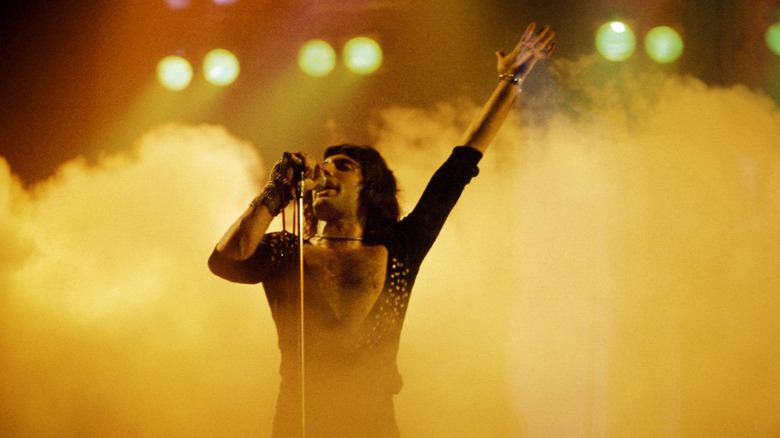
It's hard to imagine any song by Queen being a flop. In 1971, before they even had a bassist, Freddie Mercury, Brian May, and Roger Taylor were banging it out at local clubs and recording demos when studio time was free. In a 1983 interview with BBC Radio 1 (via Ultimate Classic Rock), Brian May confessed he was hesitant about his songwriting abilities when the idea for "Keep Yourself Alive" came to him. After bassist John Deacon joined the band, the group recorded the song at De Lane Lea Studios.
The original demo recording features an acoustic intro by May, who believes this is still the best recording of the song. A year after the initial recording, the band was asked to give it another go for their debut album, this time at Trident Studios, but May was not happy with that version. In fact, he thought it was terrible. "And I was very unhappy about it and I thought the De Lane Lea one better," said May. They went back to the studio for another recording that was more like the original, and it was remixed numerous times until they had the version that ended up being a single, though May was still not completely satisfied.
This final version, recorded in 1972, appeared on Queen's 1973 self-titled debut album. While the album experienced some moderate success, the single failed to chart in either the U.K. or U.S. Ironically, the album returned to the top ten in 2024, over 50 years after its initial release. With its propulsive opening guitar riff and electrifying percussion, "Keep Yourself Alive" makes for the perfect high-energy road trip song to keep your spirits high and eyes open.
American Girl by Tom Petty & the Heartbreakers
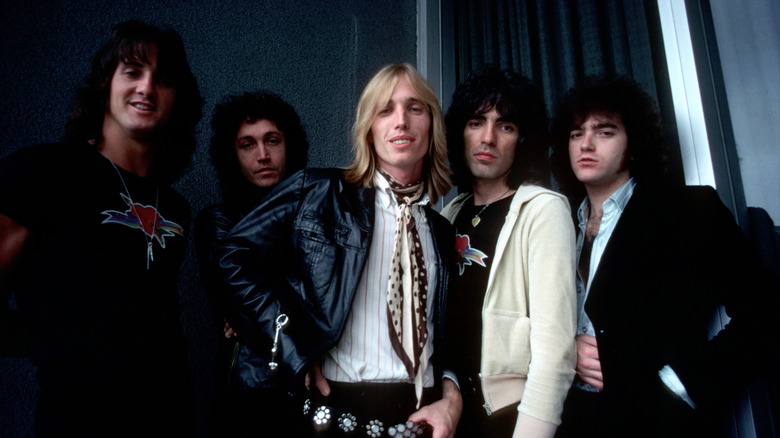
The song may be American rock royalty, but "American Girl" was a certified commercial flop when released. The first single from Tom Petty & the Heartbreakers self-titled 1976 debut album, the song failed to chart at all in the United States. Written from Petty's rented apartment in the upscale Los Angeles neighborhood of Encino, "American Girl" was inspired by the serpentine system of highways that led him from his hometown of Gainesville, Florida, to Los Angeles to pursue his dreams, Petty penned the song against the backdrop of cars careening down the freeway in his literal backyard.
Likening the din of constant traffic to waves crashing on the ocean, Petty revealed to author Paul Zollo, in his book "Conversations with Tom Petty," that the ocean-like noise must have inspired him to write the song. Recorded on the 4th of July in the year America was celebrating its bicentennial, the song is an urgent narrative of hope, desperation, and longing for a better future. Petty's titular American girl was on an angst-ridden pursuit of the American dream. In the book, Petty quelled urban myths that the song was the story of a young woman's suicide.
Characterized by an urgent, Bo Didley beat, catchy new wave-ish melody, and jangly guitar, Petty's lyrics confess his own doubt and desires via the song's mythical heroine, according to an article from American Songwriter. Through consistent radio airplay and live shows, "American Girl" became a staple of the American classic rock canon. It is also the last song Tom Petty & the Heartbreakers played live before Petty's death in October 2017. "American Girl" is perfect for any road trip through America's towns and nighttime landscapes, where brighter futures lay just beyond the horizon.
Blitzkrieg Bop by The Ramones
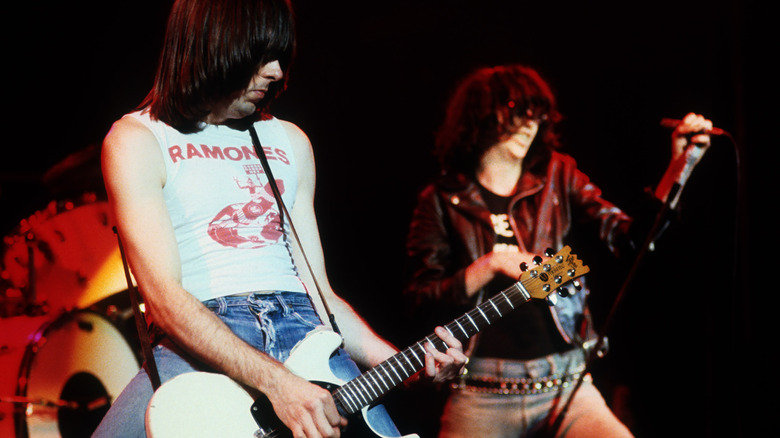
One doesn't usually associate the Ramones — the original purveyors of breakneck speed punk — with the U.K. bubblegum band the Bay City Rollers. The latter released a song in 1973 called "Saturday Night" that totally tanked, but they re-recorded it and released it again in 1976, and it became a smash hit. It was a decidedly unhip teenybopper romp about weekend fun that has something in common with the Ramones' "Blitzkrieg Bop."
In 1976, the princes of New York's nascent punk scene released Ramones, their debut album. It would be reasonable to assume the Ramones were inspired by the city's rampant crime, brutal economy, or any number of woes plaguing American society. However, the Ramones loved to have fun, especially playing and writing about it. Written and conceived as an outpouring of pure youthful abandon by band members Tommy and DeeDee Ramone, "Blitzkrieg Bop" was recorded as two minutes of pure punk adrenaline, but lead singer Joey Ramone was certain they were going to be the next Bay City Rollers and top the charts as "Saturday Night" had done. In his 2012 autobiography, John Cummings (Johnny Ramone) said, "'Blitzkrieg Bop' was our 'Saturday Night,' you know, that song by the Bay City Rollers. We had to have some kind of chant just like they did." It didn't quite happen as planned.
While the rapid-fire, three-chord punk anthem never topped any charts, the Ramones' legacy and influence has far surpassed anything recorded by the Bay City Rollers. "Blitzkrieg Bop" ranked #64 on Rolling Stone's Greatest Songs of All Time list in 2024, and it is revered to this day as an American music milestone. It's a road trip must when you want to crank up the volume and rock out with abandon.
Eagle by ABBA
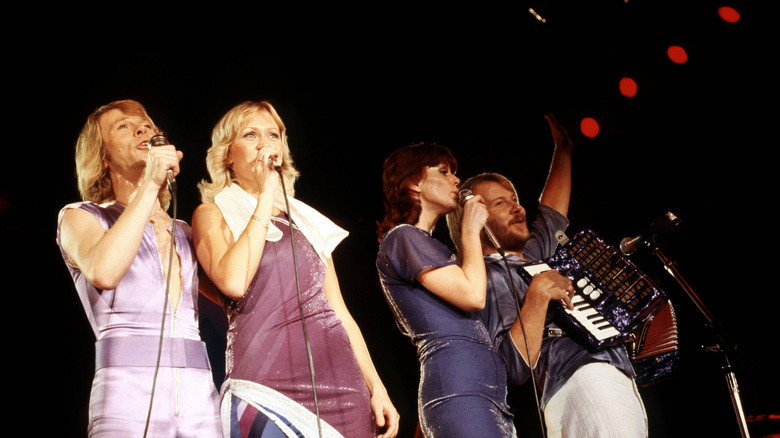
In the 1970s, ABBA was one of the world's best-selling musical groups. Thanks to their Eurovision win with "Waterloo" in 1974, Europe and Australia couldn't get enough of them. They achieved some success in America, but "Dancing Queen" was their only #1 single in the U.S.
Released in December 1977, "ABBA: The Album" was the group's fifth studio LP and coincided with a mega world tour and the release of "ABBA: The Movie." The Album reached #14 in the U.S. and #1 in the U.K. On the heels of The Album's smash hit "Take a Chance on Me," ABBA was set to release "Eagle" as the follow-up. A stylistic experiment, the decision to release the song as a single was scrapped for the U.S., though edited versions were released in some European markets. Despite some moderate success, it ultimately underperformed.
"Eagle," however, has been praised by fans and critics as ABBA's most ambitious song and has been noted as having a prog-rock influence. Inspired by the book "Jonathan Livingston Seagull," the song is a soaring swirl of guitars and synthesizer, augmented by crystalline vocals that give the song an almost levitational essence. In a review from 2012, Culture Fusion Reviews states, "'Eagle' is perhaps the highest point in the band's catalog as far as pure writing and arranging goes [...] the arrangements, melody and singing work in perfect unison to create a complete atmosphere of flying." For your road trip, play "Eagle" while driving along a highway of open, majestic spaces.
(Wish I Could Fly Like) Superman by The Kinks
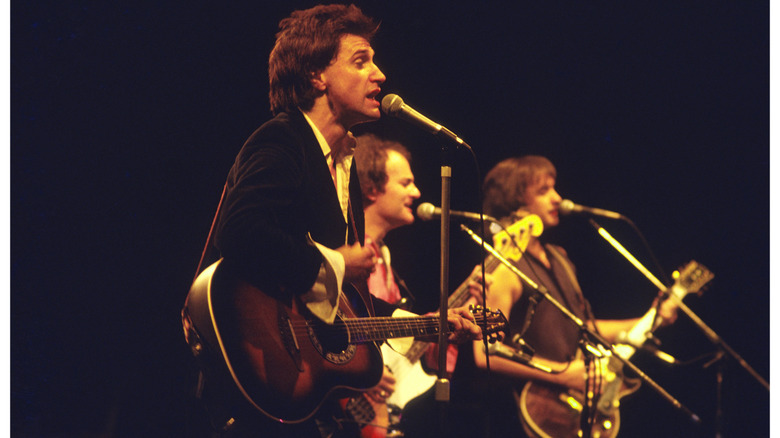
The late 1970s were a watershed for British rock band The Kinks. The band responsible for such rock classics as "All Day and All of the Night" and "Lola" found themselves struggling through the '70s, leading them on a road to rock-n-roll obsolescence. A contract with Arista Records, however, set them on a path to renewed relevance, with the albums "Sleepwalker" and "Misfits" both cracking the Top 40. Additionally, the Pretenders and Van Halen both achieved success with their covers of Kinks songs.
Clive Davis, founder and president of Arista Records, wanted a dance-floor hit for their 1979 album "Low Budget." Already leaning into stadium-rock territory and super catchy guitar riffs reminiscent of their earlier years, The Kinks obliged — albeit with singer and songwriter Ray Davies' signature stamp of satire — on the driving "(Wish I Could Fly Like) Superman." Faced with the bleak economic and societal malaise of the time, the song's narrator bemoans his feeble physical condition and desire to whisk his girl away like Superman in the 1978 film, of which Davies was a fan.
Punctuated by crunchy power guitar chords and a four-on-the-floor rhythm section that straddles into head-banger territory, the song is alarmingly catchy, fun, and surprisingly relevant. Jim Beviglia for American Songwriter, comments, "'(Wish I Could Fly Like) Superman' sounds more powerful than a locomotive, even if the character at the heart of it can barely get out of his own way." As a single, it only reached #41 on the U.S. charts and failed to chart in their native U.K. The "Low Budget" album, however, was a success, reaching #11 on the U.S. charts. Play this track on your road trip anytime you need a bolt of energy.
Methodology
The process of selecting 1970s flop songs for a road trip was not a scientific one. There is no singular website for such niche listings, and the definition of what constitutes a flop is debatable. Initial internet searches produced unsatisfactory results of mostly regurgitated lists of the same songs. It took some repeated and more in-depth searches to uncover songs that were both commercial flops, yet great — even seminal — songs unto themselves. Add in why they're road trip musts, and the search of the 1970s haystack uncovered these musical golden needles. Of course, I solicited help from sources such as Billboard, American Songwriter, Guitar World, Ultimate Classic Rock, Louder Sound, Fandom, Music Chart Archives, Paste Magazine and more. There are more songs that could be added to this list as well, if you want to make the music of the 1970s your ultimate road trip soundtrack.