
Hands-Down Indiana's 5 Best Destinations To Kayak, According To Paddlers
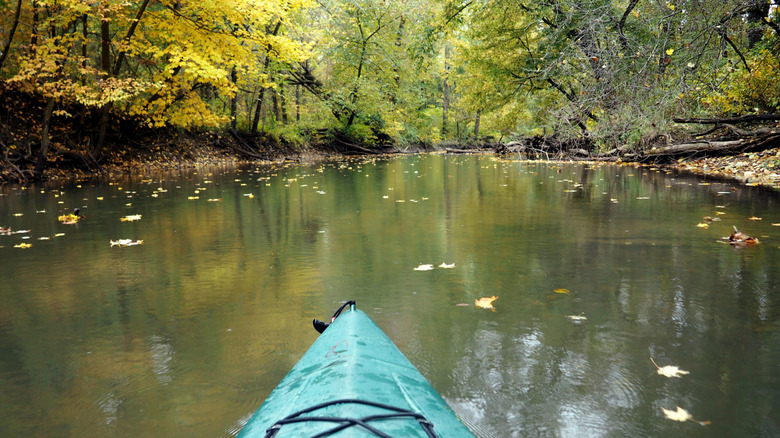
For all of its flat Midwestern character, Indiana actually offers a surprisingly diverse range of outdoor activities. Indiana's outdoor destinations stem from more obvious choices, like the well-named Hoosier National Forest and its myriad trails and campgrounds, to destinations you wouldn't necessarily think to find in Indiana, like the remarkably serene shoreline and Midwest charms of Miller Beach. Inherent in that latter option is Indiana's underrated strength as a destination for recreation on the water. The state does, after all, border Lake Michigan. At the same time, its flat Midwestern landscape is etched with countless rivers, lakes, and waterways that offer terrific kayaking adventures. Whether you're looking to explore a Great Lake, a major urban river, or a remote woodland creek, Indiana has many of the top kayaking destinations in the Midwest.
Away from the shores of Lake Michigan, Indiana has several designated water trails throughout its many waterways. Even Indiana's cities offer exemplary kayaking opportunities, as many of the state's urban areas sit alongside one (or more) of the state's rivers. And if you want to try your hand at Great Lake kayaking, Indiana has several excellent spots to paddle out into the challenging waters of Lake Michigan, including both local beaches where you can dip your toes into the Great Lakes and sections of epic, multi-state paddling routes around the lake's vast shoreline. Though different kayaking routes will appeal to different types of kayakers, these five kayaking destinations offer the most comprehensive blend of Indiana's waterways, both urban and natural, according to reports from online reviewers and experienced kayakers.
Pigeon River Fish & Wildlife Area
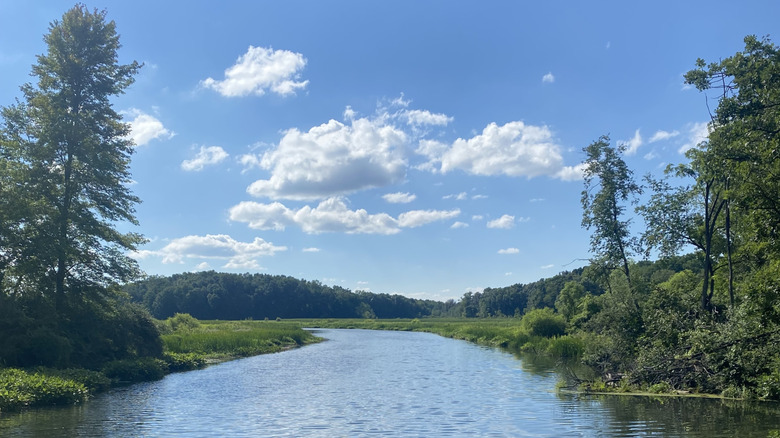
Northeastern Indiana's Pigeon River Fish & Wildlife Area is one of the state's hidden outdoor gems. Though primarily known for its hunting and fishing opportunities, the Pigeon River does provide some stellar, peaceful kayaking routes. The Pigeon River Fish & Wildlife Area covers nearly 12,000 acres. Pigeon River itself packs a fairly large punch in terms of scenery, despite its small size. Though the main navigable portion of the river is only 36 miles long, no more than half a mile wide, and fairly shallow, Pigeon River flows through a scenic glacial moraine for much of its course, providing abundant woodland scenery and several wonderful lakes near the charming Indiana community of Mongo.
Kayakers can take advantage of the park's 17 miles of free-flowing river for a relaxing day of unobstructed paddling in a peaceful nature preserve. This stretch of the Pigeon River is perfect for kayakers of all ages and experience levels, given its generally calm waters combined with enough curves and bends to keep the multi-hour trip interesting. More importantly, the Pigeon River Fish & Wildlife Area's kayaking route is bursting with gorgeous natural scenery. The Pigeon River's banks are rich in picturesque trees (including the particularly eye-catching tamarack, or eastern larch) and an understory of ferns that add a unique prehistoric touch.
Fauna-wise, the Pigeon River kayaking route is an excellent trip for spotting wildlife. Though it takes its name from the humble pigeon, the Pigeon River is home to numerous bird species viewable to kayakers, including owls, warblers, wrens, and waterfowl. One reviewer writing on Paddling.com praised the route as a "very enjoyable two-and-a-half hours of paddling," while another kayaking blogger reports: "Kayaking on the Pigeon River was...peaceful and relaxing."
Fort Wayne
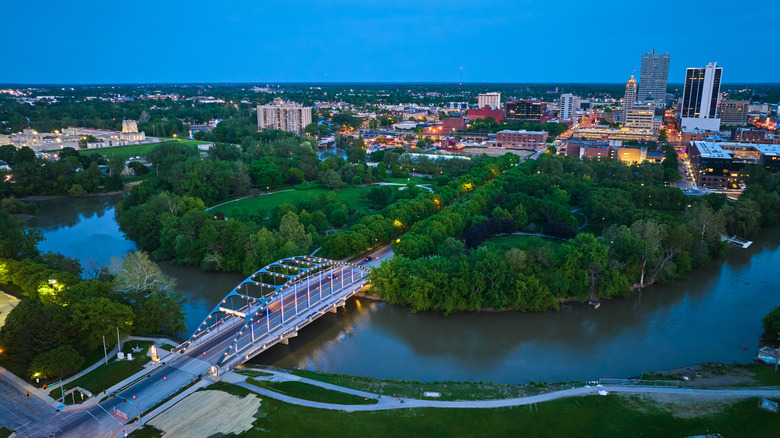
In sharp contrast to the pristine forest preserve of the Pigeon River, Fort Wayne offers some of Indiana's best opportunities for urban paddling. This makes sense, as Fort Wayne sits along the banks of not one but three rivers. Indiana's St. Marys, St. Joseph, and Maumee Rivers converge around Fort Wayne's Riverfront, creating a perfect spot for urban kayaking in the heart of one of Indiana's most underrated cities. The Fort Wayne Riverfront is a perfect nexus for the many excellent kayaking trails along all three rivers. Notably, this tri-river network creates water trails that travel north-south and east-west. Thus, kayakers embarking from Fort Wayne's Riverfront can explore the city's urban views and farther out rural and forested areas in the same day.
Within Fort Wayne's city limits, the riverfront Promenade Park is a perfect spot to begin your kayaking excursion. Promenade Park sits along the banks of the St. Marys River, near the confluence of the St. Joseph and Maumee Rivers. The park offers convenient kayak rentals courtesy of local outfitters, giving visitors plenty of options for their day on the water. If you want to keep your kayaking excursion to a short-and-sweet exploration of Fort Wayne, you can sightsee Fort Wayne's vibrant public art displays from the water while staying in view of the city's wonderful public park amenities and green spaces. One Google reviewer noted that Promenade Park is "a nice gentle place to kayak," with "a nice viewpoint of the city." If you're feeling more adventurous, you can kayak from Fort Wayne all the way to Toledo along the Maumee River, as one daring reviewer on Paddling.com did!
Mississinewa River
The Mississinewa River is yet another underrated Indiana river gem that provides superb kayaking adventures through unsung, yet brilliant, natural scenery. Originating in Ohio, the Mississinewa flows about 100 miles westward through eastern Indiana, where it runs along some of the state's most underrated natural and urban areas. On the urban side of things, the Mississinewa provides the gorgeous riverwalk of the small yet lovely city of Marion. Urban paddlers can take advantage of Marion's convenient boat launches to explore the Mississinewa's city sections. However, as charming as a Marion kayaking trip is, the Mississinewa also provides superb paddling access to some of Indiana's most astounding natural wonders.
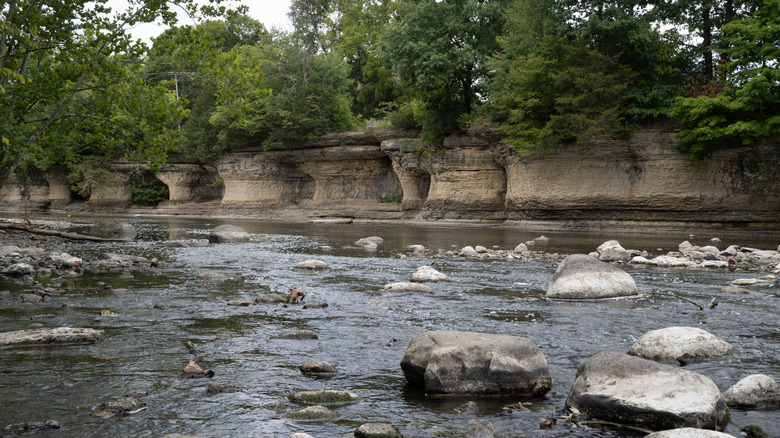
Chief among these is the unforgettable Seven Pillars of the Mississinewa. With remarkable riverside limestone formations carved by water and wind erosion, the Seven Pillars are an unforgettable Indiana oasis for serene outdoor adventures. Though the Seven Pillars Nature Preserve has excellent sightseeing trails on land, the best views of these 25-foot cliffs are arguably found on the Mississinewa River itself. Kayakers can enter the river about 3 miles upstream, near Indiana's equally scenic Frances Slocum State Forest. After drifting along the forest for a few miles, the Mississinewa will eventually take you directly past the small but stunning limestone cliffs that make up the Seven Pillars.
One advantage of exploring the Seven Pillars by kayak is that you get a much better look at the unique, water-carved "alcoves" between each of the seven limestone pillars. The overall scenery of both the Seven Pillars and the Mississinewa River is particularly esteemed by experienced kayakers. Writing on Paddling.com, one local kayaker notes that the Mississinewa provided "a slow but pleasant trip through a wooded corridor," with "a nearly non-stop show of birds" even before they got to the Seven Pillars.
White River
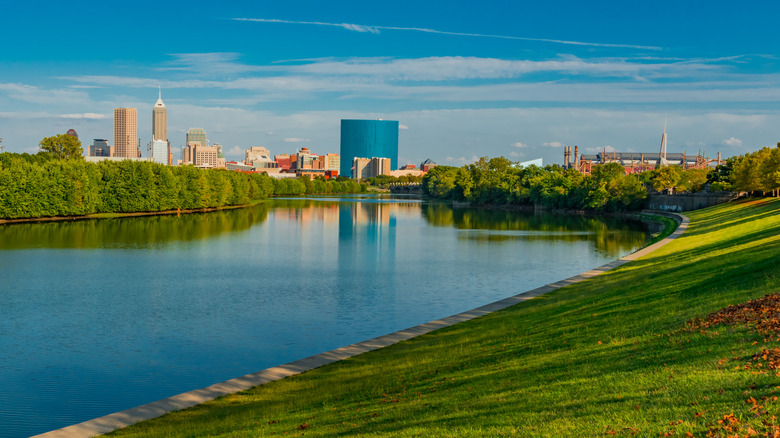
Indianapolis is Indiana's capital, largest city, and central metropolitan area, but it also serves as one of Indiana's top urban kayaking destinations. Like many cities across the Midwest, Indianapolis was built along the banks of a major river, in this case, the prominent White River. Stretching about 362 miles through much of Indiana and parts of Illinois, the White River is one of Indiana's largest waterways and a major thoroughfare for the state's urban areas. For kayakers, the White River Canoe Trail provides a perfect link between central Indiana's urban and rural paddling destinations.
Centering around downtown Indianapolis's riverfront, the 16-mile White River Canoe Trail has put-in spots at many of the city's most vibrant municipal parks, including Broad Ripple Park, Holliday Park, and Friedman Park. While these parks don't currently offer kayak rentals, the much larger White River State Park does. Located in the heart of downtown Indianapolis, White River State Park may be America's only "cultural urban state park," and its kayaking opportunities provide excellent means for exploring both the White River and the city's Central Canal.
While Indianapolis is the urban core of the White River Canoe Trail, the White River itself stretches well beyond the Indianapolis city limits. White River kayakers can find plenty of excellent kayak launching spots along the White River north and south of the city, often within some of Indiana's loveliest parks and riverside nature preserves. Farther north, the White River also passes through the smaller, yet equally worthwhile, city of Muncie, and the culturally-rich, family-friendly Hamilton County. Kayakers along the White River may also pass natural scenes like blissful White River Bluffs. Reviewers of White River kayaking routes on AllTrails.com report that the river is "slow enough to handle, but has enough rapids to make it fun."
Indiana Dunes National Park
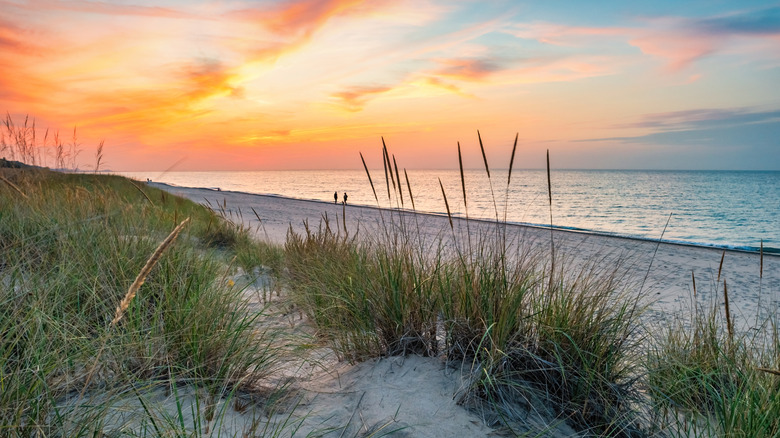
Indiana's only national park also happens to be one of the Midwest's premier kayaking destinations. Indiana Dunes National Park is defined by its prominent sand dunes, but the park's magical scenery comes straight from Lake Michigan. With a relatively small area of around 15,000 acres, Indiana Dunes ranks among the American national parks that can be seen in a single day. However, these 15,000 acres preserve a strikingly complex ecosystem, made up of bogs, marshes, oak savannas, rivers, and beaches, all centered around the mighty dunes that tower as high as 120 feet.
Indiana Dunes provides "a diversity of kayaking and canoeing options for paddlers to choose from" (according to a rave review from Paddling Magazine). Lake Michigan is obviously the park's most prominent kayaking destination. Kayakers looking to take on a Great Lake challenge can launch from any of the park's beaches (other than the popular swimming area of West Beach).
However, the open waters of Lake Michigan present several challenges and hazards you're unlikely to encounter in more tranquil inland waterways. Rough currents, colder waters, and the consistent presence of very large lake freighters and barges may cause beginner kayakers to reconsider this route. If you do feel up to the challenge, Indiana Dunes National Park is a great starting point for the epic Lake Michigan Water Trail, which stretches 75 miles along the lake's southern shore from New Buffalo in Michigan to Chicago. If Lake Michigan's size is not for you, smaller but still challenging alternatives are available at Indiana Dunes' Little Calumet River Water Trail and nearby waterways like Marquette Lagoon in neighboring Gary's Marquette Park.
Methodology
Indiana's many excellent kayaking destinations span a large spectrum of locations and challenge levels. Many of Indiana's urban areas, being so often situated around rivers, have great urban kayaking spots along their riverside parks, which make perfect destinations for family-friendly kayaking day trips. On the other end of the spectrum, many of Indiana's more rural and forested areas have remote waterways that offer longer and more challenging kayaking expeditions — including more advanced rapids and obstacles that may require more experience. Some of Indiana's waterway infrastructure even allows for thrilling whitewater kayaking, like the artificial whitewater rapids at South Bend's East Race Waterway. Then, of course, you have Indiana's northern shoreline along Lake Michigan, which offers formidable Great Lake kayaking journeys more reminiscent of open ocean paddling than most lake outings.
To arrive at this list, we looked at reviews from experienced paddlers across Indiana, both in premier kayaking media outlets and on popular review sites. Paddling.com proved to be an excellent resource, as it provides an online review outlet specifically for kayakers to review kayaks, gear, and, for our purposes, kayaking routes. Even better, many reviews of Indiana kayaking destinations on Paddling.com are much longer and more detailed than the average online review, with helpful information on put-in locations, potential entrance fees, challenges, scenery, and difficulty levels.
We also found more detailed accounts of popular Indiana kayaking destinations on Paddling Magazine, which publishes helpful articles and recommendations from experienced kayaking journalists. Outside of kayak-specific media outlets, more general review sites like TripAdvisor, Google Reviews, and AllTrails.com let us find positive kayaking reviews from the general public. This helped us identify Indiana kayaking locations that are great for beginners, families, or anyone looking for a short and easy day on the water.