
Canada's Off-Beat Yellowknife Neighborhood Is Full Of Log Cabins, Food, And Underrated Charm
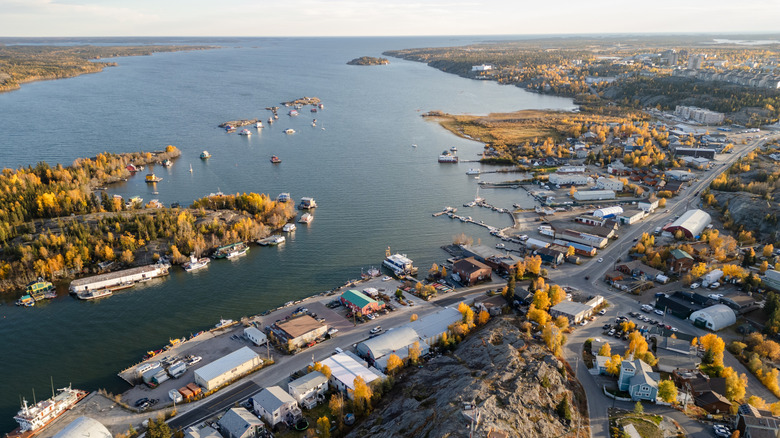
On the northern tip of Great Slave Lake, in Canada's sprawling, sparsely populated Northwest Territories (NWT), sits the small city of Yellowknife. Taking its name from the tools once made and traded here by Indigenous American communities, Yellowknife was founded on Dene First Nations land back in 1934.
Like other communities in the north and west of Canada, it started out as a mining camp and a huddle of log cabins. The mining industry may have shifted from gold to diamonds, and tourism is now a source of commerce in the city, but some of those original cabins remain. They stand in an area known as Old Town, which, though not on the main Canadian tourist trail, is arguably one of the most charming urban areas in the country.
Yellowknife's Old Town offers lovely coastal views of Great Slave Lake, the deepest lake in North America — some visitors even charter floatplanes to admire it from above. The neighborhood also hosts numerous public artworks and murals, as well as highly rated seafood grills and taverns. Colorful houseboats float in Yellowknife Bay; the residents of these cozy abodes commute to the mainland by rowboat in summer and skis in winter. While along the wonderously named Ragged Ass Road, you'll find a jumble of old shanty-town structures and handsome new homes. Old Town has been called "Canada's weirdest neighborhood," but in no way is that to its detriment.
Exploring Yellowknife's Old Town
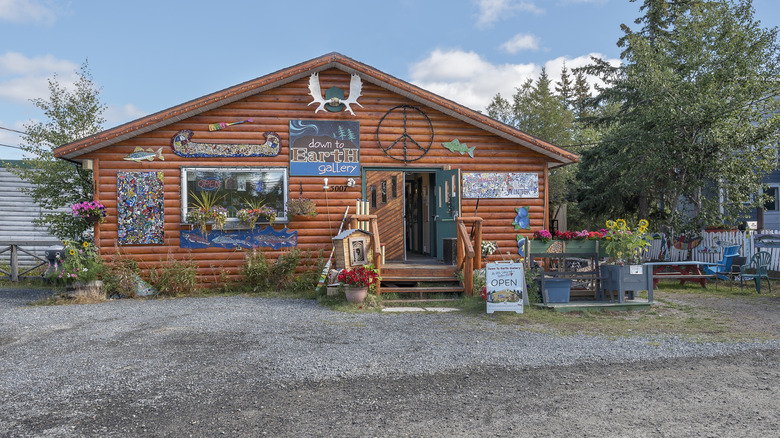
Ragged Ass Road is a good place to start exploring Old Town, leading up the peninsula towards The Narrows and upscale mansions of Latham Island. The street name was coined by an ale-soaked prospector who deemed himself and everyone around him "ragged ass" poor and thought the name of his street ought to reflect this state of affairs. The road harkens back to the district's shanty origins, while large, clapboard homes on either side show how far Old Town has progressed over the past century.
At the other end of the architectural spectrum are jackpine timber shacks from the old days, some of which are still lived in or have been repurposed for public use. You'll see these dotted here and there around the neighborhood, but The Shed Museum is one of the best known, a weatherbeaten shack festooned with mining artifacts uncovered from camps and shafts across the NWT. A walking tour map of Old Town, which you can download from the Yellowknife website, shows where to find these structures.
Though it's often absent from articles detailing Canada's best art scenes, Yellowknife has a thriving artistic community, and you'll find many interesting public works scattered across the city. Download a map from the NWT tourism website and discover some of the most alluring pieces in Old Town, from woodcarvings and sculptures to interactive murals and glass mosaics. Also worth adding to your itinerary is the Snowkings' Winter Festival in March. Centered on a snow castle erected on the frozen lake, it's a showcase for intricately carved snow sculptures and live music performances. Yellowknife is also one of Canada's best places to see the northern lights — another good reason to visit in winter.
Dining and staying in Old Town
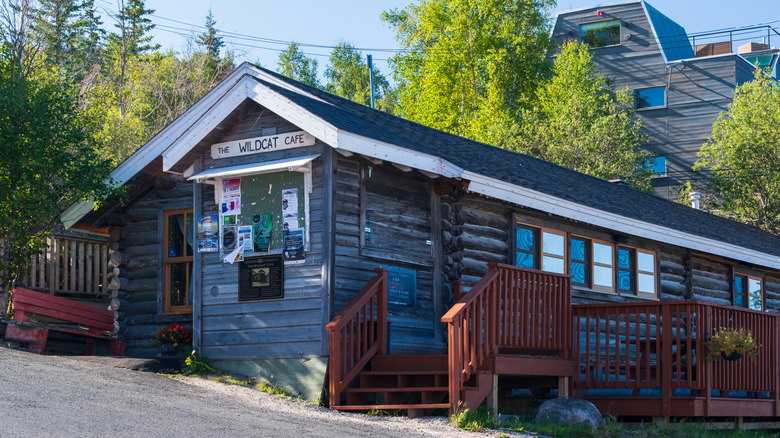
Old Town has a surprisingly cosmopolitan food scene that echoes the creativity found in the local art community. Wildcat Cafe (open only in summer) sits in one of the old log cabins and has been around since 1937, when it was opened by a pair of wonderfully named Yellowknifians called Willy Wilie and Smokey Stout. Though business has ebbed and flowed over the decades, it's once again a popular dining haunt, serving freshwater fish and a "Prospector's platter" that pays homage to the meals eaten by miners.
Another popular restaurant is Bullock's Bistro, which has been serving fish caught in Great Slave Lake for more than three decades, including cod, trout, pickerel, whitefish, and Arctic char inconnu. The restaurant, also famous for its in-house sauces and dressings, has a 4.5-star rating on Google across 1,900-plus reviews. Just ask what fish they have in stock and tell them how you like it cooked: deep-fried, pan-fried, or grilled. Or, if you want to pair great food with a range of craft beer, head to NWT Brewing Co.'s Woodyard Brewhouse & Eatery on Franklin Avenue. Order poutine, smash patty burgers, Korean-style pork belly and fries, or wild boar meatballs and wash it down with a beer tasting flight.
The most authentic accommodations in Yellowknife are the guesthouses and log cabins around Old Town. You can rent private log cabins here that sleep a family of four for $190 per night or $1,100 a week (at the time of writing). Alternatively, there are nice B&Bs on the lakefront, with intoxicating interiors and bay views. Yellowknife does have an airport, fielding flights from major Canadian cities, but if you'd prefer to drive, buckle up for a long journey. Even Edmonton, the Gateway to Jasper National Park and the closest major city, is 900 miles away.