
The World's 3 Busiest Train Stations Are All Located In The Same City, According To Data

Train travel is, as they say, so back baby. And the proof is in the pudding, with AmTrak announcing a "New Era of Rail", plunging a huge investment into modernizing its long-distance fleet, while tour operators like Vacations by Rail are popping up worldwide, and the eco-friendly network European Sleeper is launching new night-train routes year on year. Naturally, you'd guess that New York City's bustling Grand Central or London's neo-gothic wonder St. Pancras Station are probably the busiest train travel hubs on the planet, right?
Well, you'd be wrong. According to data collated by the folks at World Atlas, the three busiest train stations in the world are all in the same city, and that city is none other than the capital of Japan — Tokyo. As a travel writer who's not ashamed to admit that I've been completely lost in the labyrinthine complexes of the top two — both Shinjuku Station and Shibuya Station have defeated me numerous times — I'm not hugely surprised by their position in the dataset. But I am taken aback by the jaw-droppingly impressive number of people who use those stations each year. And another fun fact for you: The top five busiest stations are all in Japan, with Osaka's Umeda Station coming in fourth place and Yokohama's eponymous station at fifth. Sugoi!
Shinjuku Station is the busiest in the world
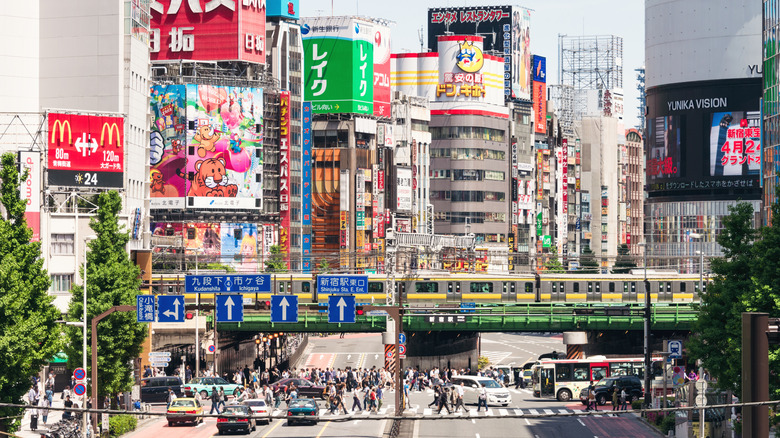
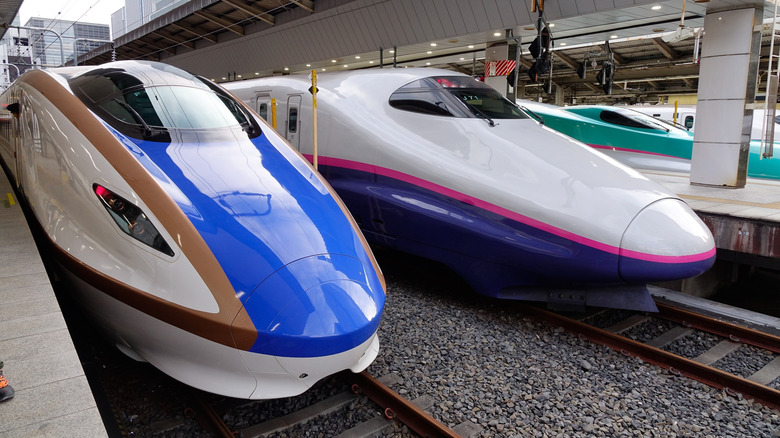
With a mind-boggling 1.16 billion riders frequenting its platforms last year, Shinjuku Station currently holds the crown as the busiest train station on the planet. Since first opening its doors back in 1885, it's grown exponentially to become an infamous transit hotspot, linking central Tokyo with suburban neighborhoods and the country beyond. Over a dozen regional and high-speed shinkansen (bullet train) lines converge in this station, which is run and co-owned by JR East, Odakyu Electric Railway, Keio Corporation, and Tokyo Metro.
Above ground, Shinjuku City is the seat of Tokyo's local government that sits in the heart of the sprawling Shinjuku Skyscraper District, which is also the home of the Park Hyatt Hotel — loved by film buffs as the filming location of "Lost in Translation." The station is arguably just as hectic as this district, with more than 200 exits and layers of subterranean levels; it's a small city of its own down there. No one will judge you for taking the wrong exit or getting rather lost — it's all part of the Shinjuku fun.
Also part of the fun, once you step outside the correct exit, you'll find yourself right in the middle of one of Tokyo's biggest commercial playgrounds, packed with department stores and tons of entertainment spots — including never-ending games arcades, and more importantly, hundreds of little karaoke rooms. It's a great location to stay in, if you can find an affordable spot (it's certainly not the most affordable place to visit in Japan), as being conveniently close to this train station means you can hop on an early morning train to Mount Fuji or even farther-flung corners of Japan.
Shibuya is home to an iconic crossing and swamped station
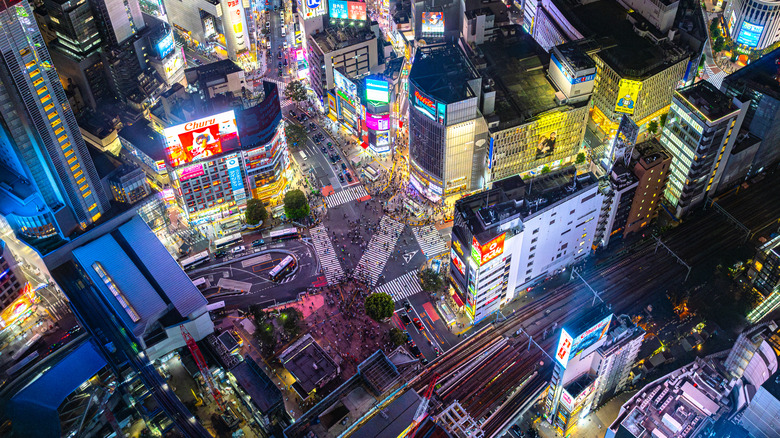
With a footfall of over a billion passengers a year, Shibuya Station is the finest example of organized chaos I've ever come up against in my travels — and the second busiest station in the world. Like Shinjuku Station, it first opened its railway service in 1885 and is run by the same co-op of Tokyo and Japan Rail companies. Its colossal size and design quirks are likely to spit you out of the station and onto the street before you necessarily find your platform, so much so that there are Reddit threads that jokingly point out that Shibuya Station might be No.1 in this graph, if people weren't so lost looking for the Ginza Line. The new entrance to the Ginza Line, the oldest metro line in Tokyo, which starts and ends at Shibuya Station, is inside the shopping mall next door – you're welcome.
The shopping malls, bars, and nightlife are what the buzzing Shibuya district is all about, and the station feeds straight into this, one of Tokyo's entertainment playgrounds. Step out of the Hachiko Exit, and you're immediately bathed in neon light at the legendary Shibuya Scramble Crossing – yes, that wild sea of people and crosswalks you've definitely seen online, which, believe it or not, is possible to see from above without spending a single yen. These big redevelopment projects like Shibuya Stream and Shibuya Scramble helped streamline the flow of people above ground, boosting the station's capacity and making it even more jam-packed than before.
Ikebukuro Station drops to third place
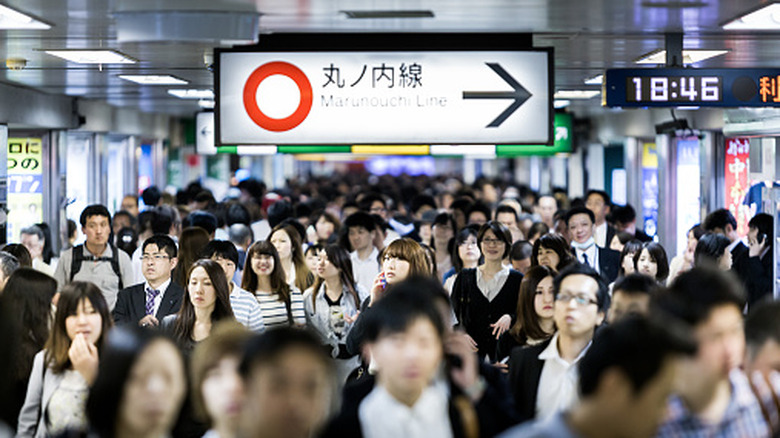
With around 843 million passengers rolling through every year, Ikebukuro Station currently ranks as the third busiest station on the planet – down from its second place spot, which it held prior to Shibuya's redevelopment. Open since 1903, Ikebukuro Station's maze-like layout weaves together multiple rail lines, making it a key gateway to northern Tokyo, the Saitama Prefecture, and central Tokyo.
The station is the beating heart of the Ikebukuro district, one of the liveliest areas in Tokyo but less hectic than (so a good alternative to) Shinjuku and Shibuya. Ikebukuro is a great place to spend a few hours exploring highlights like Sunshine City — a huge complex packed with cool attractions like Pokémon Center Mega Tokyo, the rooftop Sunshine Aquarium, and the indoor theme park Namja Town. Anime fans should also check out Animate Ikebukuro and nearby Otome Road, known for manga, collectibles, and themed cafés. The area is also fantastic for food, especially known for ramen at spots like Mutekiya and Menya Hulu-lu Ikebukuro, and has fun arcades and karaoke spots for post-dinner jaunts.
Methodology
An unashamed train nerd and regular writer on flight-free and train travel, I was delighted to research this piece on the busiest train stations in the world — inspired by the dataset released by World Atlas in December 2025. World Atlas published a graph which shows the Top 10 most frequented stations in the world, as well as a breakdown of those numbers.
I also leaned on personal experience of traveling in Japan, where I've been on assignment for BBC Travel, National Geographic Traveller, and a handful of British newspapers in recent (post-pandemic) years, but couldn't resist consulting Reddit for some added humor. I also read a piece by Business Insider Africa, which lamented that the continent is bereft of trains, and confirmed my facts and figures on the three districts mentioned by reading the Japan tourism board website and revered travel agent Japan Experience's site.