
5 Astounding Winter Hiking Trails In Joshua Tree National Park
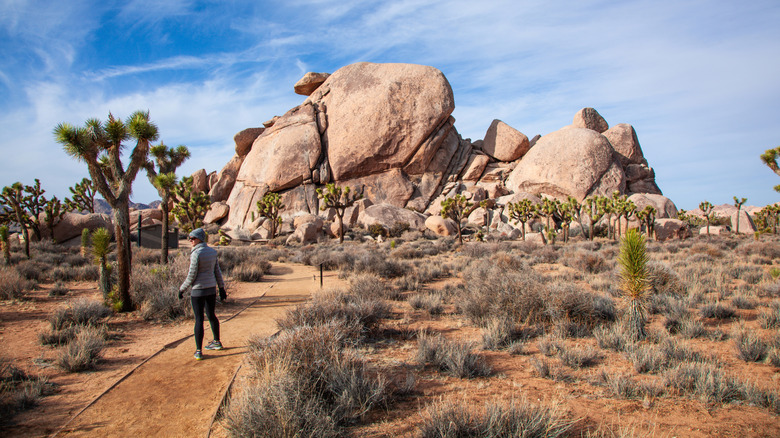
Before winter is over, you might want to fit in a few more short getaways. Joshua Tree National Park is great to visit in the colder months to avoid the summer desert heat. There's a reason why Joshua Tree's busy season is from October through May, as winter temperatures in the park are on average around 60 degrees Fahrenheit during the day and around 30 degrees at night.
The park is accessible 24/7, and you can drive in and out, making it easier to visit than other iconic national parks that require reservations. There are plenty of trails for every level of hike, from short scenic treks to more strenuous ones. It can snow at higher elevations in the park, so if you are planning on tackling longer hikes that go up in elevation, make sure to be prepared and check the forecast. The blog Destination Daydreamer says, "The winter months require some jackets and warm layers, but it's far superior to hiking in the heat."
However, when looking at which trails to take, make sure to check the national park's website because third-party sites might not have the most up-to-date information. There are some trail closures that occur during the winter to keep them intact. In order to capture the best winter hiking trails in Joshua Tree National Park, we collected reviews from travel blogs, information from the national park's website, and hikers' comments on AllTrails. We not only looked at people's favorite treks, but also what makes them good to visit in the winter. We break down five great ones to visit, ranging from easy to strenuous, so you can sneak in an end-of-winter visit to Joshua Tree.
Barker Dam Trail
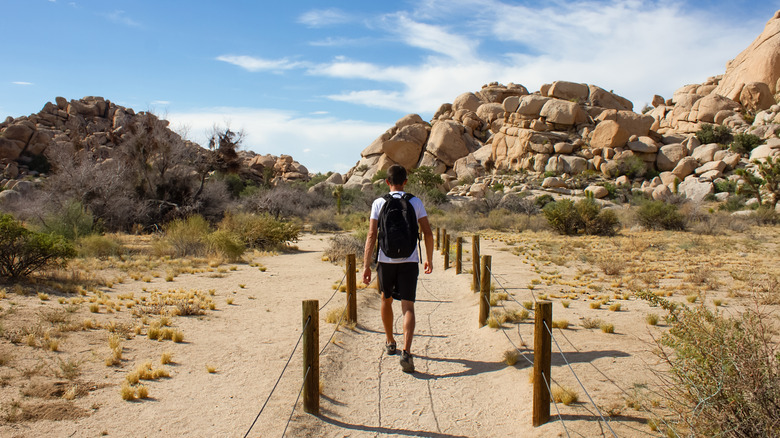
One hike that takes you through the world of petroglyphs and rocky landscapes is the Barker Dam Trail. This 1.1-mile loop trail is one of the easier trails in the park, with only about 50 feet of elevation gain. It takes most visitors about 30 to 45 minutes to complete the loop.
As one of the best trails in Joshua Tree National Park, according to hikers, it takes you to overlooks where you can see the boulders, vegetation, and wildlife. Keep an eye out for birds, reptiles, and desert bighorn sheep. The cooler mornings are a great time to hit the trails and also look for wildlife, as this trail has little shade throughout the hike. Along the trail, there are interpretative exhibits to teach you about the history of the Barker Dam and the surrounding environment.
And while there are plenty of rocks to scramble on in Joshua Tree, make sure not to climb on those with rock art to preserve the history (although don't be surprised to see that some of the petroglyphs have been vandalized). Parking near this trail can fill up early due to its popularity, so plan to arrive early to grab a parking spot.
Arch Rock
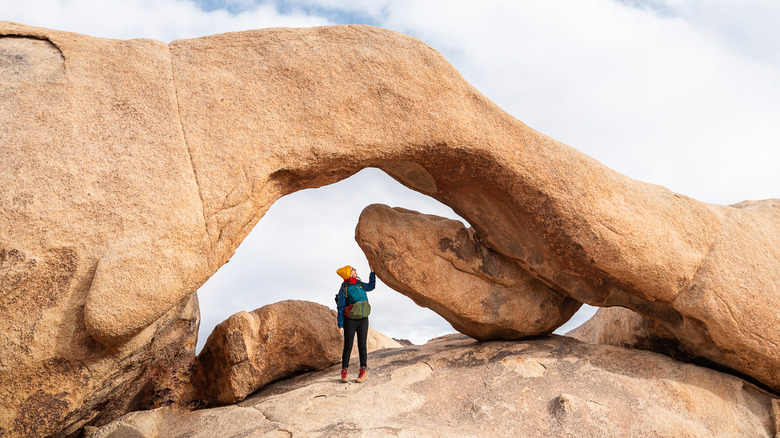
One of the most iconic trails in the park is Arch Rock. This trail is 1.2 miles and is shaped like a lollipop, with a 0.6-mile straight section leading to a 0.2-mile loop. It's recommended to take the latter part of the hike in a counterclockwise direction, offering a clear view of the famous arch. This hike is expected to take between 45 and 90 minutes, and the archway is a popular photo op.
The trail is mostly sandy up until the end, where you can climb on the rocks to explore the arch. Due to the breathtaking nature of the arch, the trail can get crowded. It's also family-friendly, as it's mostly flat and children enjoy climbing on the boulders. You can even take strollers on the hike.
Hikers who have taken this trail in December and February comment on the perfect weather conditions. One AllTrails user even hiked the Arch Rock trail at night to stargaze, noting, "Hiking at night led to new experiences ... we did hear a few coyotes!" Joshua Tree is known for having no cell service, so it's good to make sure you are prepared with any downloaded maps or information you will need before arriving at the park.
Hidden Valley Nature Trail
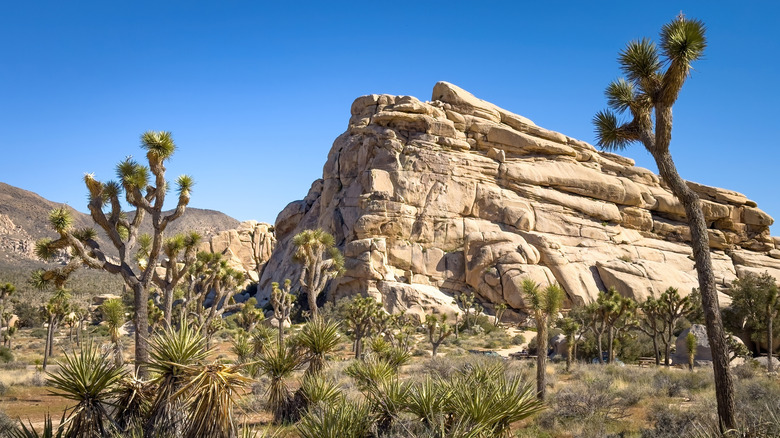
Hidden Valley Nature Trail is a popular winter route because it is an easy 1-mile loop through beautiful scenery with large rock formations. The trail starts at the Hidden Valley picnic area and follows along the trail to take in the trees and boulders in the distance.
There is a 100-foot elevation gain, and educational exhibits along the trail teach you about the history, as well as the local plants and animals. The trail gets its name from the history of cattle ranchers in the late 19th and early 20th centuries who used the valley as a discreet homestead. When you plan your hike, take into account that this trail takes most people on average about an hour to hike.
On AllTrails, hikers mention how crowded this trail can be, although people are dispersed along the trail. Kids enjoy scrambling up the rocks along the side of the trail. Many reviewers comment that this trail is a great introduction to Joshua Tree's diversity, as well.
Lost Horse Mine
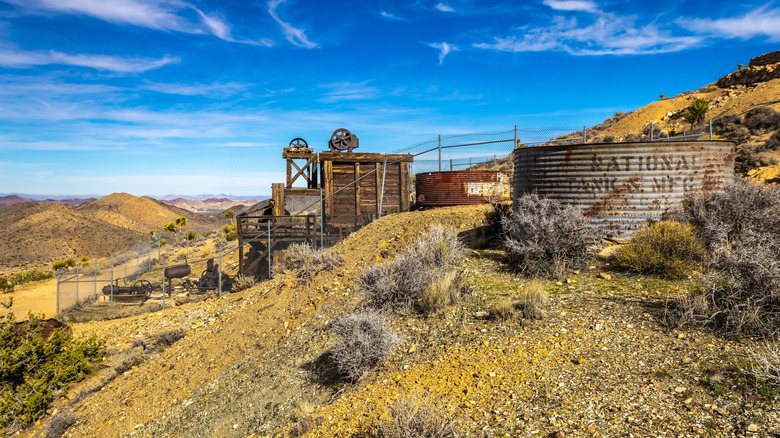
One hike that is highly recommended for winter is Lost Horse Mine. Even in the winter, the National Park Service strongly urges visitors to start early and not do strenuous hikes in the heat. This trail is for the history buffs in the group, as the trail's destination is one of the many abandoned mines that are scattered throughout the park.
The out-and-back trail takes you to the Lost Horse Mine, which is considered to be one of the most successful mines in the park. This mine produced 10,000 ounces of gold and 16,000 ounces of silver from 1894 to 1931, which is roughly $5 million in today's standard. This abandoned mine is known to be one of the most preserved mills protected by the National Park Service. Visitors are free to look at the mine and take pictures from outside of the fence, but it's important to stay out of the fenced-off areas to protect the mine's history and to stay safe.
The moderate trail is 4 miles long and takes about two to three hours. However, it's not that crowded, as reviewers report seeing only a couple of other groups on the trail. Many hikers say the trail was well worth the views and intriguing history. While hiking, keep an eye out for wildlife you may be able to spot, as reviewers report seeing mountain goats and bighorn sheep.
Black Rock Canyon Panorama Loop
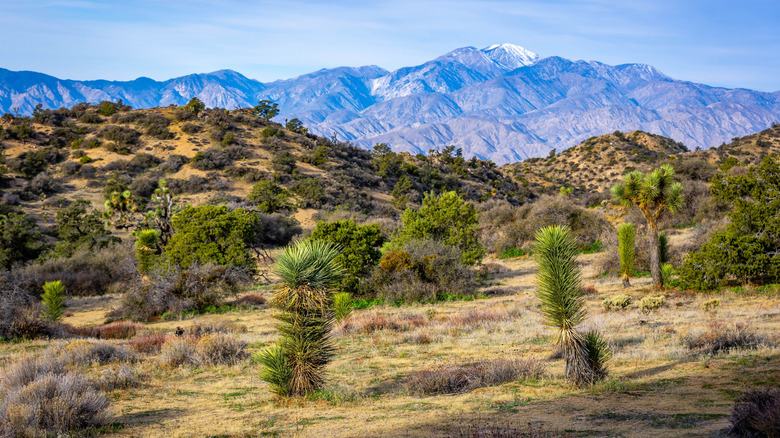
The most strenuous hike on this list is the Panorama Loop Trail. This hike is 6.6 miles long, with 1,100 feet of elevation gain. The park's website seriously advises against this hike in the summer due to the heat due to sun exposure and dehydration risks, so winter is the perfect time to tackle this trek. The Panorama Loop leaves from the secluded Black Rock area of the park, which has to be accessed by leaving the park's north or west entrances and re-entering from the south.
The hike starts up a sandy section, then moves along a ridgeline, leading to panoramic views of the park. Hikers on AllTrails suggest going counterclockwise on this trail for en easier ascent. So, if you are up for a hard hike, this is a great one to get done in the winter when the temps are on the cooler side for the park. One visitor claims that this is one of their favorites, saying, "The views are spectacular and going down the west side of the loop there is a small biosphere that is unsurpassed in the park the Joshua, Pinion pine and cholla are incredibly developed and healthy."
A reminder for hiking in the desert in the winter, is to pack layers and be prepared. The park can also get pretty windy, and this trail can get particularly big gusts when you are up on the ridgeline. The online blog That's How we Travel, states, "a day that started as perfectly chilly, turned unsafe with high-winds and a quick drop in temperatures." The extra layers will come in handy while you are up on the ridgeline taking in the views.
Methodology
Joshua Tree is a hiker's paradise when the temperatures allow for it. There are many more hikes, but these are a great place to start when planning your trip. This list was compiled by cross-referencing lists from travel blogs, such as That's How We Travel and Destination Daydreamer. We also took into account reviews from AllTrails and the recommended trails on Joshua Tree National Park's website. We wanted the list to have a variety of trail difficulty, and some of the more difficult trails were included on this list because they are not recommended in the summer, when it's best to take advantage of the cooler winter weather.
One popular hiking trail in Joshua Tree was not included on this list because it is closed until late spring at the time of this writing. The Cholla Cactus Garden trail closes during winter so the National Park Service can improve the trail's conditions. While you're exploring Joshua Tree in the "cooler" temps, it might be a good time to enjoy camping before the sweltering desert heat comes back in full force, and Jumbo Rock Campground is one of California's most scenic, surrounded by giant climbable rocks.