
The Oldest Cross-Country Ski Race In The World Takes Place In A Nordic Gem With Unforgettable Museums
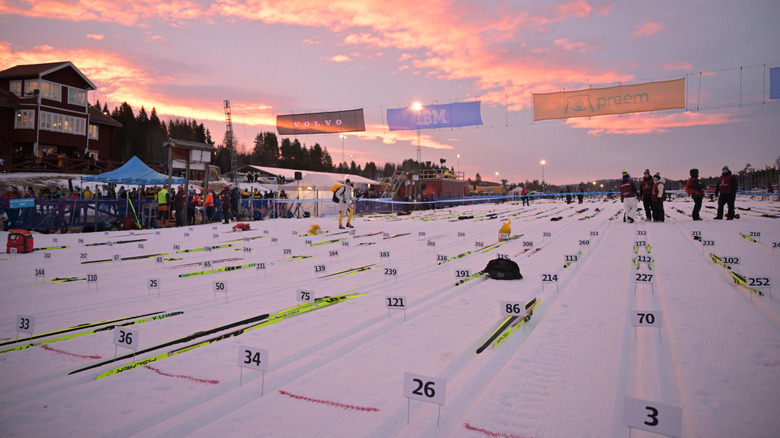
As the country with the most islands in the entire world, Sweden is no stranger to world records and all-time firsts. This Nordic country is home to gorgeous islands, like car-free Vrångö, nestled in the Gothenburg archipelago, and Holmön, on the north-eastern coast, which is one of the country's sunniest islands and a picturesque retreat away from crowds. But travel inland from either coast, and you will find some of Sweden's most recognisable sceneries and symbols, from the red, wooden Dala horse to moose-filled pine and fir tree forests. Both are characteristic of Dalarna, the central region nicknamed 'Sweden in miniature', and the birthplace of the world's oldest, longest, and largest cross-country ski race: The Vasaloppet.
The town of Mora is where the magic happens, with thousands of keen skiers descending on the finish line every year on the first Sunday of March. In addition to keeping this millennia-old tradition alive, Mora is a gem worth exploring, the perfect Nordic getaway in the heart of one of Sweden's most famous lake regions. World-class museums and attractions such as the Zornmuseet and the interbellum Ångloket steam train are only two of the cultural delights this kaleidoscopic city has to offer.
Whether you are planning a Scandinavian full-immersion in nature (maybe featuring fishing and hiking at Europe's deepest lake) or are longing to visit the Nordic capitals, Mora is ideally located and well connected via rail and air. The city is a four-hour train ride from Stockholm, or about a two-hour flight to Oslo, the Norwegian capital.
The Vasaloppet is the world's oldest ski race

The Vasaloppet race is a centuries-old tradition dating back to 1520. Not only does the sporting event outdate Sweden itself as an independent country, but it is also the oldest cross-country ski race in the world. Named after the enterprising nobleman Gustav Eriksson Vasa, the ski race was born when Vasa — who then became the first King of Sweden — had to cross the country on his skis in an attempt to rally support from the scattered regions, then living under Danish rule. Today, the race track follows the same course Vasa and his followers took, connecting Dalarna to the border with Norway.
Nowadays, taking part in the Vasaloppet is not just for royalty and nobility: Everyone over 17 can sign up, and the registration fee is between $260 and $335. The iconic cross-country race covers 56 miles, starting in the town of Sälen in the early hours of the morning and ending in Mora in the evening. Skiers spend about 12 hours out on the route, roughly from 8 a.m. to 8 p.m., travelling west to east, and enjoying majestic, snow-clad forest and small village landscapes while speeding through the slopes. Indeed, when they make it to their final stop, they are greeted by the familiar red structure of the Mora church and Anders Zorn's statue of King Vasa.
Looking for even more? It pays off to go off the beaten ski track and find out more about the region's rich lore and heritage. A fabulous way to do so is by joining a local guide on a snowshoeing and fire hiking experience, blending rarefied, winter air with cozy rest stops and cooking over an open fire (from $200 per person for a four to five-hour experience).
What to see and do in Mora
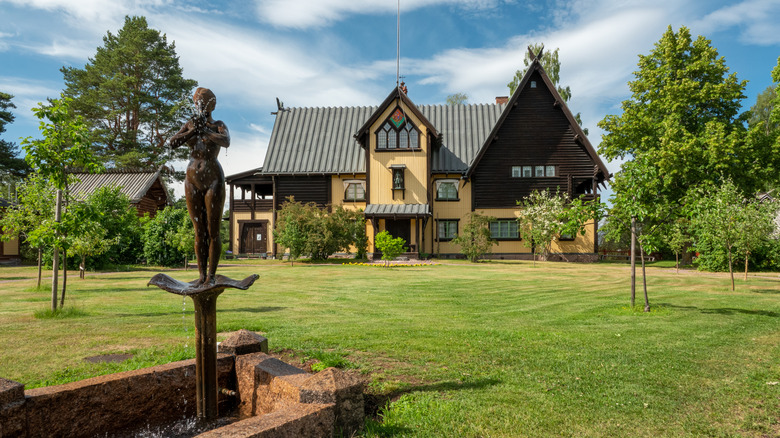
Mora undoubtedly comes alive towards the end of winter, when the Vasaloppet more than doubles the city's modest population of 20,000, split between more than 15,000 skiers and as many thousands of visitors. However, thanks to its museums and landmarks, Mora is an equally thriving hub of cultural and active delights year-round.
Start your exploration at the Zornmuseet, where over 20,000 of the finest artworks by Sweden's Master Painter, Anders Zorn, are displayed. Zorn famously painted the portraits of three U.S. presidents between 1893 and 1911: Theodore Roosevelt, Grover Cleveland, and William Taft. You can venture into Zorn's world by visiting the impeccably kept gardens filled with bronze statues, as well as visiting the artist's and his wife's private residence, Zorn House, a smorgasbord of styles, architectural eclecticism, and just a pinch of eccentricity.
The city is also the ideal base to visit the Nils Olsson factory and museum (6 miles out of Mora), where the iconic red Dala horse, a widely recognised symbol of Sweden, is carved from rough wood into a hand-painted final product. The Dala horse is just one of the many quintessentially Nordic gems of the region, which include pristine, mountainous woodlands, shimmering lakes, and floating saunas. Mora is perched on Lake Siljan, the seventh largest in the country of lakes, and a dreamy place to kayak, swim, and fish. It is also the gate to the region's many wonders, including the island of Sollerön, where you can hike the Fäbodleden route, allowing you to immerse yourself in ancient farm, lake, and mountain life, all within a day.