
5 Once-Thriving US Cities To Visit Where Booming Industry Has Faded, According To Data And History
A city's economy rises and descends with the unforgiving tides of political, social, and natural conditions, and things don't always end well. The epicenter of the domestic automotive industry can become a shorthand for urban decay. Even a place known as the Electric City can see its economic lights go out when a single industry collapses. Yet history and statistics show that once-thriving U.S. cities aren't irrevocably doomed when booming industry fades. The Motor City can be reborn as a center of innovative transportation labs, while another can be saved thanks to a cult sitcom that dubbed it "the Paris of the Northeast". The names on this list may seem like a shorthand for a bevy of American ills; many of them are also cities that have lost over half their population since their heyday.
But that's not to say cities can reclaim their lost identities. The United States' economy has spent the better part of six decades transitioning from a manufacturing to a service-based economy, and it's safe to say that the coal mines and steel mills aren't reopening. And while Cadillacs once rolled out of Michigan factories, now tortillas are being pressed in Florida, and meat and sodas are shipping out of Texas.
What remains are cities that look back upon their industrial heritage with a bit of nostalgia. Some use the relics of their past as attractions. Others repurpose them to create new seeds of industry. Still others weave their time as a manufacturing hub into the fabric of their history, filling museums with the artifacts of a past that exists somewhere between nostalgia and pride. All of them are destinations worth exploring, in spite of and because of their history as booming bastions of industry.
Detroit, Michigan
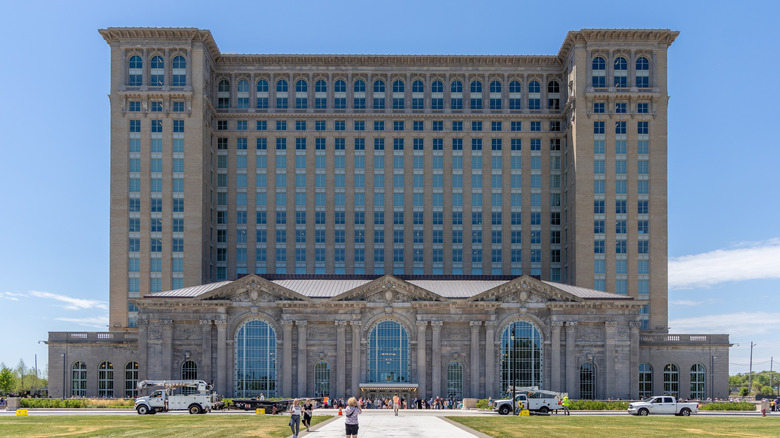
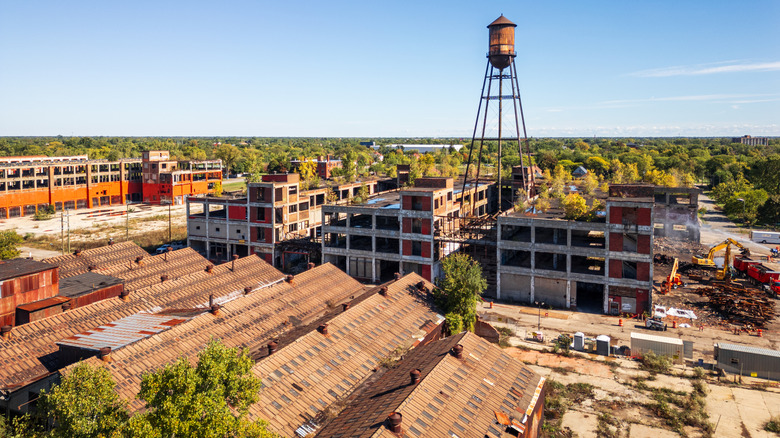
Visiting Michigan's largest city today evokes a mixed bag of emotions, equal parts a showcase of urban decay with the remnants of an industrial exodus still glaring back at you and a nascent revival gaining momentum. Landmarks that were once shorthand for blight are getting a makeover. Detroit's massive Michigan Central Station once cut a depressing yet imposing figure in Corktown. It has recently been revived as the crown jewel in a new transportation and mobility district, returning to its status as a train station that's a destination in its own right and making Corktown one of the country's most up-and-coming neighborhoods. It's a welcome bright spot in the once-thriving but troubled metropolis.
To understand today's Detroit, rewind back to the 1950s, when The Motor City represented the heart of a modern, industrial economy. The gleaming, proud home of the mass-production business model, with factory lines and lunchpail toting, unionized blue-collar workers marching to stable jobs. At its height, the city had 1.8 million residents in the 1950s, with about half the city's residents working in manufacturing in 1956, a majority in automobiles. Flight to the suburbs, dwindling factory jobs, and the once-mighty auto industry's decline shut off The Motor City's engine, forcing Detroit to declare bankruptcy in 2013. Things are changing for the better, however haltingly.
"Detroit and its suburbs have a ton of massive culture pockets, and it really pops from other cities," one local wrote on Reddit. "But Detroit can do a ton better to even be considered a high-ranking city."
Youngstown, Ohio
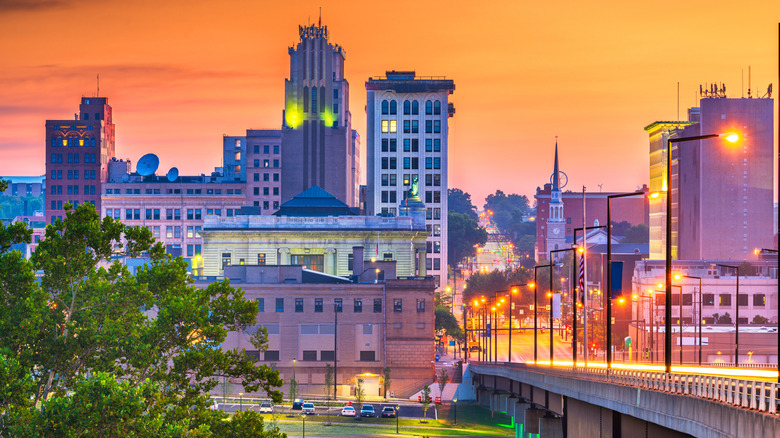
Steel Valley has come a long way from the days when shift whistles cut through the air. Today, it proudly wears its industrial heritage on its sleeve without bogging itself down in nostalgia. Case in point: the Youngstown Historical Center of Industry and Labor, which offers a gentle reminder of the steel mills that once dotted the city. Workers' tools, life-size recreations of work environments, and photos make up the museum's collection. Yet the city doesn't get bogged down too much in its past. Youngstown now ranks highly as one of Ohio's most affordable and artsy cities. Collections at museums like the Butler Institute of American Art and the McDonough Museum of Art offer a copendeum of uniquely American works, both modern and historic. This combination of culture, along with affordability (and golf), makes the Midwest city one of the top destinations to retire to. It's also quite proud of its craft beer scene and Mill Creek Park, its outdoor epicenter.
The artsy vibes are a far cry from Youngstown's recent blue-collar history. The dual discovery of black coal and seams of exceptional iron ore quickly turned a farming town into a premier steel mill, ranking just behind Pittsburgh. Foundries began popping up in the late 1800s, leading to a veritable boom in both population and industry in the 20th century. Smokestacks belched into the air as mills worked all day to satiate a country's expanding transportation network and, during two World Wars, a dire need for weapons. That boom in work led to a parallel boom in workers, as immigrants from across Europe's south and east flocked to fill job openings. The good times lasted until 1977, when 5,000 workers were laid off at one shuttered mill, triggering an industry-wide contraction in the area.
Buffalo, New York
Some places have built an admirable history of making goods at scale. Others have a knack for moving goods. Buffalo was one of the rare cities that specialized in both. It now banks on that dual industrial history, making itself a destination for architecture and nature lovers alike. The city's waterfront has become a hip attraction, drawing in visitors and locals.
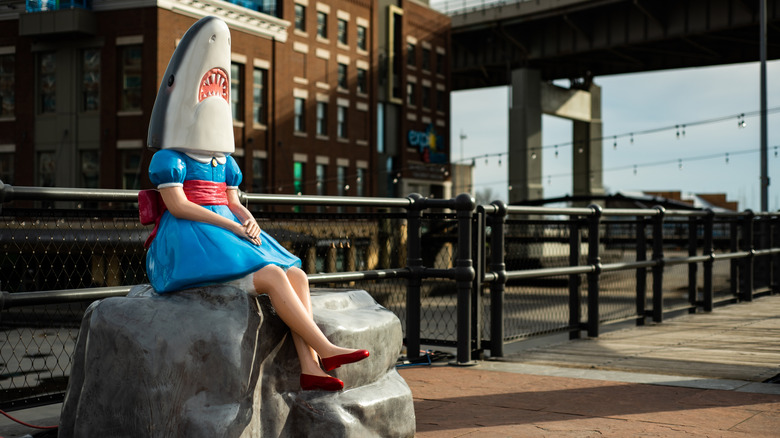
Silo City, a district along the waterfront, turns the world's largest collection of grain elevators into an idiosyncratic tour exploring Brutalist architecture and urban rewilding. It's a far cry from Buffalo's usual calling card as the home base for any visit to the United States' side of Niagara Falls, with the Peace Bridge offering a landmark connection to Canada. Canalside, a historic harbor that served as the city's western gateway to Lake Erie, transformed from an industrial logistics hub into the city's cultural epicenter — with an infamous sculpture aptly called Shark Girl at its heart. The transformation led the nonpartisan Brookings Institution to rate Buffalo's economic performance as "strong" among older industrial cities.
In the past, the city's location made it a logistical dream for companies shipping goods to the Great Lakes region. The creation of the Erie Canal made the city a gateway to several key lakeside destinations in the Midwest. Grain elevators like those in Silo City became a logistical boon, storing enough grain to provide a loaf of bread to 300 million people every week of the year. Eventually, the steel and automotive industries set up shop in town, fueling a population expansion that peaked in 1950, at just over half a million people. Eventually, a litany of ills, from deregulation to competition, sent Buffalo reeling, as it did elsewhere. Shark Girl, it must be said, came much later.
Baltimore, Maryland
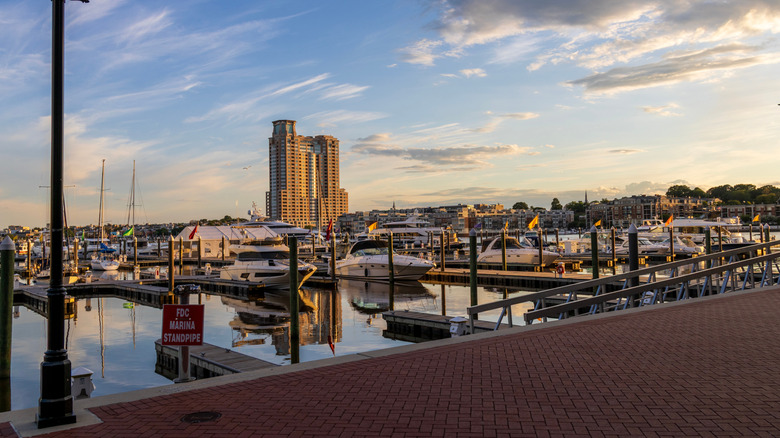
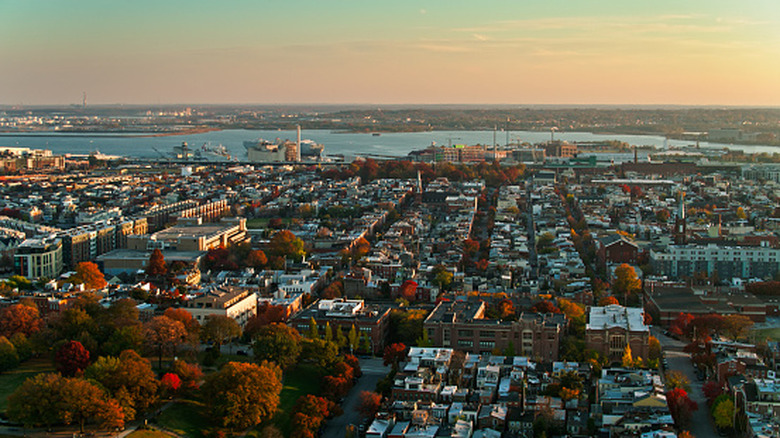
Maryland's largest city has used the same geographic and logistical advantages that made it an industrial powerhouse into a worthwhile travel destination. Its central location on the East Coast, with transportation options galore, makes it easy to reach, leading 28.5 million travelers to peruse its walkable neighborhoods and vaunted waterfront in 2024. It's also home to Charles Street, one of the best places in the country to explore urban culture.
Institutions like the Baltimore Museum of Art and the National Aquarium are part of a stretch of attractions that work in tandem with historic sites like Fort McHenry to create a full palette of destinations for visitors. This all runs alongside at least one facet of Baltimore's industrial past that hasn't died: its port, which still moves about $80 billion of goods annually.
The city's economic history is riddled with various booms, busts, and bubbles. At one point, you'd have to book a trip to Baltimore if you wanted to buy large heaps of guano fertilizer. Steel, chrome, and copper were all key parts of the city's economic engine, but manufacturing jobs have been in steady decline for decades, replaced by education and health, according to the Bureau of Labor Statistics.
Scranton, Pennsylvania
Before a certain mockumentary sitcom put Scranton on the map, it was a single-industry town married to coal and all the industrial appendages that sprout from extracting tons of anthracite. Setting aside Michael Scott and company, The Electric City has become known as a bang-for-buck destination, with one of the lowest costs of living in the country. And that dollar will take you quite far.
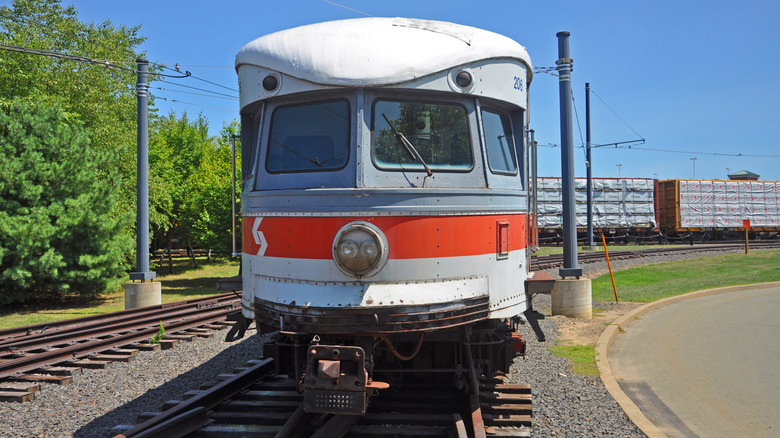
Scranton's art scene boasts a diverse mix of local creatives, such as the Artists for Art Gallery, as well as bespoke local attractions, including its Electric City Trolley Station. Those who can't avoid the connection to Dunder Mifflin can take a walking tour to satiate their inner itch for all things "The Office." The city's move away from its industrial history is still in its nascent stages, but it's a far cry from Scranton's history as a proud coal center, complete with its own heritage museum dedicated to coal mining.
The town's industrial boom began with the production of T-rails for railroads. Meanwhile, its anthracite coal reached far beyond its borders, fueling the industrialization of the rest of the country. Those raw materials, along with a boom in textiles, reached an apex in the 1940s, then steadily declined. The Knox Mine disaster in 1959, just outside of Scranton, effectively put an end to the area's coal mining, with manufacturing jobs slowly slipping away even today. Now, Scranton is working out how to best exploit its status as the "Paris of Northeastern Pennsylvania," as Michael Scott dubbed it.
Methodology
Assembling a list of once-thriving industrial hubs across the United States is relatively straightforward. But discerning which ones to select for this list proved challenging. In choosing these five cities, a set of criteria was established.
First, and most obviously, the city had to have a strong economic bond with one of the various branches of industry the U.S. specialized in in the 20th century: automotive, logistics, food, steel, or fossil fuels (namely coal). It had to have shed most, if not all, of its economic synergy with that industry, as measured by jobs and population data from the Bureau of Labor Statistics, the Federal Reserve Bank of St. Louis, and other statistical sources.
Cities then had to address the remnants of their industrial past in some fashion — whether through projects like Silo City or Scranton's Electric City Trolley Station. Finally, it had to have made some progress, however marginal, away from that dependency and towards a new economic engine, as measured by jobs data and anecdotes of new projects in the city, such as the Michigan Central Train station's revival.