
5 Walkable US Ski Towns Where You Can Skip The Car
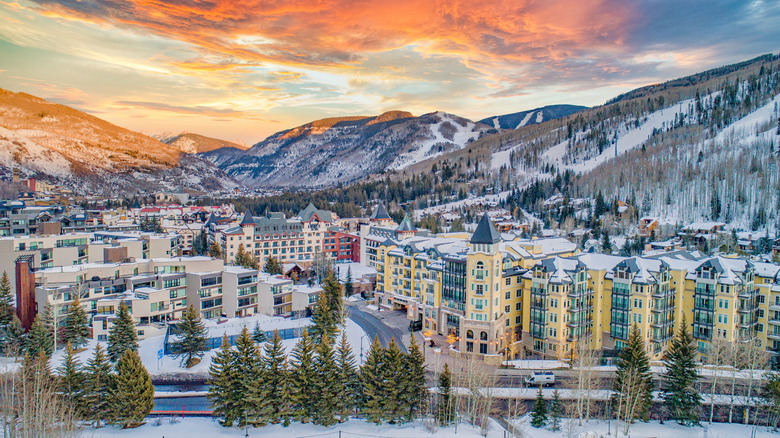
True ski towns can feel like their own universe. They lie in valleys or at the base of mountains, and their populations are usually pretty modest: The largest ski town in the U.S. is Bend, Oregon, with just over 100,000 permanent residents. Many model their main buildings on traditional architecture, from Swiss chalets to Old West settlements. And many are conspicuously walkable: You may not need a car to visit.
Instead of widening highways and paving new parking lots, these communities have developed foot-friendly centers and public transit infrastructure. You can drive there and park, picking up your car only at the end of your ski weekend — or you can skip the car altogether, and take public transport from the airport. In theory, the car-light strategy cuts down on noisy traffic and increases road safety. This and other attributes help certain scenic ski towns offer the best quality of life all year round.
While many ski towns make a car-free vacation easy, some locations are especially pedestrian friendly. Here are five walkable ski towns, where you should never have to switch on an engine, if you don't want to. We consulted a slew of reliable sources and compared infrastructure across several top-candidate towns. This list is not exhaustive (see some runners-up, below), but they're among the best boot-friendly destinations you'll find.
Telluride, Colorado
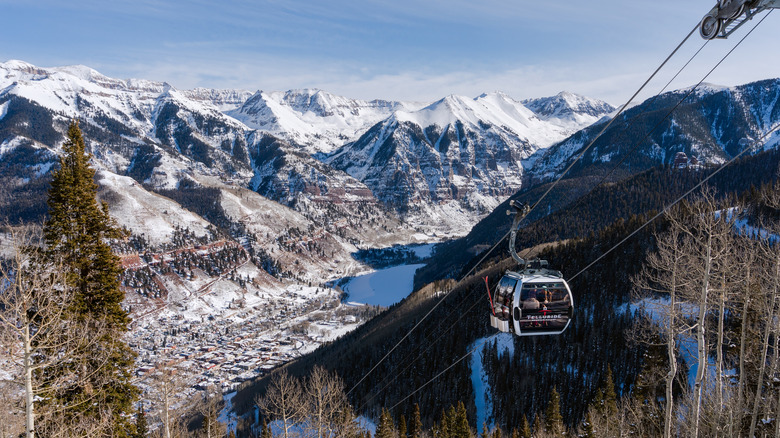
Telluride is one of the most famous names on the U.S. ski circuit, and winter sports enthusiasts flock to this Colorado town of 2,600 people every year. The town of Telluride Mountain Village is nestled in a deep valley and lies directly next to the Telluride Resort. From end to end, the town is only about a mile across, with a good number of hotels in between. You'll find everything in town, including restaurants, shops, and outfitters, and the community is always active; Telluride is a year-round destination that boasts front-row views of Colorado's iconic Rocky Mountains.
To reach the slopes, guests can ride a gondola (locally known as the "chondola") to the ski area directly from the village. The free system first opened in 1996 with the intention of improving air quality, and more than 3 million rides are taken every year. The four-person car provides 360-degree views and ascends to 10,540 feet above sea level.
Isolation is part of Telluride's charm: The town is a 5-hour 30-minute drive from Albuquerque and a full 6 hours from Denver. Many travelers will decide that the Rocky Mountain scenery is worth a road-trip, but others will find the overland journey far too tedious. Instead, you can fly into Telluride's own regional airport, with direct connections from Phoenix and Denver. From there, you're only 6 miles from town, a quick ride in a taxi or hotel shuttle if you want to skip a car entirely.
Vail, Colorado
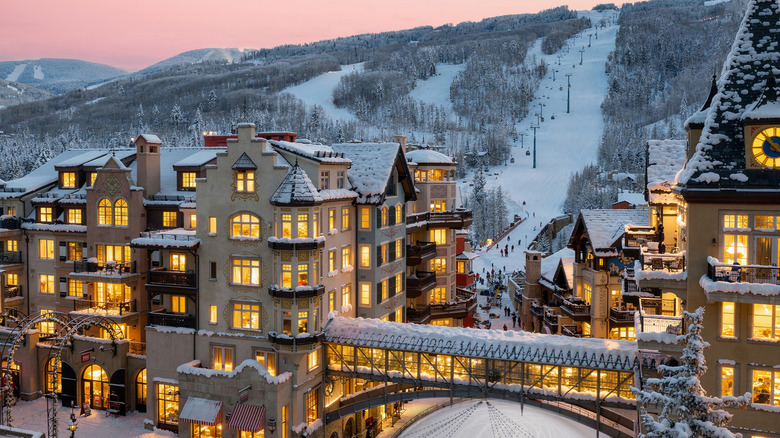
Vail is another of Colorado's flagship resorts, and skiers and snowboarders around the world daydream about carving its powdery trails. Vail is also a pretty dense little town of about 5,000 residents, with dozens of hotels clustered close together. As pictured above, much of Vail's development stands right on the edge of the ski runs. Here you'll find more dining, shopping, nightlife, and spas than you'll have time to explore, all accessible on foot or by public transit.
Vail was named the most resilient resort for skiers worldwide, and among its other great qualities, the town caters to pedestrians with a comprehensive bus system, which is free for all passengers. No need for dollar bills or a special card; you can just hop on and off at dozens of stops. The bus runs throughout the village and to Vail Mountain, operating from 6:30 a.m. to 1:30 a.m. all winter (early December to mid-April).
Vail is a much more reasonable drive than Telluride; you can motor here from Denver in less than 2 hours. However, you could also take a FlixBus along the same route in 2 hours and 30 minutes or a Greyhound bus in about the same time, and either option should cost less than about $30 each way. The Eagle County Regional Airport is also nearby, although not quite as convenient as Telluride's airport, the shuttle takes about 40 minutes to get from the airport to Vail village.
Park City, Utah
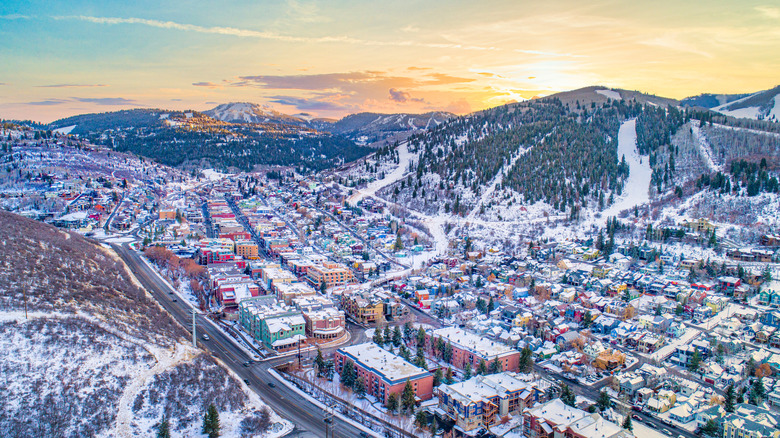
It's hard to believe this mountain community was once a ghost town. Now it's a permanent home to 8,200 residents, and you can find a wide range of dining, shopping, and services. The Old Town in Park City, Utah, is very walkable, with level sidewalks and slow-moving streets.
This town has lots of hotels, and most are so close to the downhill runs that you could practically ski into their lobbies. Local buses are free to ride, and many hotels provide shuttle service from the airport. Ride-share companies work here as well, making this one of the easiest ski towns on this list to reach, get around, and depart — all without your own wheels.
The entrance to the Park City Ski Resorts is just 38 miles from Salt Lake City International Airport, which translates to a breezy 45-minute drive. More than a dozen airlines fly into Utah's biggest city, making it easy for travelers to come here from many locations and hit the slopes within a couple of hours. If you're skipping the car, hop the light rail (Green Line) from the airport to Gallivan Plaza Station, then take two buses to Park City. The journey will take about 2-and-a-half hours, but the scenery is a spectacular distraction.
Stowe, Vermont
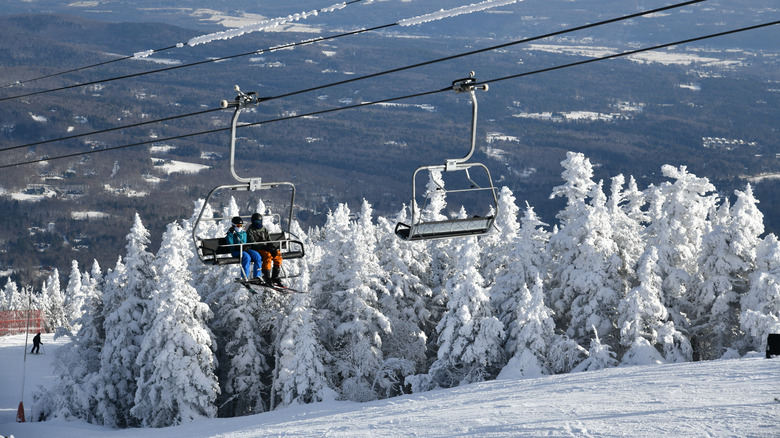
Stowe is a classic New England town in north-central Vermont, with one main street, clusters of houses, and a steepled church. You can easily walk around the downtown area, and many local inns are scattered along Mountain Road. The actual town is particularly small (pop. 803), in keeping with Vermont's reputation as the "most rural" state in the country.
Unlike the other communities on this list, the town of Stowe is a fair distance (6 miles) from the actual slopes, so you can't just roll out of your hotel bed and amble over to the ski lift. That's why the Route 108 Mountain Road Shuttle is so handy; this vehicle transports skiers back and forth all day. And yes, it's free to ride.
Vermont is a very car-centric state, and many locals would balk at the idea of visiting here without your own wheels. That's one reason Stowe Mountain Resort is so special: You can ride here on Amtrak's Vermonter Line, thanks to the dedicated Waterbury-Stowe train station. While the line is named after the Green Mountain State, the full route is shockingly well connected; you can take the train to and from Washington, D.C., Philadelphia, or New York City, or continue north to (almost) the Canadian border. That said, you'll still have to get from the station to the actual resort, which is about a half-hour away by taxi or an hour on two different buses.
South Lake Tahoe, California
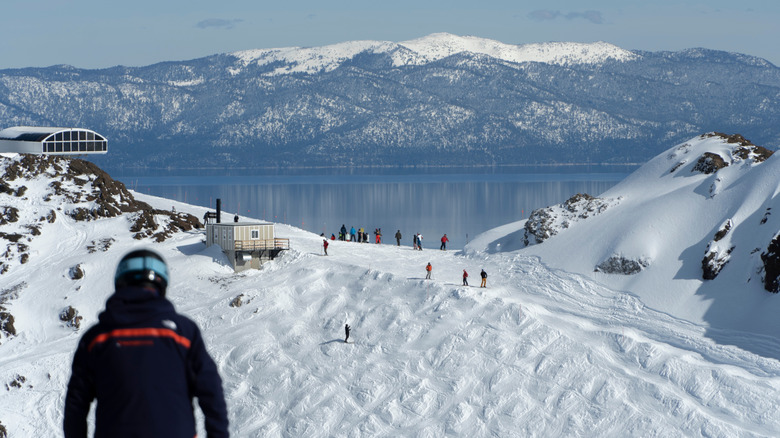
"Lake Tahoe" means different things to different visitors. The actual lake is 22 miles long; it straddles two states; and the water is ringed with mountains and ski areas. If you're looking for a car-free destination, your best bet is South Lake Tahoe, located on the edge of the California-Nevada state line just a stone's throw from Heavenly Mountain Resort, (okay, like 3 miles). The 10,000-foot Monument Peak stands just outside of town, and developed suburbs for its 22,000 permanent residents lead right up to the foot of the mountain. The main shopping and dining area is the lively and walkable Heavenly Village on the state boarder.
One of South Lake Tahoe's best amenities is Lake Link, a "microtransit system" with a dozen active passenger vans. Visitors can download a special app, much like Uber or Lyft, and request a pickup anywhere in South Lake Tahoe and its immediate neighbors in Nevada: Stateline and Douglas County. Unlike a shuttle, which runs on a prescribed route and schedule, this on-demand service is much more flexible — and it's still free.
The closest airport to South Lake Tahoe is in Reno, Nevada, which is just short of 90 minutes away by car.. An alternative is the South Tahoe Airporter, a shuttle that takes you directly to the Golden Nugget casino in the town of Stateline (also about 90 minutes), where most hotels are located. The Airporter costs around $32 per adult, each way, far cheaper than a rental car.
Methodology
The U.S. has a lot of ski towns you can visit without driving, so it was challenging to limit this list to 5 outstanding examples. To make the cut, towns needed three things: a convenient way to get there (without driving), effective local transportation (especially between hotels and slopes), and a walkable commercial center. To refine our selection, we consulted authoritative websites like On the Snow and Ski Magazine, and compared top contenders. We also compared online reviews for different resorts and towns from sites like Tripadvisor, as well as car-related travel forums on Reddit, to find out what regular customers were saying about walkability. Finally, we reviewed the towns' government and tourism websites, to assess official information on walkability and transport options. Towns that value walkability tend to highlight that for visitors.
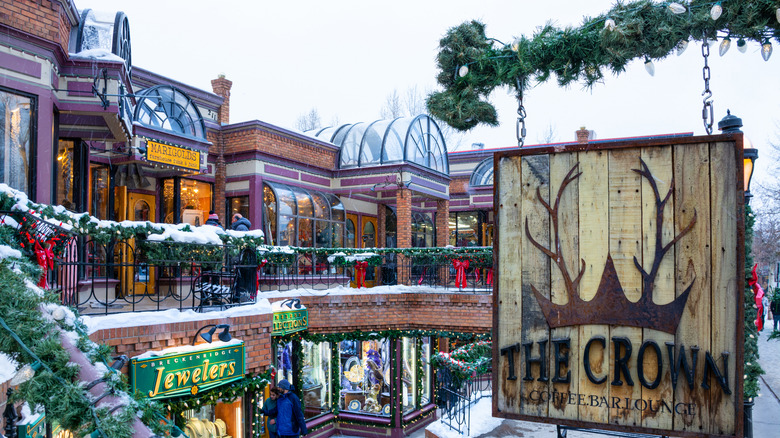
We also wanted to cover a broad geography, from New England to California, but some states really excel at both ski resorts and public transportation. We had to resist just picking 5 great spots in, say, Colorado. There are lots of runners-up, though: Breckenridge, Colorado (pictured) is a fantastic option, and the Breckenridge Tourism Office dedicates a whole webpage to the subject, titled "No Car, No Problem." Big Sky Resort, in Bozeman, Montana, is another great destination, thanks to its active and walkable "Town Center"; Bozeman is widely regarded as one of the best ski towns in the country, period. Wherever you decide to hit the slopes, we hope you get around the way you most prefer.