
Canada's Wildly Underrated National Park Is An Outdoor Haven With Roving Bison, Hiking Trails, And Camping
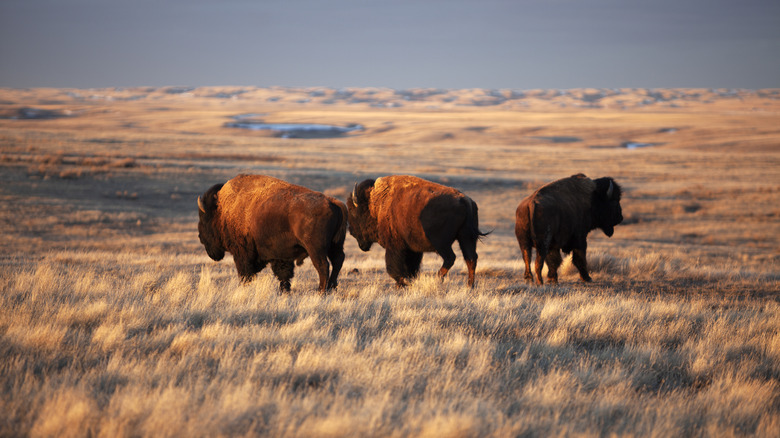
The United States boasts 63 national parks, but you only need to cross the border to explore nearly 50 protected national parks and park reserves. Canada's national park system has its own bounty, rightfully headlined by the vibrant blue waters of Banff and the rainforest-meets-ocean shorelines of Pacific Rim National Park Reserve — both of which attract over a million visitors each year. But as in the U.S., many spectacular landscapes are overlooked. Found in Canada's Saskatchewan province and abutting the border with Montana, Grasslands National Park is one such place. It's a refuge where visitors find windswept prairies, vast skies, dinosaur fossils, some extremely rare wildlife, and — best of all — no crowds.
Split into two blocks, the wilderness park covers over 350 square miles of remaining undisturbed mixed-grass prairie. Within this protected landscape, you will find miles of trails where you can pitch a tent beside million-year-old buttes, encounter grazing bison or endangered black-tailed prairie dogs, and watch sunsets fade into something even more beautiful — star-filled skies that feel infinite. Grasslands is one of Canada's biggest and darkest Dark Sky Preserves, so you are able to see the Milky Way with the naked eye and, seasonally, witness northern lights dance over these lush flats.
However, the adventure begins on the journey itself, as reaching the park means passing through sparsely populated areas and driving several miles on a gravel road before entering through either of the two entrances: East Block or the West Block. The nearest major airport is in Regina, Saskatchewan's capital, about 3.5 hours away. Or, you can fly into Saskatoon John G. Diefenbaker International Airport (YXE) – Canada's best-rated airport known for comfy lounge and great dining – which is a little over 4 hours away. If you're coming in winter, note that the camping, visitor center at both blocks, and some drives and trails may be closed.
Prairies, badlands, and wildlife of Grasslands National Park
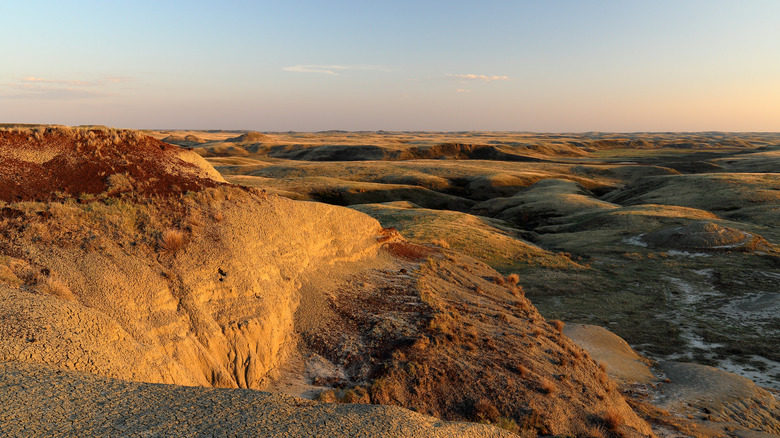
Part of what makes Grasslands National Park so special is its incredible wildlife, with many visitors reporting several encounters on their trip. Keep an eye out for rare species such as ferruginous hawks, piping plovers, burrowing owls, and sage thrashers, along with short-horned lizards, pronghorn antelope, prairie dogs, and of course, the plains bison. To spot herds of bison roaming, many folks simply cruise down the Ecotour Scenic Drive – a 12.4-mile gravel road that winds through the grassy prairies and weathered buttes, making it a great spot to enjoy the park's one-of-a-kind landscapes and watch these creatures wander.
Another way to see Grasslands' geology and native fauna is to use the dozens of hiking trails that dot the park. Some also allow backcountry camping. Before setting out, though, there's some caution and prep to be sorted. Shade is scarce, there are few people, and cell service is spotty, so pack everything you'd need — water, snacks, a first-aid kit, sunscreen, and extra layers. Temperatures can vary across elevations, and with trees out of sight, winds can flow freely and sometimes be severe. Always check weather conditions and don't hesitate to ask the park rangers for tips and advice – many Google reviewers describe them as incredibly helpful and informative. (Remember this easy mnemonic if you get lost while hiking.)
A highly-rated trail with a quick turnaround time (1.5 hours from start to finish) is the 70 Mile Butte Trail, which, according to one Tripadvisor reviewer who spent 3 days exploring the park, was "the highlight of our visit". The moderately challenging hike takes you to the top of a rolling butte with expansive views of the rare grasslands. If you're already on the route and want more of a challenge, you can pair it with the Eagle Butte Trail to form a 3-mile loop with 482 feet of elevation gain. Offering more sweet views, informational signs, and wildflowers in spring, this hike is a nice all-around introduction to this preserve's unique topography.
More trails and camping at Grasslands National Park
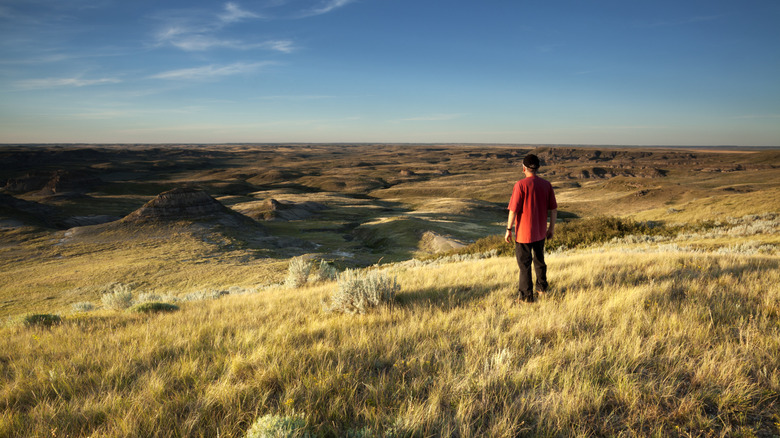
Another top trail to explore is the one that exposes the dramatic badlands' side of the reserve. The Valley of 1,000 Devils Trail is a 7.1-mile moderately challenging route in the East Block where the landscape changes with every turn — coulees, scrubbed prairies, and ravines appear around each bend. A hiker shares, "It's like being alone in the world and stepping back in time." If you don't have the chops for challenging hikes, the Badlands Parkway is a 6.8-mile, paved scenic drive that brings you closer to these enticing landscapes.
Those who want to stay overnight in this hidden gem — which sees fewer than 20,000 visitors a year — have a few options. The park has two main campgrounds: Frenchman Valley Campground and Rock Creek Campground, one at each block. Together, they offer 44 electrical sites and 12 A-frame cabin sites known as oTENTik, which come equipped with beds, electricity, and a dining table. Shared facilities include vault toilets and water.
One reviewer writes, "I agree with other reviews that said this park is under-rated. It was well worth the time and effort to come here. We stayed in the west side at Frenchman valley campsite in an o-tentic [sic]. Very comfy – even during a heat wave (cooled down nicely at night)." As of this writing, nightly camping fees start at around $19, while oTENTik will cost you roughly $115. Meanwhile, adult admission is $5 unless you have a Canada Strong Pass handy.