
The Scientific Reason Your Dreams May Be Wildly Vivid While Visiting The Colorado Mountains
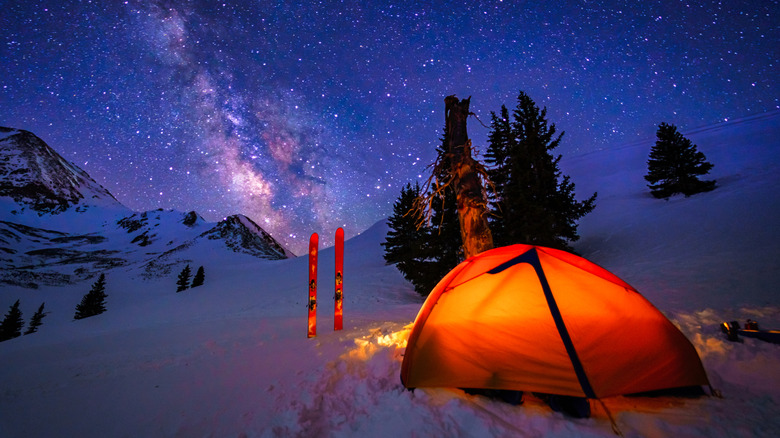
Colorado, with its four national and 40 or so state parks, offers adventurers of all levels a plethora of thrilling outdoor activities. With over 30 ski resorts, it's certainly the state with the absolute best skiing in the U.S. Beyond the winter offerings, you can also go boating, rock climbing, and even summit the 14,443-foot Mount Elbert, Colorado's highest peak with breathtaking views. But if you've ever been camping in the state's high-altitude mountains, you may have experienced this phenomenon: wildly intense dreams that you remember vividly upon waking.
There are several reasons for these dreams, including physical fatigue from a long day of trekking, the changes to your normal environment, and dehydration. All of these elements impact the quality of your sleep and the ability of your brain to function. But the main factor behind your wacky dreams is hypoxia, a condition where your body tissues have lower levels of oxygen. As outlined in an older study from 1999 and again in a 2004 study, if your brain is generally used to receiving more oxygen, it will change your sleep patterns when deprived of it. Your REM sleep cycle, which is where we most commonly experience dreaming, is disrupted, causing you to wake more frequently and, therefore, recall your dreams with increased clarity.
Dr. Chelsie Rohrscheib, a neuroscientist and sleep researcher, explained this further in an interview with Backpacker: "Dreaming is closely linked to stress and emotional processing. ... This heightened stress state can manifest as unusually intense or strange dreams." So, if you're terrified awake during your slumber in the mountains after seemingly real nightmares of being chased by menacing spirits, now at least you'll understand the science behind this occurrence.
How to reduce the impacts of hypoxia at high altitudes
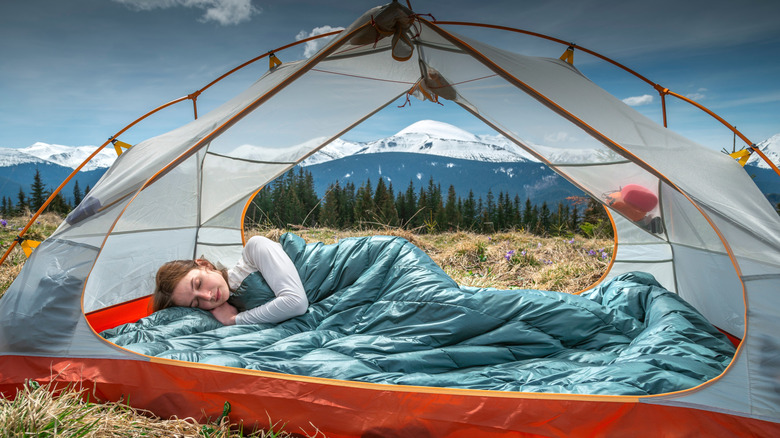
These vivid dreams are not problematic on the surface. After all, what could be wrong with waking up with memories of riding a unicorn across a sky filled with marshmallow clouds? However, it's not the dreams themselves that are the issue — it's the hypoxia causing them. Therefore, it's important to keep certain tips in mind when planning a high-altitude trek.
Hydration is key, since we lose moisture more rapidly at higher elevations. Even if you don't feel thirsty, ensure that you drink water regularly (more than you think is necessary). Additionally, stop to rest periodically during your hike. If you're a coffee fiend, note that caffeine can also negatively impact your sleep quality, so try to limit your intake. Make sure to ascend slowly so that your altitude gain isn't too dramatic (no more than 1,640 feet per day is best, according to Cleveland Clinic) and your body has time to adjust to the lower oxygen levels. Set your pillow on an upward slope to keep your head elevated while sleeping. And, just for fun, place a journal nearby to jot down your kooky dreams for future laughs (or scientific analysis). But if at any time you begin to experience extreme confusion or headaches, respiratory problems, vomiting, or other similar difficulties, you should begin your descent.
So, whether you're on the historic trails of Hartsel, a high-altitude hideaway known as the "heart of Colorado," or on one of the state's best hot spring hikes with stunning beauty, make sure you're taking the aforementioned precautions. Enjoy the wild nature (and even wilder dreams) of your Centennial State visit while staying safe outdoors.