
The 'Canadian Caribbean' Is A Stunning Island Getaway With Sandy Beaches And Peaceful Paddling
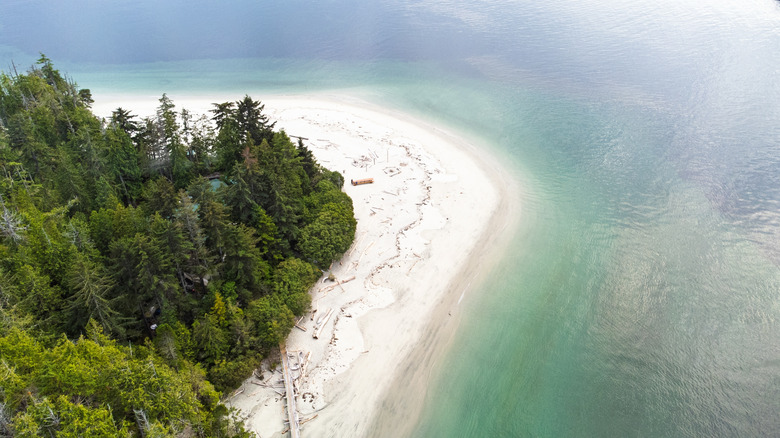
If you didn't know better, you might mistake Calvert Island for a far-flung Caribbean escape. Of course, there are a few clues that give the island away as distinctly Canadian. There are evergreens in place of palms, cool Pacific breezes, and a lack of glitzy resorts. Calvert Island has been designated the "Canadian Caribbean" by Reader's Digest Canada for its beaches on glassy lagoons and abundant sea life, but perhaps the one major perk that sets it apart is its uncrowdedness. The island is very remote, and you won't find any beach clubs or souvenir stands along its shores. That could make it a perfect outing for the solitude-seeking traveler who wants to enjoy sand and nature without jostling through tourists.
Some of British Columbia's popular Pacific islands can be accessed by regular ferry services — such as Vancouver Island, which is also home to a roadside town with delicious eats. That's not the case for Calvert Island. Getting directly to Calvert Island requires a multi-leg journey. You can charter a boat or book a seaplane, or you can go the true adventurer's route and paddle to the island. Paddling via canoe or kayak is one of the experiences Calvert Island is most apt for, and as you glide around the island's waters, there's a good chance you'll be accompanied by whales or harbor seals. Then, you can pull ashore on one of the beaches and sunbathe with the surf and distant seabirds in your ears.
Paddle along the secluded shores of Calvert Island
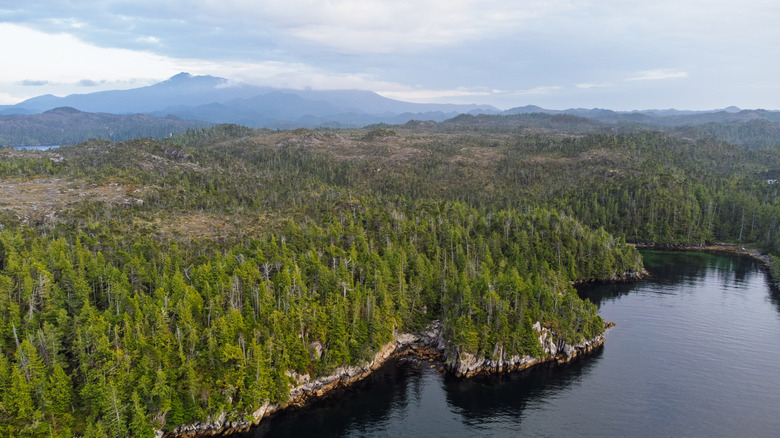
Paddlers who want to enjoy Calvert Island's Caribbean-like blue-green waters can either bring their own sea kayak or rent one on Vancouver Island. One option for rentals that gets good reviews is Comox Valley Kayaks and Canoes in Courtenay. From Vancouver Island, you can take a ferry ride to Bella Bella, a First Nations town serving as the launch point to the island. If you prefer to go with a guided tour, Spirit of the West Adventures has one paddling expedition that covers multiple islands around the Great Bear Rainforest, including Calvert Island. It's a serious commitment, though, spanning eight days and moving campsites from night to night.
Once you're on the open waters, the channels offer excellent wildlife viewing. According to BC Parks, over 100 bird species have been spotted around the northern reaches of Calvert Island. You might see bald eagles wheeling overhead or pelagic cormorants basking on shorelines. Meanwhile, offshore waters are full of orcas, seals, humpback whales, and dolphins. "We had daily humpback sightings in Fitz Hugh Sound, several at a close range," described travel blogger Adventures All Year. The Fitz Hugh Sound is on the east side of Calvert Island.
Coming in via Fitz Hugh Sound, you can anchor at sheltered waters in Safety Cove, while paddlers approaching from the north can anchor at Pruth Bay. There are expansive, sandy beaches all along the shores. As British Columbia explorer and blogger 3meterswell noted, the beaches "seldom get visited other than by the ever present wolves." While there is a chance of seeing some fishers, you'll likely have the coves to yourself to wander or lounge on.
What to know before visiting Calvert Island
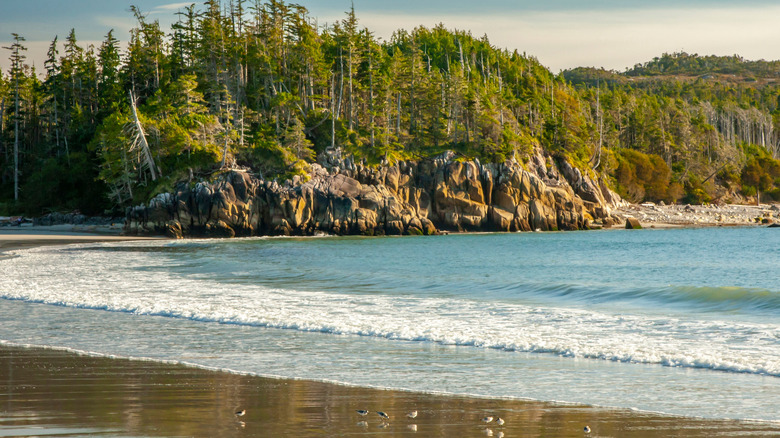
Getting to Calvert Island requires a few travel maneuvers. If you want to travel without a chartered boat or plane, you'll first need to get to Vancouver Island's northern coast. Port Hardy is a common base for getting around the islands north of Vancouver Island. Pacific Coastal Airlines offers daily flights to Port Hardy from Vancouver International Airport, which was crowned the best in North America. From here, you can hop on a BC Ferry and get off at Bella Bella with kayak in tow, if you plan to paddle from Bella Bella to Calvert Island. The ferry schedule varies depending on the season.
Calvert Island is managed by two conservancies (Hakai Lúxvbálís Conservancy for the northern portion and Calvert Island Conservancy for the south), which allow for free and public access. Just make sure to follow the conservancies' responsible recreation guidelines, including only lighting campfires in designated fire pits. One other thing you may want to be wary of is weather — one area in which the island isn't like the Caribbean. The waters around this part of British Columbia can get very windy, and temperatures are much cooler than its tropical counterparts.
Those interested in exploring some of Canada's western coastal islands can also check out the Discovery Islands archipelago, known for whale watching and cozy wineries.