
The Quick And Easy Passport Barcode Trick That Could Save Your Vacation
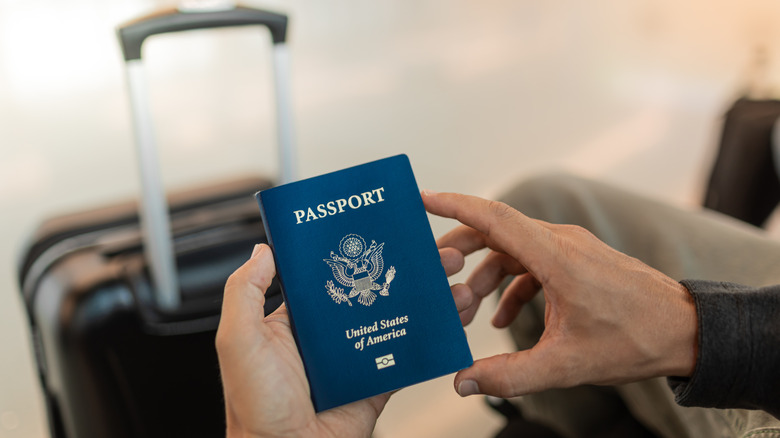
Passports are among the most important documents any of us will ever own. Your ticket into (and back out of) a country, you may also need it for securing visas, checking into hotels, renting a vehicle, to being eligible for tax-free shopping, and even exchanging money or making international phone calls. With a document this vital, you don't want to misplace it, but passports have a way of going on walkabouts. 900,000 American passports were reported lost or stolen between January 2024 and July 2025, an average of 600,000 a year. That's where a quick and easy barcode tip can come in handy — and literally save your vacation from ruin.
Valerie Stemper, a travel influencer who posts under the handle littleeyes.bigworld, offered this tip to her more than 130,000 Instagram followers last year. Simply put, Semple said you should take a photo of the barcode on the back page of your passport. That way, if you lose your passport while traveling, you can "expedite the [recovery] process, exponentially." The passport barcode is encoded with your personal information, like name, date of birth, nationality, and passport number, and is used by customs officials to streamline the immigration process.
Up there with checking your passport's expiry date — Rick Steves' crucial tip for tourists heading to any European country — snapping clear photos of the barcode is among the most important preemptive measures you can take before traveling abroad. Bear in mind that the barcode page in an American passport is at the back of the document and shouldn't be conflated with the few lines of encrypted text at the bottom of the biographical page known as the Machine Readable Zone (MRZ). It also differs from the QR code on new U.S. passport books, which brings up a passport information webpage when scanned.
What to do if your passport is lost or stolen?
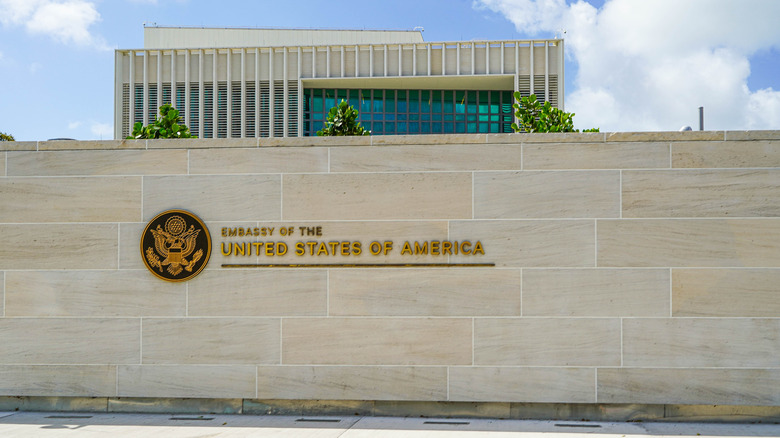
According to the U.S. Department of State, if your passport is lost or stolen while on vacation, you must report it immediately using one of three methods: online, by mail, or in person when submitting a new passport application. This offers protection against identity theft and renders the missing passport obsolete. The next step is to contact the nearest U.S. embassy or consulate; they can either replace your passport or offer an emergency copy, valid for up to a year, if there isn't enough time to receive a regular passport before your return journey.
As Stemper noted in her Instagram video, having a picture of the passport barcode allows embassy staff to verify your personal information, thus ensuring the passport is reissued more efficiently. When visiting the embassy or consulate, you'll also need a 2x2-inch passport photo, some other form of identification, details of your travel plans, money for the passport fees, a stolen or lost passport police report (if filed), and proof of U.S. citizenship, like a photocopy of your passport or birth certificate.
Processing times can take up to a few weeks for a reissued full-validity passport (the exact length varies from country to country), while emergency passports can be issued in as little as 24 hours.