
Australia's 'Grand Canyon By The Sea' Is A Crowd-Free Desert Wonder With Hiking Trails And World-Class Snorkeling
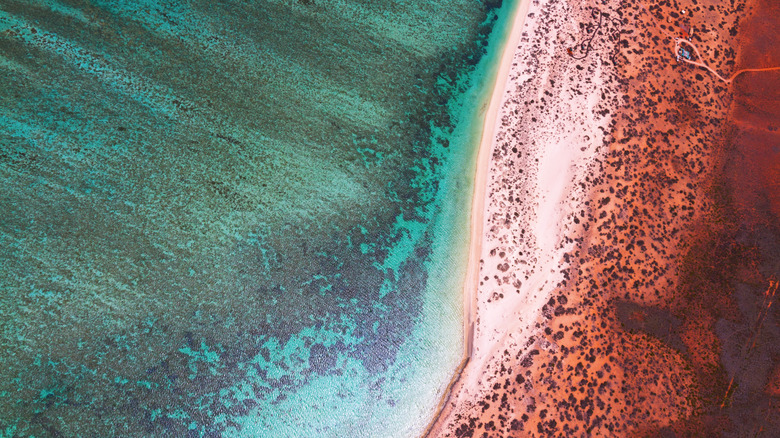
The Grand Canyon is undoubtedly one of the most breathtaking landscapes you'll ever see, where turquoise waters and a lush oasis await at the end of the ancient Hopi Salt Trail. On the other side of the world, in the Land Down Under, one place evokes scenery so similar that it's referred to as "Australia's Grand Canyon by the sea." Cape Range National Park takes up approximately 124,988 acres of space on the North West Cape Peninsula in Western Australia. This spectacular destination consists of vast limestone beds and immense canyons that give it an arid, desert-like appearance. The sheer expanse of the unique terrain makes for unforgettable trails in the wide-open country.
Cape Range National Park is also a waterfront haven, serving as a gateway to the Coral Coast. With a 31-mile shoreline surrounding the barren plains, expect world-class snorkeling at this desert wonder. This stretch of sand gives you the chance to view parts of the 161-mile-long Ningaloo Reef. In fact, the park's Turquoise Bay was ranked as the 11th best beach in the world in 2025 on The World's 50 Best Beaches list. While certain famous spots attract many travelers, you can still have a crowd-free trip when visiting underrated areas.
Getting to Cape Range National Park is an adventure in itself. International travelers will have to fly to Perth first, then hop on another plane to get to Learmonth Airport. From there, the drive takes one hour and 20 minutes. The closest city to the park is Exmouth, a resort town located an hour away. You can either book accommodation there or opt for a true wilderness experience by camping in the rugged park. Osprey Bay, Yardie Creek, Kurrajong, North Mandu, Tulki Beach, and Bungarra Campgrounds are some of the well-known areas in Cape Range.
Explore the hiking trails of Cape Range National Park
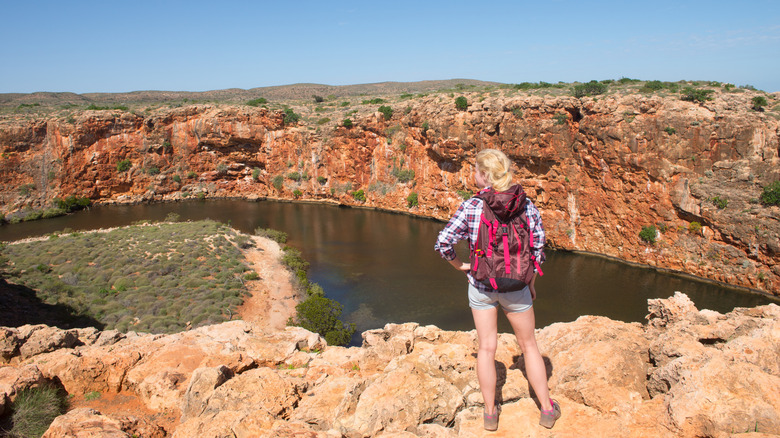
When you have canyons, caves, and an immaculate coastline at your fingertips, you have to hit the trails to get the best sights. If you're starting at the park's southern end, the Yardie Creek Gorge Rim Track is a great way to see the best of both worlds: the beach and the Australian Outback. Spanning 1.7 miles, this out-and-back trail exposes you to the limestone crags in a stark, sun-baked landscape, interrupted only by the glittering Coral Coast. While the hike begins easily, the path gets rockier as you advance.
Those who pitched their tents at the Osprey Bay Campground can complete the Sandy Bay Walk for more ocean views. The short, 1.1-mile out-and-back trail takes you to the bay's day-use area, where you can wade in the sea and enjoy snorkeling. Meanwhile, in the northeast part of Cape Range, you can traverse the Badjirrajirra Trail. This is a 4.7-mile loop that climbs up to 600 feet, with a surface comprising a blend of loose rock and karst limestone. Although rated as a moderate hike, this trek involves navigating rocky, technical terrain in some portions. Eventually, you'll arrive at the Shothole Canyon Lookout, allowing you to take in the panoramic vistas of Cape Range. Make sure to bring enough water, as there are no facilities along the way.
If you're up for a challenge, you can combine hiking the Badgirrajirra Trail with the Thomas Carter Lookout for a longer journey. This is an 11.8-mile loop that can take up to 5.5 hours to complete — the Thomas Carter Lookout is among the highest vantage points here, giving the trail an elevation gain of 1,213 feet. Due to severe weather conditions, the best time to attempt this hike is from April to September.
Go for a dip to explore the reefs of Cape Range
Contrary to popular opinion, there are other snorkeling destinations in Australia than just the Great Barrier Reef and its dreamy island resorts. And at Cape Range National Park, you won't even have to ask yourself how to find the best snorkeling places. Ningaloo Coast is not only a UNESCO World Heritage Site, but also the largest fringing reef in the world. This underwater marvel gives you the opportunity to swim with manta rays, whale sharks, and humpback whales — the national park is your access to the coral kingdom.
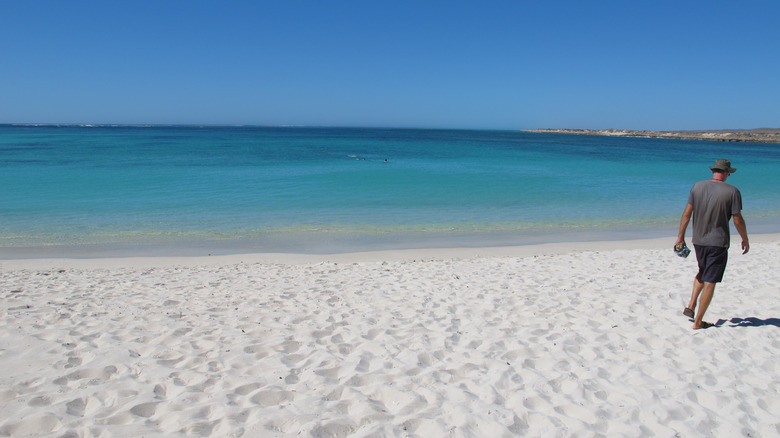
Turquoise Bay is the most well-known snorkeling area in the park, with crystal-clear waters perfect for discovering marine life. Here, you can drift snorkel to admire kaleidoscopic corals with colorful reef fish, sea turtles, and other creatures. Another snorkeling spot within the park is Sandy Bay. This lesser-visited beach allows you to snorkel without the crowds, with a shallow shoreline safe for wading in the water. Boasting white sands, Sandy Bay is ideal for snorkeling, kite surfing, and windsurfing.
At high tide, the Oyster Stacks offer some of the best snorkeling in Cape Range. This site features five separate islets rising from the seabed. As you snorkel through the coral garden, you'll come across angelfish, parrotfish, and even octopus. If you stayed the night at the Osprey Bay Campground, you can go snorkeling just a short walk from your campsite. Although it's a small beach, you can still enjoy snorkeling either from a kayak or from the shore. Plan your trip between March and August, and whale sharks might keep you company. Humpback whales, on the other hand, start migrating between July and August. With so many unique experiences, there's no doubt that Australia offers some of the best coastal vacations.