
How To Find Florida's Seaweed-Free Beaches
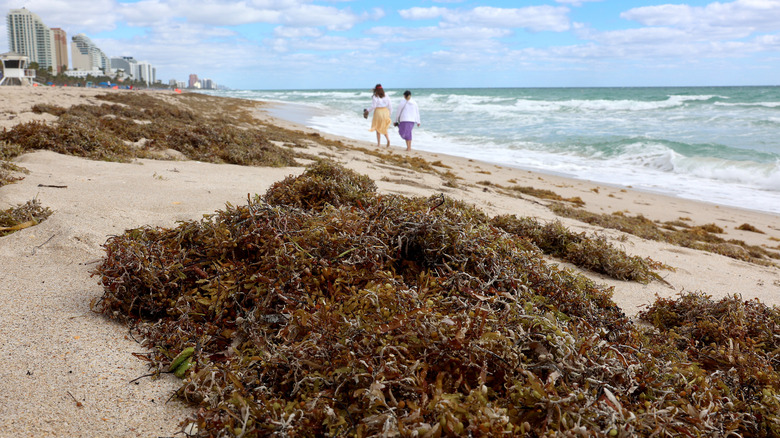
Florida is one of America's top beach vacation destinations, home to over 820 miles of sandy beaches, including Honeymoon Island State Park, one of America's best beaches in 2026. But while many Florida beaches are famous for their beauty, they might also be about to have another distinct but less inviting feature: seaweed. Over nine million tons of Sargassum (a type of algae that presents as brown seaweed) are already on their way to Florida, the Florida Keys, and the Caribbean, pushed along the Atlantic Ocean by currents and winds. According to Popular Science, Florida beaches could see more Sargassum along their shorelines in 2026 than ever before. Fortunately, there are ways to still find seaweed-free beaches in the state.
Locals and travelers can use the Sargassum Monitoring service online, which tracks and forecasts the movement of Sargassum for up to seven days. The map includes red dots, indicating where Sargassum deposits have already been identified via satellite imaging. However, the forecasts aren't completely reliable. That said, it's evident through the map and past years that Florida's southeast beaches will be more impacted by Sargassum than its Gulf Coast shorelines. It's usually a safe bet to opt for a Florida beach on the Gulf of Mexico (renamed the Gulf of America in 2025 by U.S. President Donald Trump), where Sargassum doesn't typically reach.
While Sargassum has been coming to Florida almost every year since scientists noticed the pattern in 2011, it's arriving earlier and in potentially record-breaking amounts due to stronger wind systems and warmer ocean temperatures. The seaweed has already disrupted Spring Break festivities on some Florida beaches — an unexpectedly early appearance. Beach clean-up crews do their best to remove the seaweed, but beachgoers may want to avoid the state's southeast coast this year.
Where to have a seaweed-free beach vacation in Florida
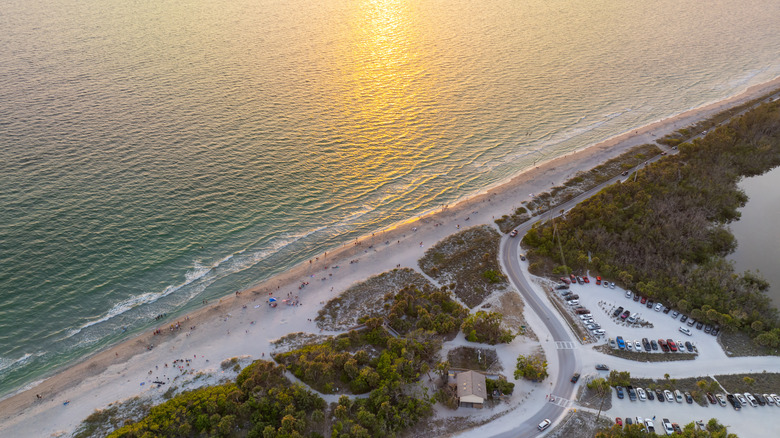
While it's still too early to predict exactly where the Sargassum will end up in Florida, it does appear to be moving past Florida's southwest coast on the Sargassum Monitoring map. You may still find it washed ashore on beaches here, but not usually in overwhelming amounts. Large clumps of Sargassum can deter beachgoers, as it releases a rotten egg-like stench while decomposing. However, small and avoidable amounts in the water or washed ashore can be manageable.
If the incoming seaweed is making you think twice about booking your summer vacation, remember that Florida has numerous Gulf Coast beaches worth visiting. Blind Pass Beach is a quiet stretch of Florida's Pristine Gulf Coast that rivals the Caribbean and is often free of seaweed during the summer. Another option is visiting Ozello, a maze of Gulf Coast islands with fresh seafood and clear waters. Visit Florida also lists all the beaches on the state's Gulf Coast stretch. There are over 50 destinations to choose from, so you're bound to find one that can cater to your vacation.
You can still visit the beaches on Florida's southeast coastline. Sargassum season tends to peak during spring and summer, but also ends before the hot days turn cold, so you might not be impacted depending on when you plan to visit. Sargassum removal efforts in Florida are a $35 million initiative, so it's also worth checking whether the beach you want to visit has its seaweed levels under control. It's also not life-threatening to humans, but it can irritate your skin or give the beach an unpleasant odor. People with asthma may want to avoid it, though, as the gas it releases when decomposing can exacerbate symptoms. However, this is rare on beaches, where clean air flow is ever-present.