
Utah's Once-Thriving Railroad Locale Is Now An Abandoned Ghost Town With Historic Ruins To Explore
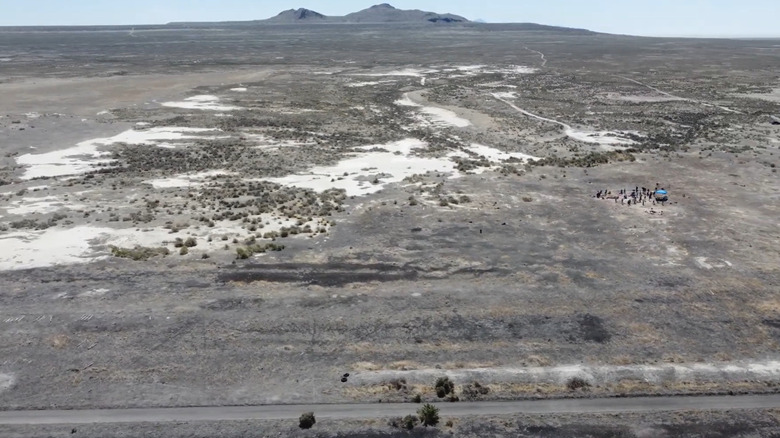
In the vastness of Utah's northwest desert, surrounded by sand and dust, big empty skies, and tufts of sagebrush, sits the abandoned town of Terrace. At more than 40 miles from the nearest gas station, you'd be forgiven for wondering why anyone would erect a town in such a patently remote place. But in the latter half of the 19th century, Terrace was booming, with as many as 1,000 residents. From 1869 to 1904, it was the major Utah terminal on the First Transcontinental Railroad, which connected New York with San Francisco.
Today, there's little evidence of Terrace's prior significance. Connected to Highway 30 by an old railroad grade road, the ghost town is as flat as the land it sits on. The railway depot, the main street, and the shops, hotels, saloons, and 1,000-book library are long gone. All that's left are remnants of the railway track, cracked and displaced over time, depressions left behind by the former 18-stall roundhouse and turntable, and a forlorn-looking cemetery. Then there's Terrace Mountain a few miles to the south.
While Terrace lacks some of the architectural features found in Utah's other once-thriving but now abandoned ghost towns, archaeologists have been conducting digs and research in the area to uncover more about the town's history. They are particularly interested in Terrace's Chinese population — which may have made up 10 percent of the total — many of whom helped to build the railroad. Digs uncovered the foundations of houses in Terrace's Chinatown, featuring artifacts like porcelain vases, medicine jars, Chinese coins, bamboo-leaf paintings, and Go pieces. These artifacts will be displayed in the Museum of Utah in Salt Lake City, opening later this year.
Exploring Terrace Today
Despite there being no dilapidated buildings to wander through, Terrace is still worth visiting if exploring ruins is your thing. Research was begun here because Chris Merritt, a local archaeologist, was walking through the area and discovered a large concentration of Chinese artifacts poking out of a depression in the ground. That inspired him to better understand this unique aspect of Terrace's history. When walking through Terrace, you probably won't find bits of priceless porcelain in abundance, but there are fragments of the former town scattered around, jutting out of the earth like bits of fossilized bone.
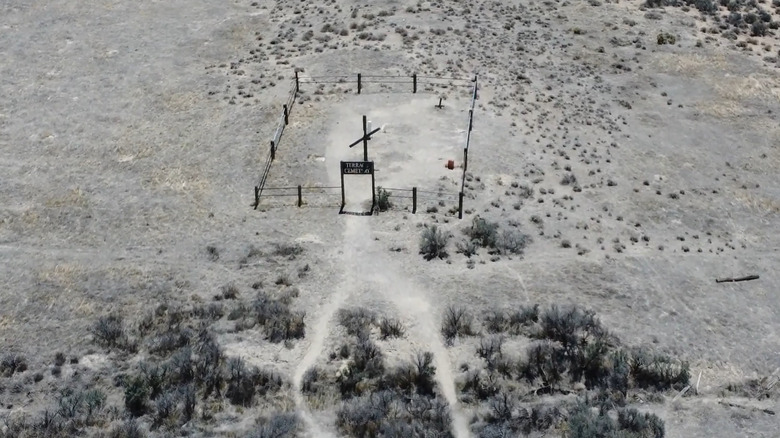
Railway struts, fasteners, and parts of trestle bridges lie about in varying states of disrepair. You might find some exposed brick foundations marking neighborhood divisions, and traces of the turntable, used for changing the locomotives' direction, and the roundhouse, where locomotives were stored. The Terrace Cemetery announces itself with a square-arch entrance and a large wooden cross wedged into the desert soil. Nearby is a signboard with some information on the cemetery, which notes that it was used until 1910, six years after the railroad was rerouted 40 miles to the south, causing Terrace to be abandoned.
Before archaeologists got to work on the ruins, scavengers and amateur treasure hunters had scoured the site, meaning many interesting artifacts have ended up in private homes, in auctions, or, sadly, in the backs of garbage trucks. As such, some excavated areas are now fenced off or reburied to deter future looters. Think of exploring Terrace as more of a historical investigation and an exercise in imagination, where every sign of the past and every fragment you encounter helps to construct your own interpretation of the town's former glory.
Getting to Terrace
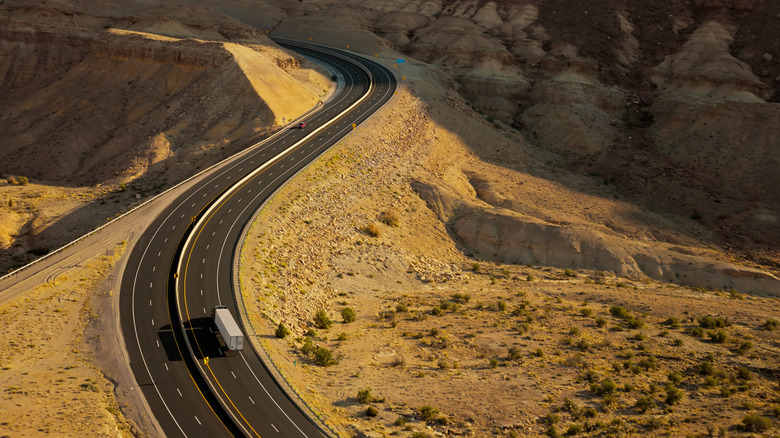
Terrace is distant and not easy to find on Google Maps. It's officially listed as "Terrace UT Central Pacific steam locomotive turntable., Utah 84083," and is accessed by a dirt and gravel road stemming off Highway 30, a little east of the Bovine Mountains and Devils Playground Recreation Area. When driving into Terrace along the railroad grade road, you'll see miles of partially intact remnants of the track, including trestles for passing over dry gullies and uneven ground, and as you approach, look out for the cemetery marking the site of the town itself.
If you're coming from Salt Lake City, the closest large city, the drive takes around three hours. Terrace is just on the other side of the Great Salt Lake, northwest of Salt Lake City. Another major city, Boise, one of the best places to retire in America, is about four hours away. But don't expect much in the way of accommodations nearby. This really is one of the emptiest corners of America. Even Utah's Mighty 5 national parks are all hundreds of miles away. Realistically, such distances can make Terrace prohibitive from a day trip perspective, so it might make more sense to include it as a stop on your own interstate, or even transcontinental, road trip.