
One Of Pennsylvania's Historic Suburbs Was An Eclectic Island Tied To The Origins Of The Hoagie
Use both hands to steady the roll as you bite in — the crust gives just enough before your teeth sink into the soft, airy bread. Inside, densely layered cold cuts press together, slick with mayo, while shredded iceberg spills out with every bite. Call it a hoagie, a sub, a grinder, or a hero: The bread is integral to this beloved sandwich, hailing from a long-lost suburb of historic Philadelphia, one of America's most historic cities and top travel destinations with a rich food scene.
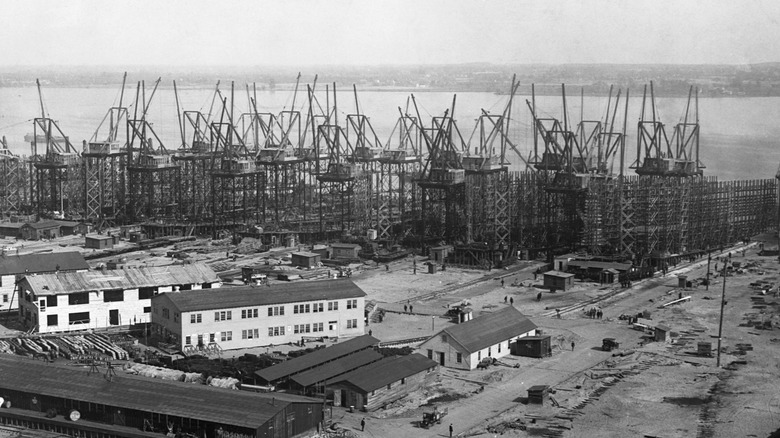
The hoagie's origins trace back to industrial manufacturing spaces along the Delaware River just southeast of Philadelphia. During World War I, emergency shipyards sprang up at Hog Island to meet wartime demand. Italian American workers needing quick, hearty, portable lunches brought massive sandwiches from home, typically cold cuts piled onto long rolls. Legend has it that an Irish laborer, envious of his co-workers' meals, asked a friend to bring him one. Before long, so-called "hoggies" evolved to hoagies and spread beyond the shipyard. More than a century later, hoagies — interchangeably referred to as the bread roll itself and the cold-cut sandwich — endure as a regional treasure. The torpedo-shaped roll was even adopted by another local delicacy, the Philly cheesesteak.
Hog Island itself is long gone — absorbed into airport infrastructure and history. In the 1930s, shipbuilding declined, and the area was paved over to make way for Philadelphia International Airport. Today, over 30 million visitors pass by the ghost of Hog Island each year as they transit through PHL. But a few vestiges of the marshland and river life remain: Those who venture beyond the terminals into Tinicum Township can explore preserved marshland strolls, a historic fort, and a few spots to get really good hoagies.
Beyond the airport, nature still thrives
Centuries before the hoagie was born, the area southeast of present-day Philadelphia was inhabited by the Lenape (Delaware) people. It remained largely rural marshland until Swedish settlers arrived in the 17th century and developed it for agriculture, using their expertise in diking. The origins of the name "Hog Island" are murky and unconfirmed by the historical record. It may refer to wild pigs that once roamed the region, or to hog farming that developed as agriculture expanded. Feral swine are even reportedly still found in parts of Pennsylvania today.
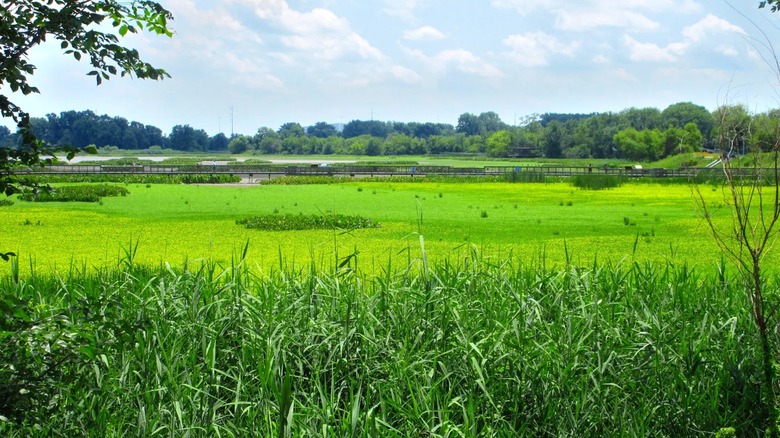
Remnants of the original landscape remain. Near the airport, the John Heinz National Wildlife Refuge at Tinicum preserves a stretch of former Lenape homeland as a sanctuary for fish, wildlife, and native plants along the Delaware estuary — also known as "America's first urban refuge." It features 10 miles of trails winding through diverse habitats, from mudflats and woodlands to freshwater tidal marsh, including a wheelchair-accessible boardwalk trail, and free fishing gear rentals (check in at the visitor center). "A fantastic spot for a day out, offering a surprising escape right in the city," noted a visitor. "The refuge is a true gem, perfect for hiking, birding, and enjoying nature."
The area has also become a birding mecca, and not just for plane spotters. Hog Island Road, "a dead-end stretch," loops the perimeter of the airport, and several pull-offs overlook the Delaware River and Little Tinicum Island, where airplane enthusiasts and birders alike can park and set up scopes to view shorebirds, ducks, warblers, meadowlarks, and wading birds like herons. Visitors recommend going at low tide, when exposed mudflats attract feeding birds. Be aware that "no parking" signs are posted, though they're reportedly not enforced for casual day-trippers.
Historic sites and hoagies near Hog Island

One of the most compelling draws near Hog Island is Fort Mifflin, a Revolutionary War-era site tucked along the edge of the airport grounds. Originally constructed by the British, the fort was seized and used by American forces under George Washington. It served as a military prison during the Civil War, and in World War I, the deteriorating fort was used to store naval ammunition. In 1954, Fort Mifflin was officially decommissioned and transferred to the city of Philadelphia. Today, operated by the city of Philadelphia as a National Historic Landmark, it offers visitors the chance to explore its past through reenactments, guided tours, and other living history events. One visitor praised the rare public access this historic site offers. "This place is such an underrated gem as so much history has happened here," they wrote.
Add "eating hoagies" to the list of best things to do on a vacation to Philadelphia. While many visitors head 12 miles into the City of Brotherly Love — one of the most underrated foodie destinations in America — you'll find some worthwhile hoagies just outside it. Hog Island sits in Delaware County, close to communities like Tinicum Township, Ridley Park, and Eddystone. America's Pie in Tinicum Township offers separate hoagie and cheesesteak menus with a range of flavors. Just down the street, Big Joe's Sandwich Shop serves plush hoagies stacked with Italian cold cuts alongside classic regional cheesesteaks.
Don't miss Chickie's and Pete's, with locations at the airport and across Philadelphia. Order the famous crinkle-cut Crabfries dusted in signature Old Bay-style seasoning, plus a cheesesteak on a soft hoagie roll with decadent topping options like lobster or Buffalo chicken. Even on a quick layover, you'll get a proper Philly food — and Hog Island — experience.