
Wisconsin's Historic Villa Turned Museum In Milwaukee Offers Stunning Architecture, Gardens, And Lake Views
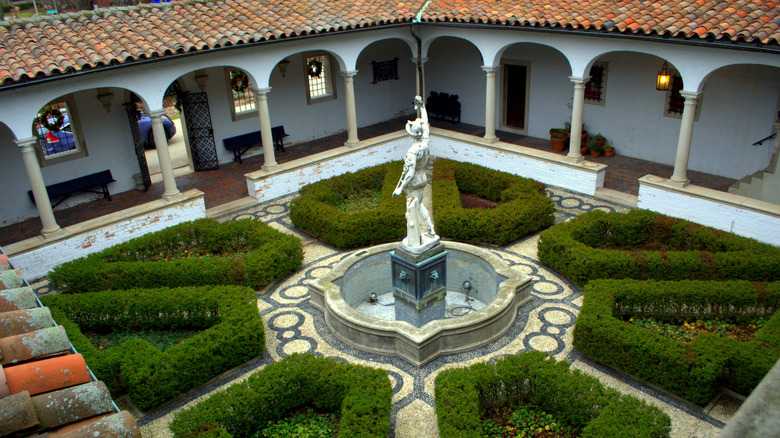
Set against the shores of Lake Michigan, the Villa Terrace Decorative Arts Museum looks more like a Mediterranean summer home than an early 20th century residence just 2 miles north of downtown Milwaukee. However, that deceptive appearance is by design. After industrialist Lloyd R. Smith and his family returned from a trip to Italy, they hired architect David Adler to bring a taste of the Mediterranean to their Wisconsin hometown. Finished in 1923, the result is a stunning example of Italian Renaissance architecture, sat atop a bluff so that the gardens below can spill out towards the placid surface of Lake Michigan. In fact, the home's name was Sopra Mare, which means "above the sea" in Italian.
Today, the villa is a Milwaukee landmark known for its striking architecture amid the surrounding urban structures, with ornately landscaped gardens and a collection of fine and decorative artwork dating as far back as the 15th century. Its connection to the arts isn't just historic, either — the museum continues to serve as a venue for artist talks and lectures, and many of its rooms have been repurposed as rotating exhibition spaces. Admission to the museum and gardens is just $15 for adults (at the time of writing), netting it a spot on Tripadvisor's list of must-visit museums in the city that's been named America's most affordable lake destination.
Villa Terrace was inspired by Renaissance architecture and gardens
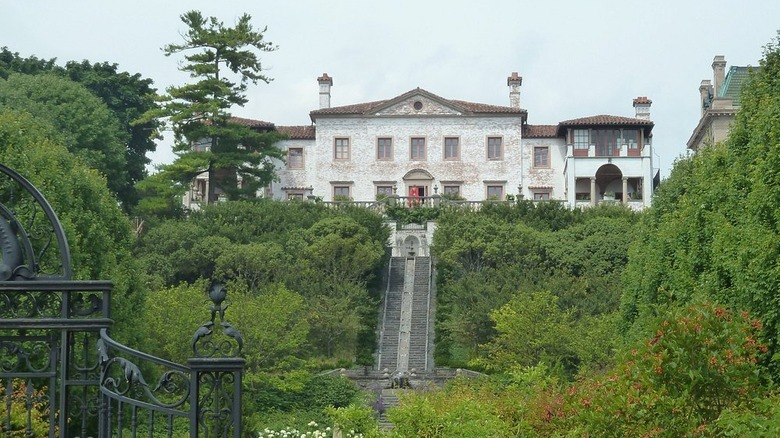
11 distinct spaces comprise the architecture of Villa Terrace, blending indoor and outdoor with open-air courtyards and terraces. Architect Adler was notably inspired by Villa Cicogna Mozzoni, a lavish historic home in the Lombardy region of Northern Italy, an area famous for its unparalleled fall foliage views and well-preserved Renaissance-era gardens. However, the Milwaukee villa also incorporates other architectural styles. For example, the Tudoresque wood-paneled Dake Gallery was designed with American oak sourced by a local Milwaukee company. Adler has been characterized as an eclectic architect, borrowing styles from across centuries and regions to evoke the feeling of being in a true Italian villa. Key features include the trademark red clay tile roof, arches stacked on top of Tuscan columns, and gridded windows.
Perhaps the home's most obvious connection to Villa Cicogna Mozzoni is its cascading gardens, which mirror the 156-step sloping gardens of its source of inspiration. Its central feature is formally known as the Scaletta d'Acqua, meaning water staircase, which is exactly what it sounds like — a set of stairs designed so that water can flow down the middle and into a small pool at the bottom. The garden and stairway were designed by Adler and Rose Standish Nichols, an author and architect who wrote about Villa Cicogna Mozzoni in a 1928 book. Following the natural landscape down the hillside and towards the water of Lake Michigan, flowerbeds and foliage dot the lower garden, accompanied by an elaborately sculpted wrought-iron gate with the likeness of Neptune marking the entrance.
Come for the Lake Michigan views, stay for the decorative art collection

Much of Villa Terrace was built with Lake Michigan in mind; its terraces face east, opening directly up to views of the shore. The Terrazzo della Luna, or "terrace of the moon," is a fittingly serene spot to watch the moon rise over the waters of Lake Michigan. On either side of the terrace are Palladian-style pavilions topped by windowed sleeping porches, where the home's residents could sleep within view of the lake on warm summer nights. Down below in the gardens, the gate of Neptune separates the residence from the beaches beyond. Villa Terrace faces a pebbly stretch of shoreline between two public beaches. From here, you can even walk about 2 miles along the Oak Leaf Trail to Wisconsin's only urban state park, Lakeshore State Park.
There's more to see inside Villa Terrace, though. The house museum is home to the permanent collection of Milwaukee ironworking master Cyril Colnik. Some pieces, like the spiraling iron railings along the home's grand staircase, are original to the property. The majority, however, were donated by his daughter in 1991. This collection of over 200 pieces contains dynamic iron figures, sophisticated antler sconces, and an ornamental grille known as Colnik's "Masterpiece." Throughout the home, decorative art pieces can be found on display, alongside fine art from the Milwaukee Art Museum's collection and an ever-changing set of modern exhibitions from contemporary artists.