
The 5 Most Germ-Ridden Spots In Your Rental Car, According To Research
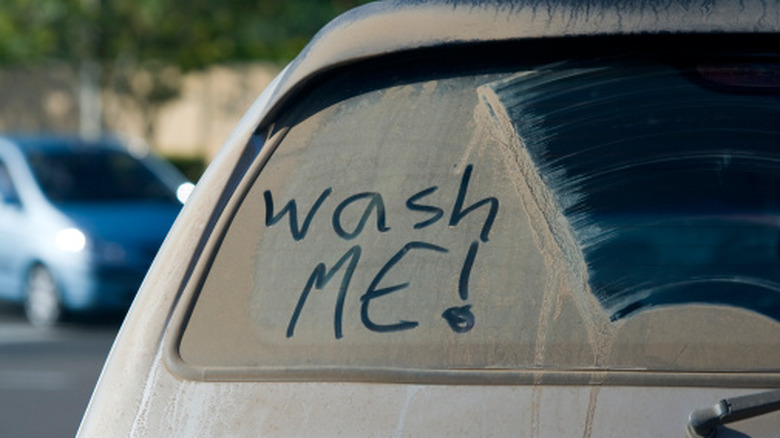
Drivers on vacation shouldn't spend time and energy pinpointing the dirtiest part of a rental car. Yet they do. No one wants to plop behind the wheel of a rental and immediately think, "Gross!" Fortunately, researchers have spent an inordinate amount of time trying to find the five most germ-ridden spots in your rental car. The results, ultimately, aren't grossly out of line with expectations.
A 2014 study of car interiors conducted by researchers at the University of Michigan, in tandem with the Ford Motor Company, found a direct correlation between human contact and a long list of bacteria. They focused on several high-traffic areas, from the radio volume knob to the window controls, testing for several strains of bacteria. The study's findings were measured in colony-forming units (CFUs) across a square centimeter in cars either in Ford's company fleet or community-shared Zipcars. Despite all the gross things that can happen in a rental car, the study concluded that the biggest source of bacteria remains the people inside the cabin. Namely, their hands. "The most highly colonized locations [...] were areas of frequent touching by the occupants," the study concluded. Other studies have echoed the results two decades after it was published.
Research by the insurance company Netquote found rental cars, while harbingers of more bacteria than toilet seats, pale in comparison to rideshares (which anyone who has taken an Uber at 2 a.m. on a Friday night can probably attest to). The humble taxi, meanwhile, had by far the fewest germs. Netquote's research also found that the types of bacteria vary by location. So, what gets the most microbial traffic inside a rental car? And if you're interested in more germ-y facts, be sure to check out the list of dirtiest surfaces in a hotel room.
Steering wheel
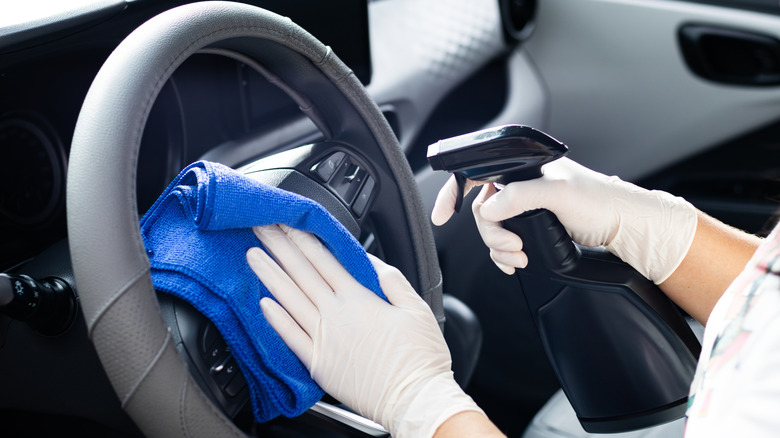
Car writers love the "man and machine" framing, and automakers lean into it too by asking where "the line between car and driver" begins to blur. But the symbiosis works both ways, with the driver leaving an impression on the car too. It only makes sense. Nobody has as much continuous, robust contact with a car as the driver. And a driver with dodgy hygiene or a case of the sniffles can be a major germ distributor.
Researchers from the previously mentioned University of Michigan study found the highest number of colony-forming units (CFUs) on the steering wheel, mainly on the outer rim, which is most often gripped while driving. The Netquote study confirmed these findings, showing more bacteria per square inch on a rental car's steering wheel than on a typical car's.
The University of Michigan study suggested that coating steering wheels and other frequently touched surfaces with 5% silver-ion products helped reduce bacterial growth. A study conducted by Aston University in the U.K. found the steering wheel wasn't as filthy as one might suspect, though it didn't focus on rentals. Researchers attributed those findings to the post-COVID boost in personal hygiene.
Gear shifter
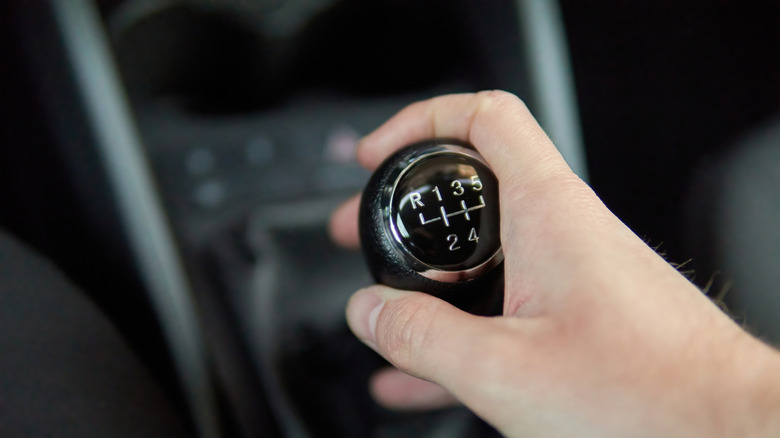
Anyone who has had to squeeze into a tight parking spot in a congested city recognizes the repetitive clicks of switching from "reverse" to "drive" and back again, as you shimmy a car into a spot the size of a matchbox. Depending on where you're driving and how much time you spend on the highway, a car's gear shifter will get a lot of interaction. It'll also accumulate a lot of germs in the process.
Authors of the University of Michigan study explicitly list the gear shifter as one of the "most highly colonized locations" inside cars. Netquote's study compared its findings with a 2011 study, concluding that rental car shifters were almost 7,000 times more germ-infested than a typical one-person car.
"The steering wheels were crawling with only gram-negative rods, and the gear shifts were rife with gram-positive cocci," Netquote's research revealed, pointing to two of the more common sources of infection. This makes "both surfaces (especially the steering wheel) potentially hazardous to your health."
Interior door handles and controls
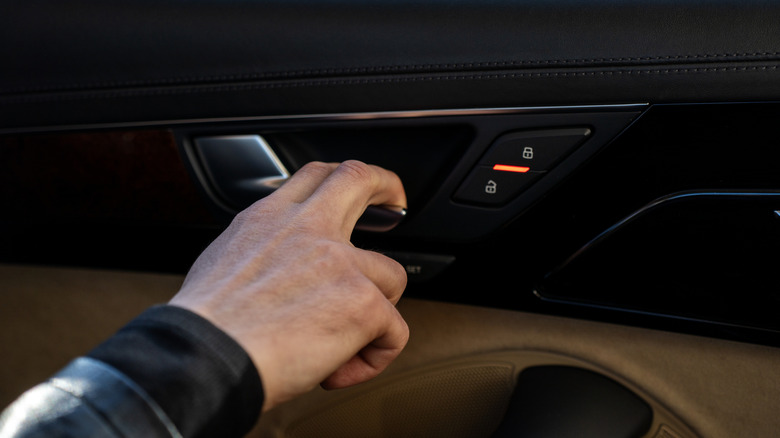
Most underestimate the complex role a driver's side door plays in a trip. It's the go to point for random requests. "Hey, let in some air." Followed by, "No, it's cold." And "How about unlocking the doors, huh?" from the kids in the back seat. Getting out to refuel. Rolling down the window to convince an ornery traffic cop you were going over the speed limit because your speedometer is broken. And every interaction potentially spreads germs on the buttons and switches.
If you consider the driver's hands as the main conduit of filth and grime, then the door becomes the left hand's bacterial storage unit. The door latch, lock, buttons, window controls, and handle all serve as a breeding ground for microbes. The study conducted by researchers at the University of Michigan found over 100 culturable bacterial colonies on the door handles and window switches of cars it monitored.
The best response, according to Netquote's research, is to give the rental a quick once-over as soon as you enter it. Wipe down the biggest culprits — door handles, gear shifter, and steering wheel — with a disinfectant wipe before touching them.
Center console
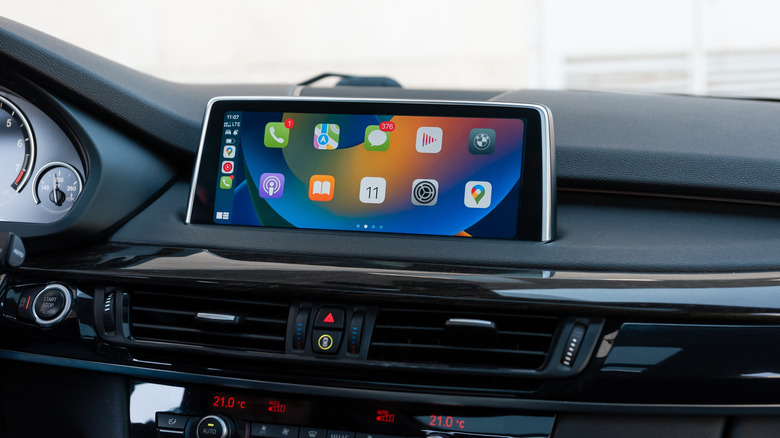
Driving offers the great joy of fulfilling the childhood dream of commandeering a sophisticated craft across a vast expanse of asphalt instead of space. But the sensation of commanding complex technology can bleed through with all the doodads and buttons within reach. The advent of touchscreen center consoles, often replacing the radio buttons and dials of yore, has only expanded the surface area ready-made for germs. The situation is made worse by a factor not mentioned for any other germ magnets in a rental: the other passengers.
If the driver's hands are the main source of germs in the car, a second set of fingers only makes the problem exponentially worse. The shape of the terrain, so to speak, doesn't help, with buttons and touchscreens providing traps for grime and bacteria. The University of Michigan study predated the era of center-console infotainment screens, yet it still found CFU counts in the triple digits in the middle of the car. A peer-reviewed risk model assessing the germ-transfer potential of touchscreens in general found that disease spread can increase when many users frequently touch the same spots, depending on how frequently the surface is cleaned.
"You wouldn't go weeks without washing your hands, but drivers go months without wiping down the one surface they touch every single day," luxury car cleaner James Taylor told Express. "People touch their face, their phone, their food — then grab the wheel."
Cupholders
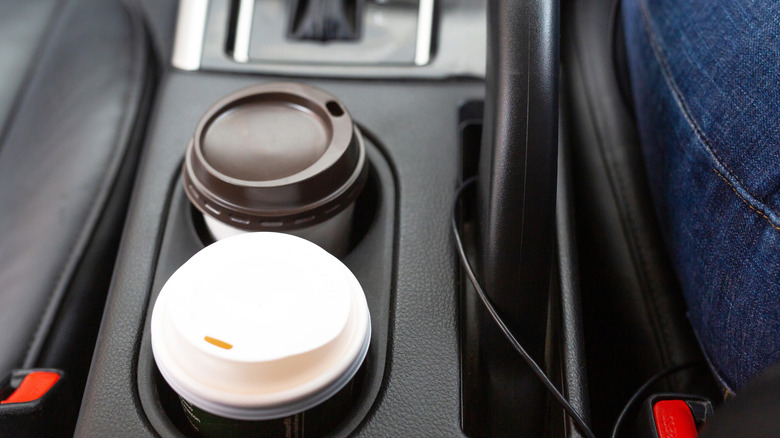
The last location on this list may seem counterintuitive. Anyone with an unsteady grip knows the damage one can do with a cup of joe and a speed bump. Yet the contents of your morning coffee run don't register as highly as other areas on the germ-y index, unless they leave a visible, sticky mess. Yet a study conducted by CloroxPro found that the front seat cup holder was home to the most germs (it also contradicted earlier studies, which claimed the steering wheel and driver door handles were comparatively cleaner). This may not be the rental company's fault. Sometimes, getting a clean car is a matter of logistics.
"Some branches do not have a car wash at their location and have to go off-site for a car wash, and they will do it the day before to save time for the upcoming day," one former rental car employee wrote on Reddit. "One of the branches I worked at, it was like 25-30 minutes round trip for a car wash, and we would do as much as possible the day before."
Rental car companies, for their part, have tried to combat a reputation for letting customers drive around in grime-addled cabins, trying to avoid being ranked among America's worst car rental companies. Enterprise Holdings, which owns Alamo, National, and its eponymous company, has a "Complete Clean Pledge" which promises to disinfect and sanitize 20 key parts of the cabin, including those on this list. The efforts paid off, as Enterprise ranked No. 1 for traveler satisfaction in 2025.
Methodology
To identify the top five germ-infested spots in a rental car, we consulted studies examining the microbial makeup of car interiors. Work done by researchers at the University of Michigan's Department of Molecular, Cellular, and Developmental Biology, as well as the Ford Motor Company, provided the most insight. Scientists swabbed cars from the Ford employee fleet and community-shared Zipcars, focusing on high-touch areas, the kinds of bacteria they harbor, and how to prevent their spread.
Researchers found that all sites contained bacteria, with the worst sites harboring 100 separate bacterial colonies on a surface about the size of a large postage stamp. Staphylococcus epidermidis was the most common bacterium, which can cause infections if it breaches the skin. The Zipcar results showed that 1 in 5 samples contained an antibiotic-resistant strain of Staphylococcus aureus. The study, published in 2014, was extensive and rigorous enough to serve as the foundation for the article's list, with additional studies supporting its findings.
Less-rigorous work by Netquote, which tested samples from three random rental cars but had similar results, helped shore up the study's conclusions, with studies by CloroxPro confirming the results or adding nuance. Other studies found conflicting concentrations of germs and bacteria in other parts of the car, such as the trunk. For the sake of real-world use and this article's focus on rental cars, those studies were taken with a grain of salt. The ownership histories of the cars sampled were unclear. As every traveller knows, there's a big difference between your everyday personal car and the rental you're driving during a holiday abroad.