
Travelers Are Building Entire Vacations Around This Wild Natural Phenomenon In 2026 (And It Might Actually Be Worth It)

Some people are planning once-in-a-lifetime vacations for 2026 — and they're building those trips around destinations where they can watch a total solar eclipse. On August 12, 2026, the path of totality — where the moon completely covers the sun — will cross parts of Iceland, Greenland, and Spain. A range of eclipse travel packages is already available, from cruises to guided tours, and travelers are comparing plans online, including on Reddit, where many are sharing their extensive itineraries for the natural phenomenon. Flights and hotels are booking up, and some travelers are even scoping out the best viewing spots or renting boats. Eclipse fans are going all out.
Based on my own travel and eclipse experiences, it can be worth turning a total solar eclipse into the centerpiece of a trip — up to a point. If you have the time and budget (and it can be expensive) to reach the path of totality, it will be almost 100% worth it. I say "almost" because even within the path, cloud cover can still obscure the view.
For those who can get close but not quite to the totality zone, I wouldn't make special travel plans to Europe just for the eclipse. In April 2024, my mom and I were in Kansas for the solar eclipse, where about 89% of the sun was covered. Watching the sky gradually darken as much as it did where we were, seeing flowers close, and the feeling the temperature drop was noteworthy. But it wouldn't have been worth the cost of a standalone trip for that level of coverage.
Why a total solar eclipse is worth a trip
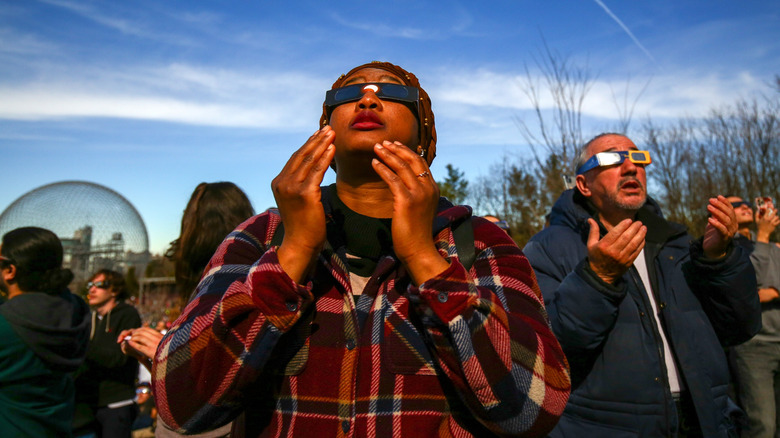
Totality is what makes a solar eclipse worth traveling for, and one of my brothers has built trips around it twice. In 2017, he and my sister-in-law pulled their two young kids out of school and drove from Kansas to Homestead National Monument in Beatrice, Nebraska, to see their first total eclipse. They loved it so much that they made another eclipse pilgrimage in 2024, this time to Dallas.
My brother told me why being in the path of totality made the experience so special: "It's something that you can't replicate. The street lights came on, and birds started singing since they thought it was evening. You also don't have to look through the glasses during the totality; you can actually look at it for those few precious moments."
He's not alone. During live TV coverage of the 2024 eclipse, what stood out to me was how excited and emotional even meteorologists became as they reported on it live. It felt like watching a last-second Super Bowl win. Experiences like that make it easy to see why people would center an entire vacation around an eclipse.
Connect with others over the solar eclipse, but plan for backup activities and have patience
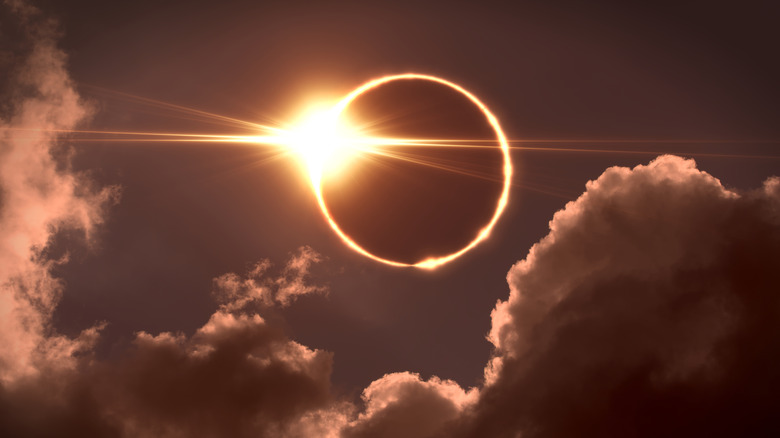
A total solar eclipse isn't just about a few minutes of darkness. There's also a strong sense of community. My brother mentioned how fun it was to share the experience with others — including taking a bite of the largest Moon Pie made for the Texas eclipse. "It's not just go outside and see the eclipse; it's an event," he explained.
Several destinations in Europe are planning eclipse-related gatherings, including a five-day event in Vinuesa, Spain, and celebrations on Iceland's Snæfellsnes Peninsula. Travelers walking along the famed Camino de Santiago may also find themselves along parts of the path of totality, including near Lugo. It's a chance to connect with people from around the world — no shared language required.
On the flip side, if you make the eclipse the pinnacle of your entire vacation and it gets rained out or clouded out, the disappointment can be real. Make sure to plan other activities so the trip still feels worthwhile. And as crowds gather, patience will matter. Some locations along the path don't regularly see large numbers of tourists, so infrastructure may be limited and not be what you're used to. With high demand expected, giving yourself — and others — a little extra grace will go a long way.