
Las Vegas' 4 Coolest Abandoned Places To Explore
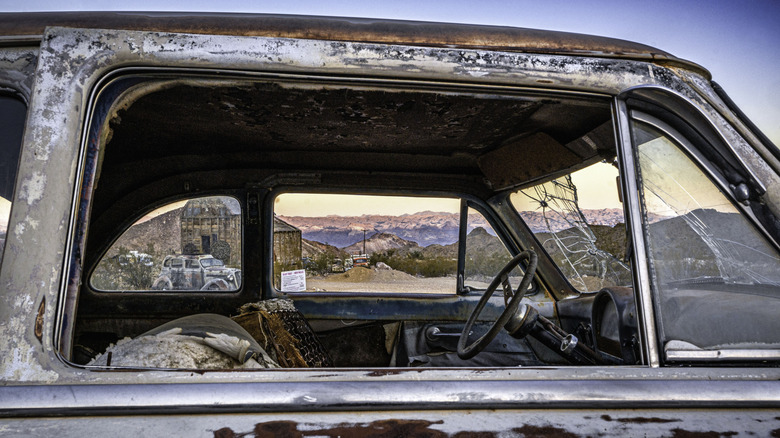
One of the hardest parts about living in Las Vegas is watching as historic buildings, beloved casinos, and beautiful vintage motels are remodeled, torn down, or imploded in order to make way for the latest trendy attraction or shiny new mega resort. While Vegas has several preservation nonprofits that attempt to save what they can, Las Vegas as a whole isn't a city known for clinging to the past or wallowing in nostalgia.
Unlike cities on the East Coast, where creepy ruins of abandoned amusement parks or movie theaters are left to gather dust for decades, in the Entertainment Capital of the World, a 67-year-old casino can be open one day and be imploded the next. But live in Sin City long enough, and you'll come to discover, as I have, that a handful of abandoned places still exist, mostly on the outskirts of the city.
As someone who lives in Vegas, I have firsthand experience exploring the places on this list. All of the destinations included are safe and legal to visit and are located less than 1.5 hours away from the Strip. From forgotten mines to ghost towns, these are some of the best abandoned places to discover near Las Vegas.
Potosi Mine
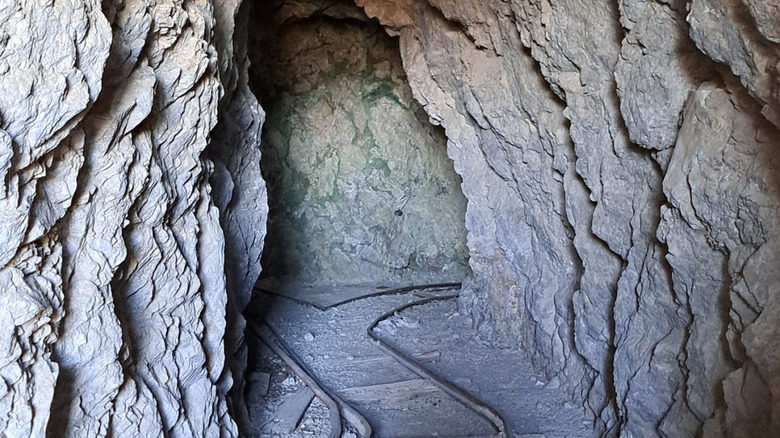
I first visited the eerie and abandoned Potosi Mine about 10 years ago, exploring through its labyrinth of darkened tunnels. While a gate has since been erected to keep vandals out, you can still hike to the mine and peer inside. Along the trail to the mine, you'll also see a few abandoned cars and even an abandoned cabin. Potosi Mine is located on the west side of Potosi Mountain, about an hour outside of Las Vegas. While local hikers and rock hounders may know about the mine, it's not as well known among most Vegas visitors or even Southern Nevada locals, despite its distinction as the oldest mine in Southern Nevada and possibly even the oldest lode mine in the entire state.
Mormon settlers first founded the mine to harvest lead for bullets, but it was eventually abandoned in 1857 and again in 1930 for a final time. To reach the mine, you'll need to drive down a dirt road and complete the last part of the journey on foot. The hike from the trailhead is about a mile with 700 feet of elevation gain, but if you don't have a jeep or truck, you'll probably want to park down the road and walk to the trailhead, as the bumpy road can be tough to maneuver without four-wheel drive.
St. Thomas Ghost Town
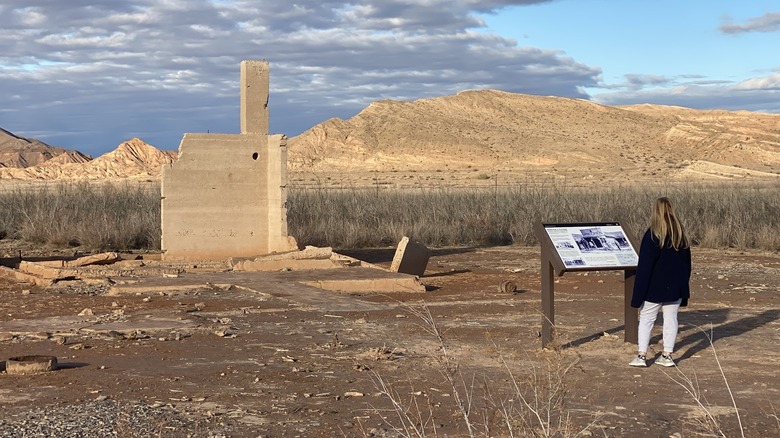
St. Thomas was once a town of 500 people that served as a pitstop between Los Angeles and Salt Lake City before (literally) sinking into decay. Intentionally flooded during the creation of Lake Mead in the 1930s, the town sat at the bottom of the lake for decades, its only inhabitants the fish that swam through the gravesite of dilapidated homes. At one point, St. Thomas was more than 60 feet underwater.
Because the water levels of Lake Mead have lowered over the years, the remains of the town are now visible, and visitors can walk among the concrete slabs that once formed a hotel, store, and school. Although only a few crumbled buildings still exist, you can stroll the length of the town and view photos of how it looked prior to the lake's creation. While there, you can also visit the nearby Lost City Museum, featuring archaeological exhibits that provide insight into the history of the area. St. Thomas is also a short drive away from both the Lake Mead Recreation Area and the Valley of Fire, which is one of America's most affordable state parks, and about a 90-minute drive north of the Strip.
Goodsprings Ghost Town
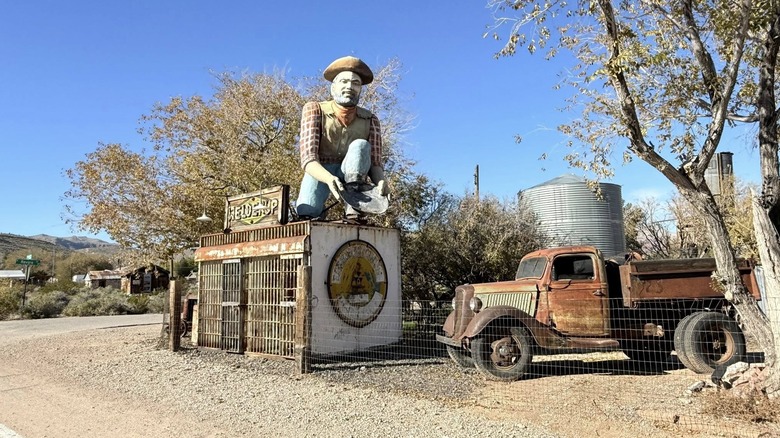
Just a 45-minute drive south of the Las Vegas Strip lies the ghost town of Goodsprings, Nevada. Although technically the former mining town still has 213 residents, at its peak it had 800. While in 1918, Goodsprings had a hospital, hotel, post office, and newspaper, today the town's most notable surviving business is a restaurant and bar called The Pioneer Saloon, which dates back to 1913, and is the oldest bar in Southern Nevada. The Pioneer Saloon is perhaps best known as the place where actor Clark Gable waited in 1942 for news about his wife, actress Carole Lombard, whose plane had crashed nearby on Mt. Potosi. You can still see the burn marks on the bar from where Gable sat smoking, anxiously awaiting news from the search party.
Several of the buildings in Goodsprings date back to the early 1900s or before and are no longer in use, but can still be visited, such as the cabin-style post office and the Cottonwood Cabin. The Goodsprings Historical Society has further details about the town's history and the abandoned buildings that remain, as well as a walking tour map. The town is small enough that you can easily wander through it in about 20 minutes, and The Pioneer Saloon offers live music and delicious BBQ in a fun and authentic Wild West setting.
Hidden Forest Cabin
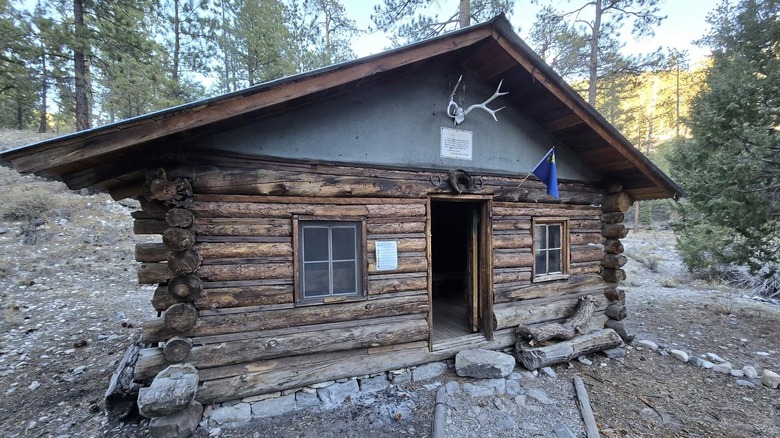
About a 1.5-hour drive from the Strip, hidden deep in a Ponderosa pine forest thousands of feet above the Mojave Desert lies the abandoned "Hidden Forest Cabin." Though a World War I veteran named Clarence Russell initially built the cabin in 1931 with the intention of homesteading there, he only lived in the cabin for a year before killing a neighbor in a drunken gun fight and subsequently being killed himself by said neighbor's son. After his death, rumors spread that Russell had been involved with the mafia and that he'd buried diamonds in the woods near his cabin.
Though the occasional hiker or forest ranger camped at the cabin over the decades, the story of the cabin owner's life and death remained a mystery until 2019, when Russell's story was brought to light using old news reports and archives. While the cabin remains abandoned today, it's safe and legal to visit, thanks to a 2010 rehabilitation effort. Reaching the Hidden Forest Cabin involves quite the trek. You'll need to drive 20 miles down a bumpy, washed-out dirt road that reviewers on AllTrails report requires a high-clearance vehicle. Once you reach the trailhead, you then have to hike a little over 5 miles along what AllTrails has labeled a "hard" trail that includes more than 2,000 feet of elevation gain.
Methodology
In creating this list, I relied heavily on my own personal knowledge as a longtime Las Vegas resident. I only included places I've visited, or in the case of the Hidden Forest Cabin, places friends have visited and recommended. I made sure to only include abandoned places that were safe and legal to visit. I also wanted to make sure that each destination on this list was inherently interesting in some way. Because while a random shuttered pharmacy may technically meet the criteria of an abandoned place, unless it held some significant historical value or was located in an interesting place, like a ghost town, I chose not to include it. I was also careful to ensure that each place on this list was within a reasonable driving distance of the Las Vegas city limits.