
Near The Banks Of The Mississippi Is A Once-Thriving Port City That Is Now An Eerie Abandoned Ghost Town
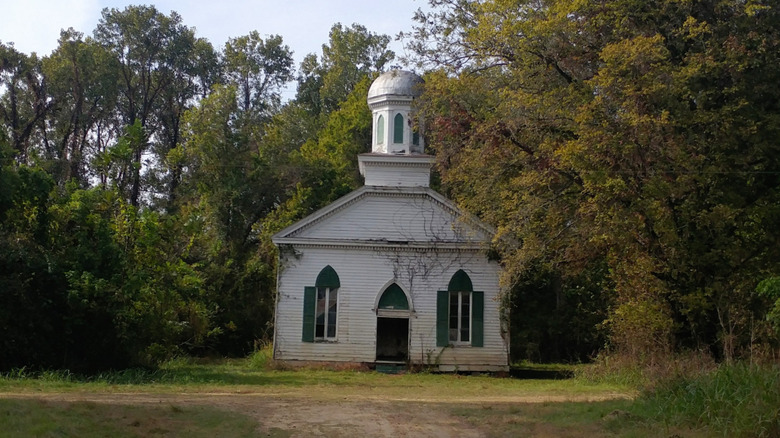
Every ghost town in the U.S. lures visitors with haunting buildings and a tragic history — and Rodney, Mississippi has both. Just two miles from the Mississippi River, this forgotten historic town was a once-thriving 19th-century river port along the southwest border with Louisiana. Accessible only by rural backroads, the town today is a hallmark of a ghost town with abandoned churches, a cemetery, and a commercial district draped in moss and impacted by occasional flooding. It's an eerie relic of a place that once played a significant role in the nation's development and is now listed on the National Register of Historic Places.
Originally called Petit Gulf during its prime, the town's decline was essentially a perfect storm of illness, military conflict, Mother Nature, and the expansion of the railroad. Multiple yellow fever outbreaks in the 1840s led to deaths and forced a mass exodus of residents. Then, during the Civil War in 1863, things took a dramatic turn when Confederate troops captured Union sailors from the USS Rattler who were attending a service at Rodney Presbyterian Church — the Rattler then opened fire on the church and town. If that wasn't enough, a massive fire in 1869 destroyed a major section of town, gutting local infrastructure.
Geographical shifts and a bit of bad luck eventually led to the town's final major abandonment. In 1870, a sandbar nudged the Mississippi River two miles west, leaving Rodney high and dry without its port. To add insult to injury, a new railroad was built in the 1880s through Fayette, which sits 16 miles away, rerouting the area's commerce and leaving Rodney behind. All of this created the ultimate recipe for a ghost town.
What to expect when visiting Rodney, Mississippi today
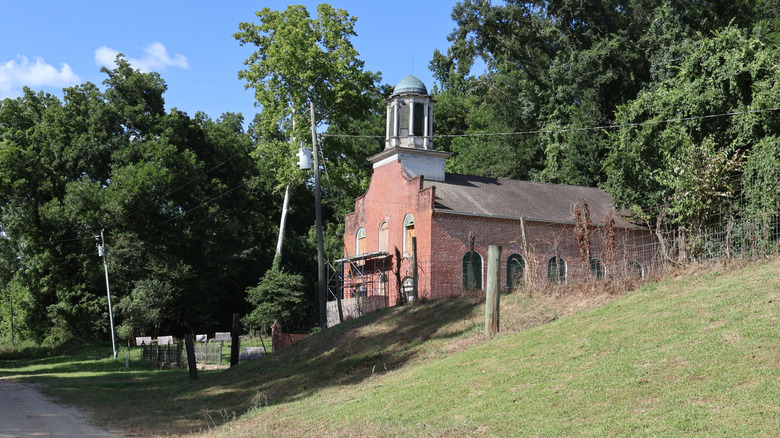
Locating Rodney, about a 90-minute drive from Jackson, can feel like following a haunted treasure map. The town can be found by first spotting a weathered Old Country Store in the town of Lorman on U.S. Route 61, then driving past a shadowy cemetery, and continuing another 12 or so miles along unpaved dirt roads. Once there, visitors will encounter Rodney Baptist Church, which faces constant structural threats by floodwaters, and Rodney Presbyterian Church (pictured), which allegedly still has a cannonball in its brick façade from the Civil War. When climbing the hill behind the Presbyterian Church, visitors are greeted by the spooky graves of around 200 of the town's earliest residents at Rodney Town Cemetery, some from as early as 1828.
The town's original commercial district once included the Greek Revival Alston grocery store and the two-story Berkeley Saloon. These buildings, which once lined the riverbank during the town's prime, now sit amid lowland shrubs and forest. Visitors can look out for various historical markers amongst the moss, including one for the Old Town of Rodney in front of Rodney Presbyterian Church, as well as a tribute to early settler Dr. Rush Nutt, who developed the popular "Petit Gulf" cotton variety sought during Rodney's port city prime.
These ruins stand in somber contrast to a town just 35 miles away: Natchez, which preserved its wealth and antebellum architecture by having kept its position as a Mississippi River port city. Tripadvisor reviews have described that Rodney is not fully abandoned (at least not in spirit). Former residents and their relatives do, in fact, return frequently, as the community remains connected through an online publication called The Rodney Telegraph, which documents church preservation efforts, and come together for activities such as clean-ups at the Rodney Town Cemetery.
A brief history of Rodney, Mississippi
Rodney nearly became the state capital of Mississippi in 1817, losing the title to Natchez by a narrow margin of only three votes (Jackson would later become the official capital four years later). By 1860, Rodney actually became more populous than Jackson and even boasted the state's first opera house. Wealthy cotton plantations turned Rodney's port into a major player on the Mississippi River, holding its own against heavyweights such as New Orleans and St. Louis. During Rodney's heyday, it even inspired author Eudora Welty, a notable figure on the Mississippi Writers Trail, which celebrates the state's legendary authors, to feature the town in her 1942 novella, The Robber Bridegroom.
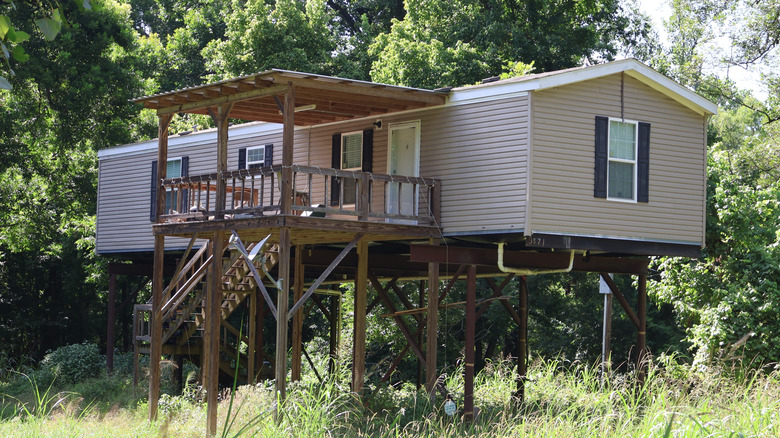
Rodney lost its official town status in 1930, and Jefferson County remains one of the most economically challenged areas in the nation today with just under 7,000 county-wide residents and a poverty rate of over 30%. Despite this, a handful of families still call Rodney home — often residing in houses elevated on stilts to stay above the floodwaters. In fact, the same environmental challenges that destroyed Rodney in the first place continue to remain a concern today, as the Mississippi River was named the most endangered waterway in the U.S. in 2025.