
California's 'Little Japan' Is A Lush Garden Escape In San Diego
For many, seeing the springtime bloom of Japan's iconic sakura flowers is a lifelong dream. The brief window between late March and early April is the absolute best time of year to visit Japan for cherry blossoms, when rows of trees across the country are transformed into blushing bouquets of pink petals. What many don't realize, however, is that there are plenty of cherry blossoms much closer to home. There's the iconic National Cherry Blossom Festival in Washington, D.C., a spring highlight with a dazzling display of color, while Branch Brook Park in New Jersey boasts America's largest cherry blossom collection. For those on the West Coast, look no further than San Diego, California. Every year at the Japanese Friendship Garden and Museum, visitors can stroll among blooming trees during the Cherry Blossom Festival.
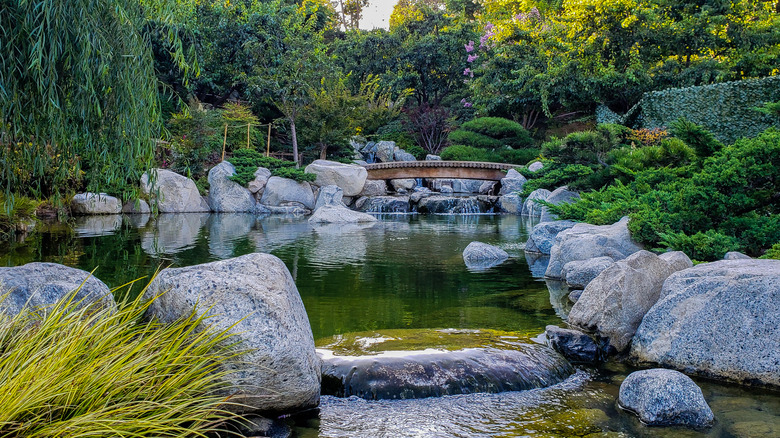
A lush paradise of tranquility, the Japanese Friendship Garden and Museum is hidden deep within Balboa Park, California's world-famous cultural oasis of iconic museums. Aside from cherry blossoms in the spring, the friendship garden is a veritable trove of Japanese landscape culture. Visitors can wander across wooden footbridges where a gentle waterfall trickles over mossy rocks. Paved walking paths weave between landscaped lawns shaded by trees, while statues of formidable East Asian divine beings peek through groves of bamboo. "If you want to see what Japan is like, [I] would suggest checking this place out," a previous visitor shared.
The Japanese Friendship Garden has aptly been called the Golden Gate's "Little Japan." Verdant and green throughout the year, it feels like a serene escape from the bustle of the city. Whether you're a San Diego local or traveling from out of town, make sure to plan a visit to Balboa Park and grab tickets to experience a little slice of Japan.
Enjoy the Cherry Blossom Festival at the Japanese Friendship Garden
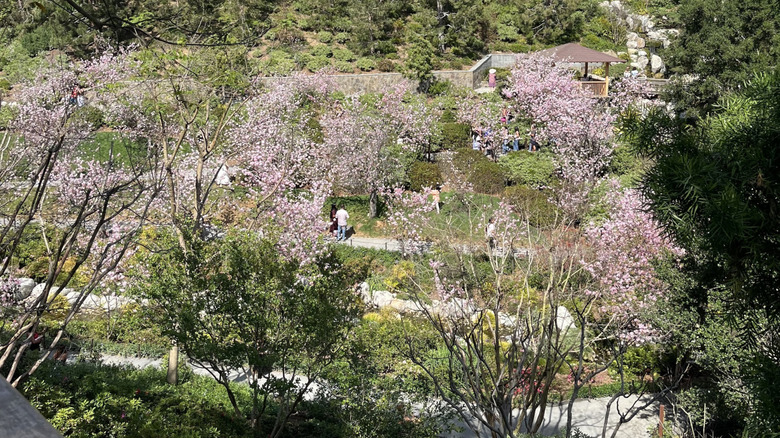
In Japan, "hanami" is the cherished tradition of gathering together each spring to admire the fleeting beauty of the blushing pink sakura flowers. Each year, when March rolls around, San Diego's orchard of roughly 200 cherry blossom trees in the Japanese Friendship Garden opens up its petals for all to see, giving visitors a chance to experience hanami for themselves without even leaving the country. The cherry blossom trees were originally given to San Diego from the Japanese city of Yokohama back in the 1970s, and the garden itself opened two decades later to symbolize the strength and appreciation that unite the two sister cities.
The cherry blossoms in the Japanese Friendship Garden remain in full bloom for roughly two weeks, and the hanami tradition is celebrated in full force at the Cherry Blossom Festival, often held sometime during the first half of March. As pink petals flutter overhead, live music entertains the crowds of both locals and tourists as they wander through the tunnels of blooming cherry trees framing the garden footpaths. Rows of paper lantern decorations add to the feeling of being in Japan, and market stalls offer everything from traditional Japanese street snacks to souvenirs and artwork. Cool off with cups of sweetened shaved ice, or fill up on onigiri and musubi.
Visitors can even stop by the costume rental booths to dress up in yukata, a type of traditional Japanese robe. While families can bring their children to get face paintings and temporary tattoos, adults can head to the Beer and Sake Garden to sample traditional Japanese rice wine and Sapporo beer. Plan a visit to the Japanese Friendship Garden during the Cherry Blossom Festival to feel like you've just landed in Japan.
Explore the Japanese Friendship Garden's attractions
There's still plenty of excitement to be found in the Japanese Friendship Garden even without the Cherry Blossom Festival. As a matter of fact, the garden is in bloom with a variety of flowers for most of the year. Even if you miss the spring cherry blossoms, you will find gardenias, daylilies, and jasmine flowers from May through June, and colorful sprays of magnolias and hydrangeas from June until July. Azaleas and camellias also add color to the greenery of the garden all year long.
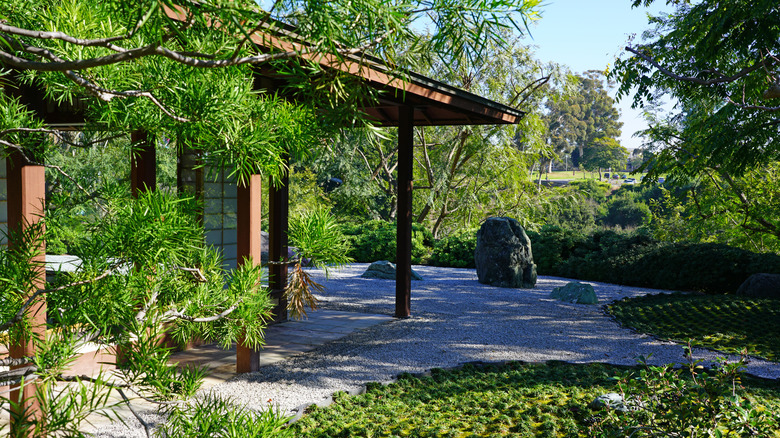
The friendship garden was designed according to traditional Japanese landscaping philosophy, and visitors are in for a treat. The curved footpaths purposely obscure the terrain, which entices you to keep strolling along to reveal more and more of the garden layout. The journey begins in the upper garden, which is split from the lower garden by a tranquil stream. Stop at the shaded veranda of Inamori Pavilion, which looks out across the koi pond where brightly-colored carp dart beneath the calm water. There is even a Japanese-style zen garden where you can admire the pleasant arrangement of jagged stones surrounded by beds of raked gravel. Meanwhile, an observation terrace overlooks a waterfall flowing in waves down the boulders of a ravine.
Don't miss the exhibition hall within the garden to explore the collection of Japanese artifacts. Wander through the gallery of vivid woodblock prints dating back to the late 1700s, not to mention stunning displays of colorful kimono robes decorated with elaborate hand embroidery. Visitors can also register to participate in a variety of cultural workshops, like the monthly tea ceremony demonstration, or even Japanese-style flower arrangement classes. For admirers of Japanese culture, the Japanese Friendship Garden is the place to be.