
North Carolina's Historic State Park Is An Oceanfront Beauty With Trails, Paddling, And Bird Watching
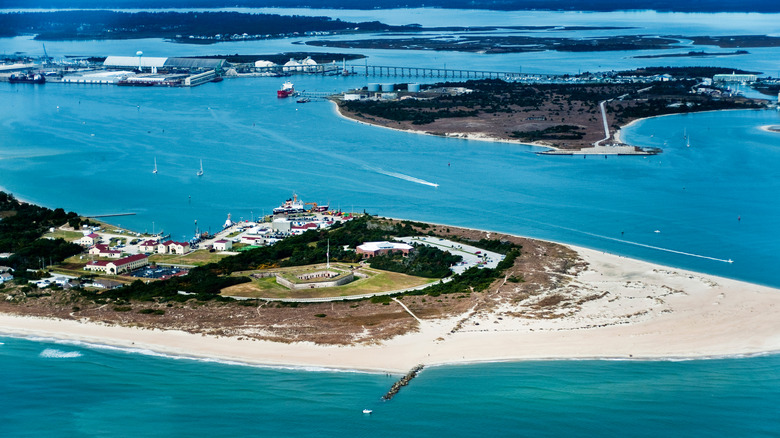
One of the most stunning and wildlife-rich areas of North Carolina's Crystal Coast is Bogue Banks, a barrier island off Bogue Sound. This small, car-accessible island does a lot more than offer coastal beauty; it also provides protection against erosion and flooding while doubling as a tourist destination for history buffs. Nestled at the edge of Bogue Banks is a historic site that has played a vital role in multiple wars and remains a testament to North Carolina's heritage and scenic natural beauty.
Fort Macon State Park is built around the pre-Civil War fort from which it takes its name. Initially occupied by Confederate forces just days after the war began, the fort was later taken over by Union forces, who kept it as a strategic stronghold during the rest of the war. It was also used by the U.S. military during World War II for coastal defense. By the 1930s, the state acquired the fort and its surrounding land and converted it into North Carolina's very first state park open to visitors. It is now easily accessible from nearby Morehead City, known as the "Gateway to the Crystal Coast" — and there is no parking or entrance fee. Although much smaller than other North Carolina state parks at only 424 acres, Fort Macon State Park is still one of the most visited in North Carolina, attracting over a million visitors each year.
Within Fort Macon's brick-and-stone walls lie multiple vaulted rooms and exhibits displaying its history as a Civil War fortress and WWII stronghold. Visitors typically take a quick tour of the historic fort itself, watch Civil War reenactments in the central courtyard, and then head onto the trails to immerse themselves in scenic Crystal Coast views.
Canyons and birdsong — the sound of Fort Macon
In the central courtyard, Fort Macon State Park regularly hosts events and educational programs, such as annual Civil War reenactments, simulated cannon attacks, and WWII-era gun displays. After touring the inside of the fort, visitors can climb up to the top, where cannons overlook the tranquil, azure waters of the Atlantic Ocean.
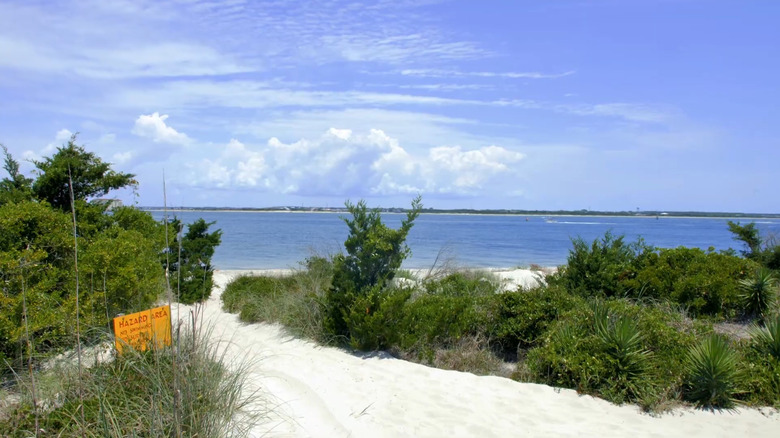
After touring the fort, head out onto one of three trails to explore the surrounding wooded areas and pristine beach at Fort Macon State Park. The Elliott Coues Nature Trail is the longest at 3.2 miles and takes you along a moderately difficult path through the trees and dunes of the park to the beach. The section over the dunes is the most difficult, but the rest of the trail is relatively flat. Bird watchers should bring their binoculars and cameras on this trail, as there's a good chance of spotting herons, egrets, or the occasional bald eagle roosting in the trees above.
Yarrow's Loop and the Beach Trail both take you to the stunning blue waters along Fort Macon's shoreline. However, Yarrow's Loop is more of a quick educational round trip of around 0.25 miles in length, with signs explaining the local plants and wildlife. The Beach Trail, on the other hand, is the go-to trail for the water babies. As the name suggests, this is a three-mile out-and-back trip along the beach. Pro tip: Do this trail slowly. The point of the Beach Trail is to enjoy the waves lapping at your feet, comb through the sand for unique shells, and keep your eyes peeled for elusive coastal birds, like painted buntings, sanderlings, and purple sandpipers. If you're lucky, you might even spot a dolphin or two!
Swimming and paddling in Fort Macon's crystal-clear ocean
Fort Macon lies at the eastern end of Atlantic Beach, an idyllic place with sandy beaches and friendly residents. To get there, fly into Wilmington International Airport (ILM), located 99 miles from the park, then drive to Morehead City and cross onto Atlantic Beach. There are smaller airports nearby, but those don't serve as many destinations as ILM.
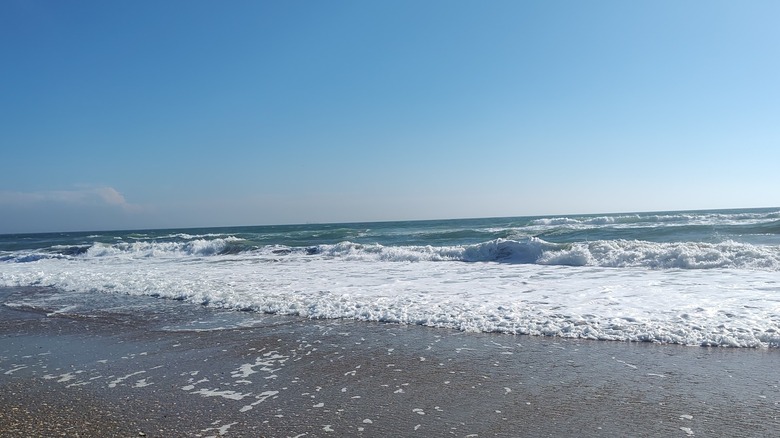
Parts of the beach are cordoned off for specific uses — you can't paddle or use a motorboat in the swimming area, and swimming is only allowed in a designated zone due to rip currents. There are lifeguards on duty between Memorial Day and Labor Day, though, so you're safe as long as you don't wander past the designated boundary. But make sure you bring enough sunscreen and a wide-brimmed hat if you're exploring the beach or the trails, as large sections of the trails have little to no shade.
According to the Fort Macon State Park website, paddling is allowed off the beach. However, they don't have paddle rentals available in the park itself. Instead, you can stop at Atlantic Beach on your way and rent a kayak or paddleboard from AB Watersports – rated 4.6 on TripAdvisor and praised for its high-quality equipment – and carry it into Fort Macon State Park. There are two free parking lots, but anyone heading for the beach will want to stop at the first lot next to the bathhouse for easy beach access. The other parking lot is next to the fort at the end of the road, and provides easier access to the rock jetty and fishing areas at the corner of the beach.