
Utah's Remote Ghost Town Is An Abandoned Beauty
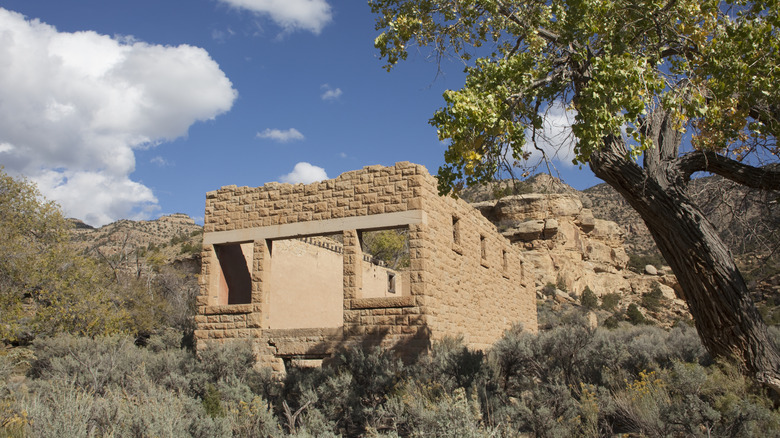
Utah is no stranger to ghost towns. The Beehive state is home to an estimated 140 ghost towns (per Utah Life Mag), with arguably the most famous one being Grafton, a once-thriving settlement with cinematic notoriety. For a chance to explore an abandoned town that feels tucked away from the rest of the world, look no further than the Book Cliffs of Eastern Utah. Here, visitors can find the remains of the once-flourishing town of Sego.
Sego got its start in 1908 after a rancher from the neighboring town of Thompson discovered coal in the area. Henry Ballard bought the land and set up a small coal camp, hiring people to mine the area until 1911, when he sold it to a businessman whose fuel company developed the camp into a full town, adding a railroad line to connect the town to other Western hubs. The town was given the name Nelsen until 1918, when it was changed to Sego because of the sego lilies that grew in abundance in the area. However, the poor water quality could not sustain a growing population. By the 1940s, the mine was no longer profitable and was shut down, then a flash flood in the 1950s effectively destroyed what was left of the town — it has remained abandoned ever since.
What to expect in and near Sego
A visit to Sego will reveal the remnants of a not-so-distant past. The area is filled with foundations and structures that once supported the mining town, as well as old pieces of the railroad. Situated in the middle of the town's remains are the partially standing stone walls of the old company store, Sego's most prominent and well-preserved structure. The area is also littered with shacks built by miners in varying conditions, as coal miners were permitted to build their homes wherever they pleased. Visitors are advised to check the weather before visiting the area, as heavy rain can cause flooding, which makes the roads impossible to traverse, although it's rare.
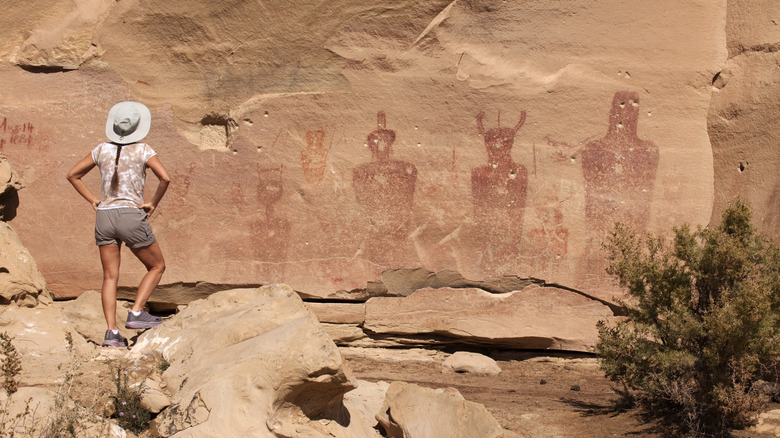
Though the history of Sego as a mining town was quite short-lived, Sego Canyon itself has seen visitors for thousands of years before that. The canyon features stunning rock art along its walls, painted by three different Indigenous groups who resided in the area over the centuries. The oldest artwork on display are the Barrier Canyon style petroglyphs, which is estimated to have been completed by the Archaic people between 8,000 B.C. to 1,000 A.D. Right beside it is the Fremont Style panel, believed to have been carved by the Fremont people between 300 and 1300 A.D. Finally, there is the Ute Panel, created by the Ute people, from which the state of Utah gets its name. This panel is believed to have been placed after 1493, as it contains imagery of horses that were not known in the Americas before then.
How to get to Sego's ghostly town
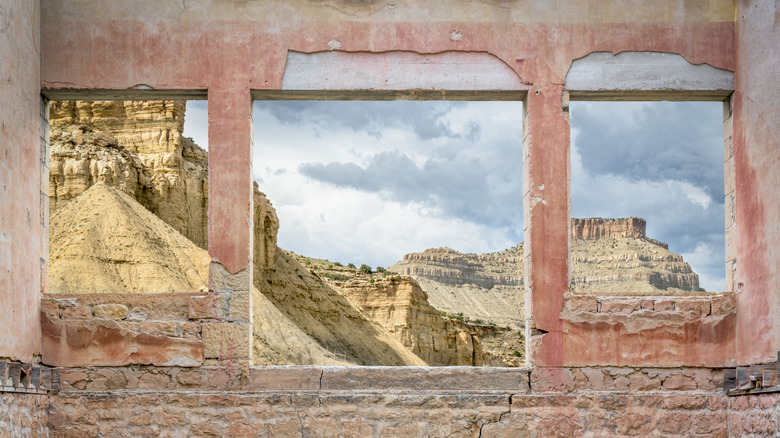
Sego is situated along U.S. Route 70 near the Colorado border, and its remote location in the Book Cliffs keeps it far away from the cozy towns and cities Utah is known for. Sego has very few neighbors — the closest town is Thompson Springs, which is on its way towards becoming a ghost town itself. The closest city with a pulse is about 32 miles away in Green River, a cute riverfront city surrounded by scenic canyons and national parks. For visitors who are flying in, your best bet is to choose Salt Lake City International Airport, one of the easiest airports to navigate in the country. From there, you can easily rent a car and make the almost four-hour drive to Sego.
Because of how remote the area is, there is not much in the way of lodging or accommodations nearby. You can stay in Green River, where there are plenty of affordable options, such as the Holiday Inn Express or the Comfort Inn, both of which have rankings over four stars on Google Reviews. While Sego's remote location may make finding accommodations a challenge, it lends perfectly to the quiet, tranquil atmosphere that makes the ghost town so inviting in the first place.