
Canada's Largest National Park Is A Bison-Filled Escape For Fishing, Lakeside Camping, And Wildlife Watching
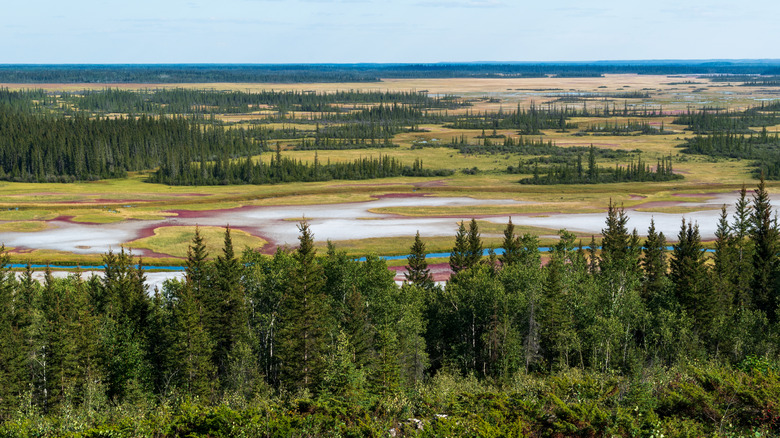
Canada is the second-largest country in the world, spanning 3.8 million square miles — so it's no surprise that its national parks are massive, too. The largest national park in Canada is located in the north of the country, in Alberta and the Northwest Territories, and covers an impressive 17,000 square miles. Journey into the remote reaches of Canada to Wood Buffalo National Park, an unforgettable destination for outdoor adventures and those seeking to spot wild Bison.
The landscape of Wood Buffalo National Park is characterized by salt plains and boreal forest, and the park is home to the largest inland delta in the world, the confluence of the Athabasca and Peace Rivers. Enjoy hiking and paddling opportunities throughout the park, soaking up spectacular views along the way. It's also the largest Dark Sky Preserve in the world, so stargazing is popular here.
Dark Sky Circle at Pine Lake is a top spot, but avoid visiting in May to July, when daylight hours are long. The Northwest Territories' capital, Yellowknife, is one of the best places to see the northern lights in Canada, and the northern lights can also be seen at Wood Buffalo — visit in January or February for the best conditions to see them. There are also excellent opportunities for fishing, spotting wildlife, and camping at the park.
Where to fish and watch wildlife in Wood Buffalo National Park
Anglers will love a trip to Wood Buffalo. Slave River, Salt River, Peace River, and Athabasca River all provide opportunities to cast a line — you may reel in northern pike, walleye, whitefish, and goldeye. For a truly remote experience, head to the isolated Lake Claire — which is only accessible by floatplane or boat. Flying in will offer stunning views of the landscape, so consider checking it out if you're looking for a serious adventure.
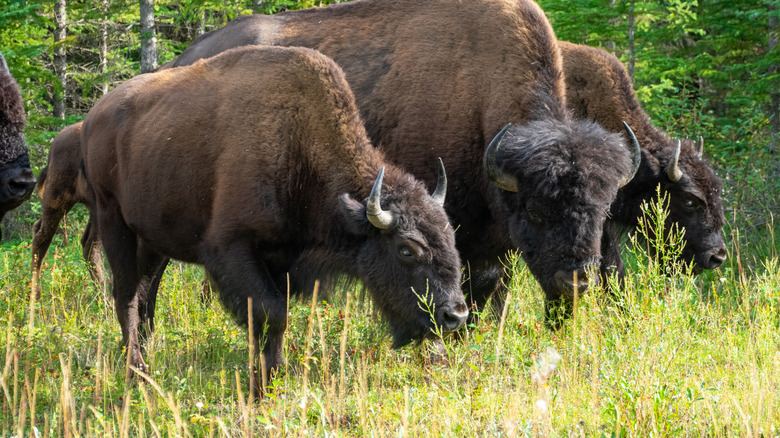
It's very likely you'll see wildlife during a trip to Wood Buffalo National Park. The park is home to 3,500 bison — the continent's largest herd of wood bison, a threatened species, is found here. Bison can be seen around the park, particularly on roads that form natural grazing corridors for the animals. Two of the best places to see bison on the road are at the Nyarling River Pull-off and on Pine Lake Road. Drive with care and never approach bison, as they are unpredictable and can be dangerous.
There are plenty of other animals to see around the park apart from bison. Wood Buffalo National Park is a designated UNESCO World Heritage Site as it's a nesting area for the endangered whooping crane — this is the only breeding habitat in the world for this species of crane. You may also see the world's largest beaver dam, along with animals such as wolves, black bears, moose, foxes, lynx, and sandhill cranes.
Where to stay in Wood Buffalo National Park and how to get there
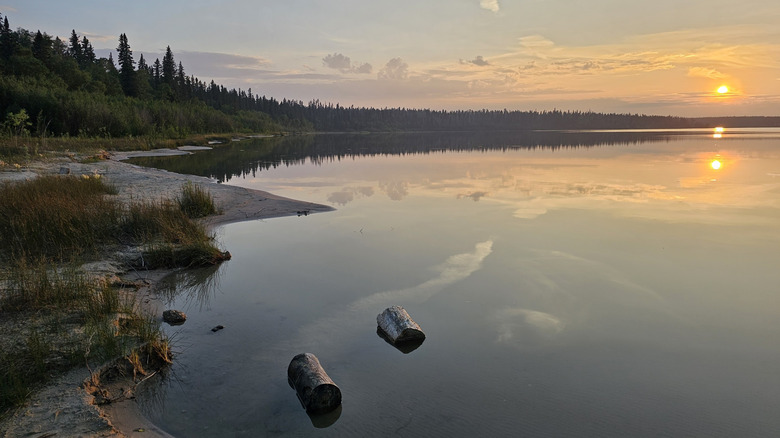
For a special outdoor experience, camp on the shores of a sinkhole lake in Wood Buffalo National Park. Pine Lake Campground has 20 non-electric sites and an unbeatable lakeside location, with a sandy beach that's great for swimming. There are flush toilets and bear-proof food lockers, too. Groups of between eight and 50 people can camp at Kettle Point Group Campground, which has its own semi-private beach and flush toilet. Campgrounds are open between Victoria Day in May and the end of September — several Google reviewers recommend bringing bug protection here. The campground is about an hour's drive from Fort Smith.
Wood Buffalo is accessible year-round by road from Fort Smith, Northwest Territories, where the visitor center is located. Fort Chipewyan is only accessible by air or water for most of the year — however, in winter, an ice road links Fort Chipewyan with Fort Smith. Other destinations in the park may only be accessible by water or floatplane. Having your own vehicle is essential for this trip. Fort Smith is a 12-hour drive from Edmonton or an 8-hour drive from Yellowknife; it's also possible to fly into Fort Smith. Looking for more epic adventures in the Great White North? Explore more of the Northwest Territories and visit Great Slave Lake, Canada's deepest lake, or discover the underrated neighborhood of Old Town, Yellowknife.