
Do Airlines Ever Recycle Trash From Flights?
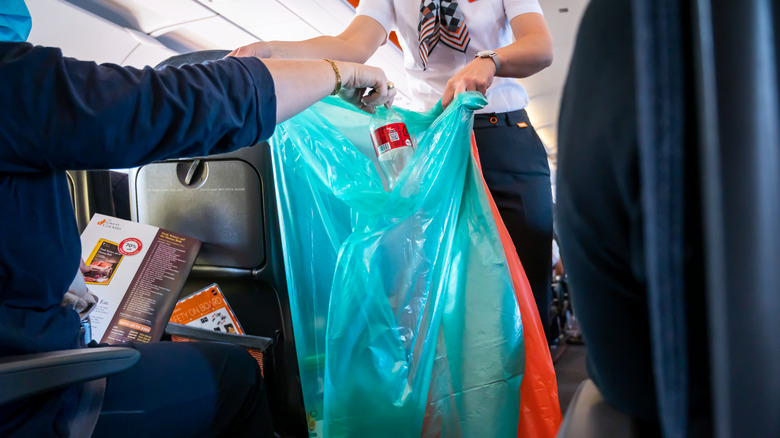
For most people, traveling by air isn't an everyday experience. For many, it's a rare occurrence, and that can leave you wondering how it all works. You may have considered where airplane food comes from or which surfaces are the dirtiest on a plane. One question you may not have asked, however, is whether airlines recycle trash from flights. The answer? It's rather complicated.
While many airlines are working to reduce waste, what happens to in-flight trash is shaped by international regulations. It's also difficult to track because, according to the International Air Transport Association (IATA), the catering and cleaning companies – not the airlines themselves — typically handle waste, often serving multiple carriers across different airports.
According to a 2012 to 2013 audit by IATA at London's Heathrow Airport, the average passenger generated about 3.15 pounds of cabin waste per flight. With tens of millions of flights operating each year globally — the Federal Aviation Administration reported managing 17.2 million flights in 2025 alone – the total adds up quickly.
Plus, much of that waste can't be recycled. Many countries enforce strict rules on international catering waste, particularly items containing dairy and animal products, to prevent contamination of their agricultural landscape. As a result, a significant portion of cabin waste is sent to landfills or incinerated, even when recyclable materials are present.
What airlines are doing to reduce cabin waste
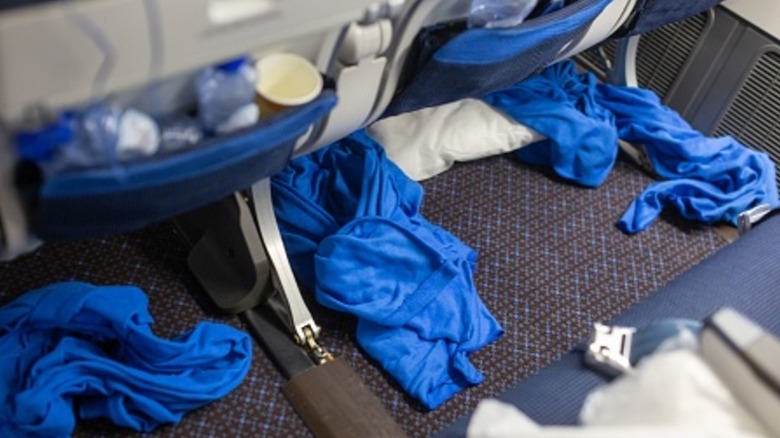
Airlines are trying to cut waste at the source and recycle what they can. Finnair says it recycled 29% of its waste in 2025, noting that the rest was largely incinerated because food and beverage waste from outside the European Union must be treated as regulated waste. The airline stated, "Currently, we can recycle aluminum cans, glass bottles, clear plastic bottles, clear plastic meal covers, and biowaste packaged in cardboard or plastic returning from European flights, from the waste generated on aircraft."
Meanwhile, some carriers are experimenting with alternatives to single-use plastics and reducing excess supplies. According to Aviation Benefits Beyond Borders, Delta Air Lines began testing paper cups and other alternatives to cut plastic use in 2023, and since 2017, Air New Zealand has been implementing Project Green, which reuses unopened items on subsequent flights. Qantas Group has also said it aims to eliminate most single-use plastics by 2027 and significantly reduce landfill waste by 2030. Regulators are involved, too. In the U.S., Customs and Border Protection is working with industry groups, including IATA, to explore clearer recycling policies for international flights.
If the amount of waste generated during a flight concerns you, there are a few small steps you can take. First, dispose of trash in the airport before boarding instead of bringing it onto the plane (flight attendants hate when you bring outside trash), since airport waste is not subject to the same international restrictions. Second, if you don't plan to eat an in-flight meal, consider declining it in advance or selecting only what you need when given the option. Third, if you're bringing snacks, do so in a reusable container that you can wash yourself when you land. That said, you should check local regulations before traveling, as some countries restrict which food items can be brought across borders.