
Germany's Eerie Abandoned Amusement Park Is Now A Picturesque Art Attraction
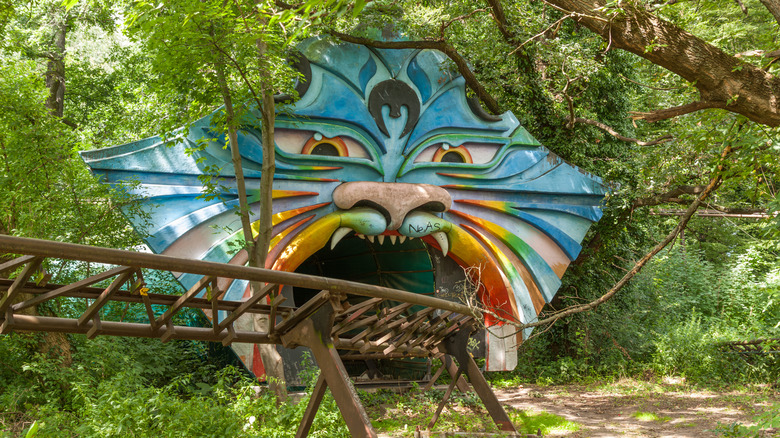
There's a palpable thrill in exploring the abandoned, whether it be once-thriving Olympic stadiums or empty island resorts. But in the case of Spreepark — today an ever-evolving leisure hub and a picturesque art attraction — historical weight makes its eerie abandonment even more intriguing. VEB Kulturpark Plänterwald opened in 1969 in East Berlin during the German Democratic Republic era. Though its name was chosen by the Communist government to underline a cultural slant in addition to leisure, its highlight was a 130-foot, 36-cabin Ferris Wheel, which dominated the 70-acre park. And it was quite popular, attracting up to 1.7 million visitors per year during its heyday — the fact that it was the only permanent amusement park in all of East Germany at the time may have had something to do with it.
The park's custodianship changed hands after the reunification in 1990. With its new owners, Norbert and Pia Witte, at the helm, and with a spanking new name — Spreepark — the park reopened in 1992 with a slew of new attractions that emulated theme parks around the world: rollercoasters, canals, greenery, and even an English village. But Spreepark's popularity was short-lived as ticket prices rose and visitor numbers progressively plunged. That, and mounting debt, led to the park's closure in 2001.
For the following decade, the park became a playground for urban exploration enthusiasts, its harrowing appeal turning it into one of those places tourists couldn't resist visiting. Despite the no trespassing signs, tour guides occasionally led guided tours around the park; the more adventurous jumped the fences to go exploring on their own. But in 2016, the state-owned urban development company Grün Berlin took over the reins of the site, tasked with overseeing the return to Spreepark's original spirit — a place where arts, culture, nature, and leisure converge.
Berlin's abandoned amusement park becomes an unlikely art destination
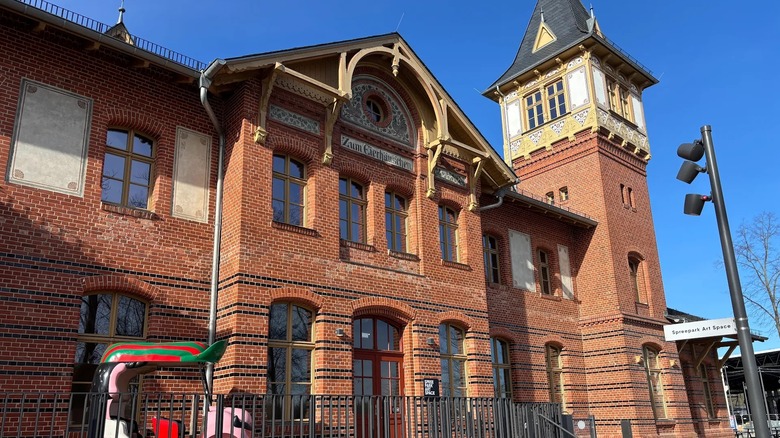
Since then, Spreepark has been slowly shedding its eerie past for a bright, arty future, with Grün Berlin keeping their eye firmly on a bold and clear vision: Create a unique, nature-immersed public venue for a thriving artistic and cultural experience, carried out in a way that still nods to its past. Its first milestone came in March 2024 with the opening of the Eierhäuschen, a renovated 19th-century building located next to the amusement park.
The Eierhäuschen is home to the Spreepark Art Space, a thriving artistic and cultural hub that hosts art exhibitions and artist residencies. The park itself becomes an extension of the gallery with permanent and temporary outdoor installations set within nature — just as it was envisioned. "We have a lot of art in Berlin, and even more than exhibition spaces, we have a lot of artists in Berlin, which is great," Tim Gärtner, Grün Berlin's project manager, told WBUR in a 2018 interview. "We don't have a lot of art in open spaces, in public spaces, like immersive art, where people can go inside, feel things, like multisensual stuff — playing with light, playing with colors. So, it can be a very good place for that."
Those hoping for a tinge of nostalgia won't be disappointed: The park's iconic Ferris Wheel is being reimagined as its centerpiece, its completion expected in the spring of 2027. In the meantime, a waterside restaurant and a beer garden are already open to visitors — something to tide you over while awaiting the inauguration of the rest of the park's offerings — as well as a rehabilitated English village, a factory events venue, and a performance hall.