
Rick Steves Says This Adventure In Spain Is 'One Of The Most Wonderful' For Foodies
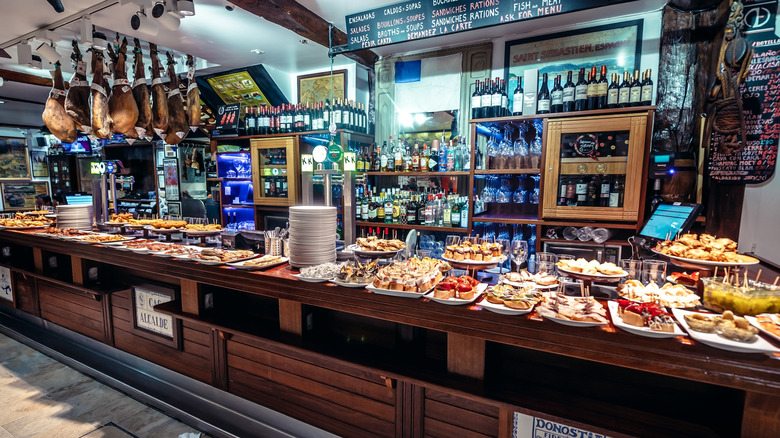
Europe is a treasure trove for food-loving travelers. The culinary adventures are seemingly endless; you can hop the vineyards of Calabria, Italy's ancient land of wine one day, and then head west to taste your way through France's Pas-de-Calais, a place of castles, sand dunes, and seafood, the next. Then there's what good old Rick Steves — you know, only one of America's leading European travel gurus since 1976 — recently dubbed "one of the most wonderful" adventures for gourmands on the continent: Hopping the tapas bars of San Sebastian and the Spanish Basque Country.
While delivering an hour-long bout of taste-bud-tingling insider info about European dining during the 2026 Travel Festival, Steves takes a moment to wax lyrical about his love for the food that awaits in this northern cut-out of the country between the Atlantic Ocean and the peaks of the Pyrenees. He talks of the communal spirit of the tapas bars and the long, local traditions that run through the cooking. He pinpoints specific tapas dishes that stand out on menus, and encourages would-be food pilgrims to the region to break out of their comfort zone.
He's not alone in his love for the local kitchen. Long-time travel guide publishers Lonely Planet place Pintxo hopping — the art of going from one tapas bar to the next in a single session — as the second most important thing to do in the foodie paradise city of San Sebastián, the town Steves himself has dubbed the gateway to the Basque Country. Meanwhile, food blogger Moani from Appetites Abroad goes one step further, imploring travelers to hit the local food bars before they do anything else in that town.
Tapas in the Basque Country
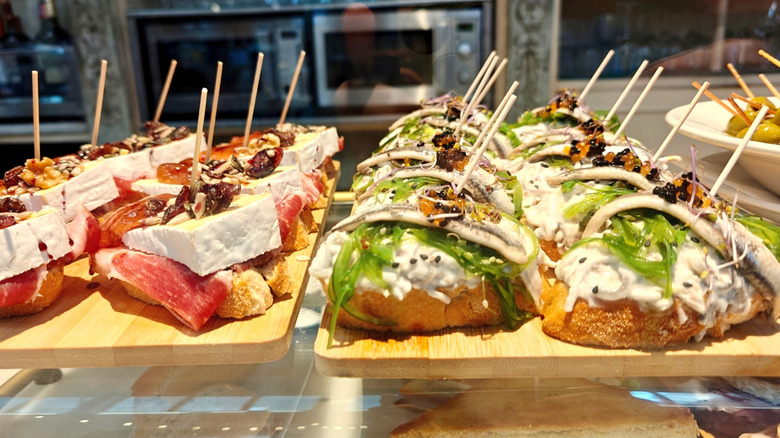
Tapas eating in the Basque Country isn't quite the same as it is in the rest of Spain. For one, it goes by a different name. Up here, in this Atlantic-washed northern part of the country, tapas isn't tapas at all; it's pintxos. The name comes from the word for "stick" in the local lingo, and it stems from the fact that many small plates in the region take the form of something skewered on something else using a toothpick. The toothpicks are important, too; as a tapas tips guide on RickSteves.com points out, they're used as a sort of ad hoc billing method. Simply eat what you like and count your toothpicks at the end to see what you owe!
San Sebastián is ground zero for tapas eating in the Basque Country. The city is said to have the highest rate of Michelin stars per square meter of any town on the planet (according to the Spain Convention Bureau). Backing that up is a whopping 200-plus tapas bars in the historic core of the city alone. Each of those serves its own in-house style of pintxos, so it's hard to know where to begin.
Charlie Brown from the culinary Substack The Sauce Mag, who has over a decade of experience dining around San Sebastián, recommends starting at Ganbara, where they serve a trademark mushroom platter topped with egg. Aussie travel and food blogger Daniela from Ola Daniela picks out La Cuchara de San Telmo as the best for its seafood and pig ear combos. Meanwhile, Rick Steves himself namedrops both of the above in his own guide to the city, alongside Bar Goiz Argi, purveyors of baby squid and black pudding.
Spain is Steves' pick for a proper foodie adventure
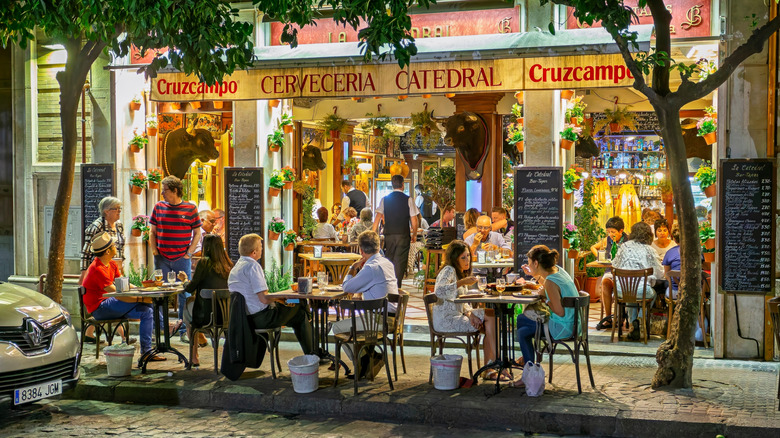
A love for all things Spanish cooking is something Rick Steves has echoed time and time again, and his tapas passion is by no means limited to the Basque Country alone. In a Tapas 101 guide for USA Today, Steves hails San Sebastián as the cooking capital of the nation, but also recalls salty Iberian ham in Granada, paprika-topped octopus in Galicia, the seafood vermicelli of Catalonia — the list of mouthwatering dishes goes on and on.
The veteran travel writer has been quite clear that there's only one destination out there for those serious about enjoying their small plates, and that's Spain in general. In an article entitled Spain's Tasty Tapas, he declares, "I never tire of tapas," before moving on to say that nothing can compare to the experience of eating tapas in the land of flamenco and bull fighting.
That makes sense. According to Google Arts & Culture, the type of social, small-dish dining we now call tapas can be traced back to the 1200s, to the reign of King Alfonso X of Castile and Leon, an historic area that covers the heart of northwestern Spain. Another origin story (posted on Your Spanish Recipes) says tapas were invented in Cádiz during the early 20th century, when a local bartender placed small plates of ham atop drinks to protect them from sand and flies. What's more, the Spanish government has even called for tapas to be protected (as reported by The Independent) on UNESCO's list of Intangible Cultural Heritages, which would put it alongside iconic culinary things such as the French baguette and Turkish coffee.